



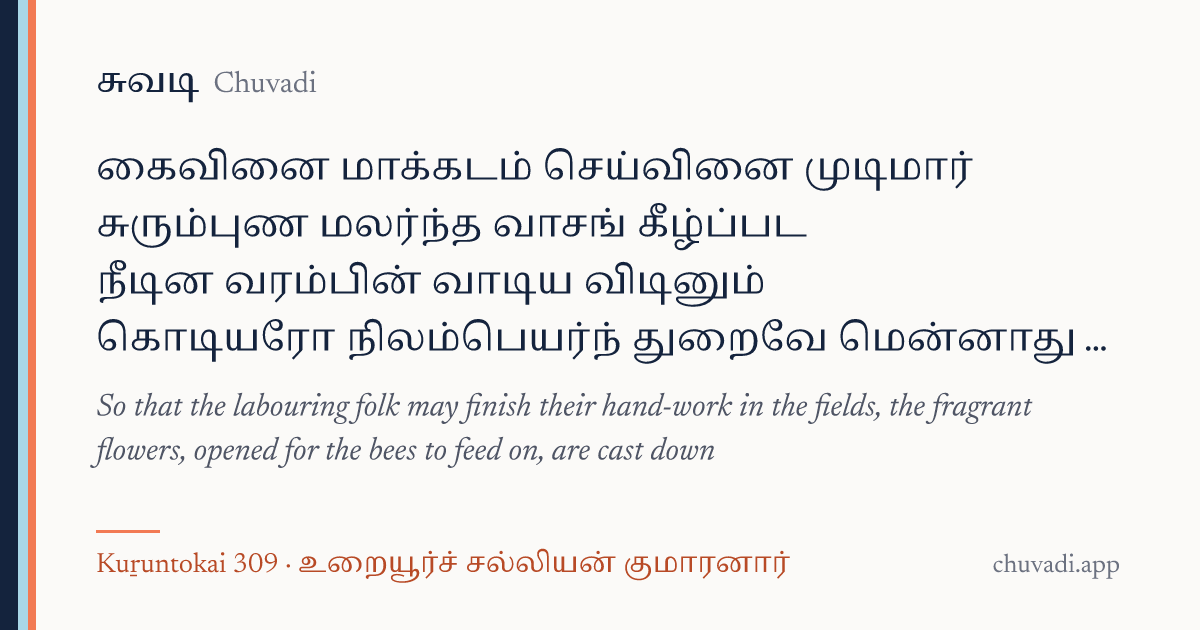

குறுந்தொகை 309
பாடல் · The poem
Tap a word to see where else it occurs.
பொருள் · Meaning in TamilAI
தலைவனே! வயலில் கைவேலை செய்யும் உழவர்கள் தம் களைபறிக்கும் பணியை முடிப்பதற்காக, வண்டுகள் தேனுண்ண மலர்ந்த மணமுள்ள நெய்தல் பூக்களைப் பிடுங்கிக் கீழே எறிந்து, நீண்ட வரப்புகளில் வாடும்படி போட்டுவிடுகிறார்கள். அப்படிச் செய்தாலும், ‘இவர்கள் கொடியவர்கள்; நாம் இந்த நிலத்தை விட்டு வேறிடம் சென்று வாழ்வோம்’ என்று எண்ணாமல், தன்னைக் களைந்தெறிந்த அதே வயலில் அது மீண்டும் பூக்கிறது. உன் ஊரின் அந்த நெய்தலைப் போன்றவர்கள் நாங்கள்: நீ எங்களுக்குத் துன்பம் தரும் பலவற்றைச் செய்தாலும், உன்னை விட்டு வாழ எங்களால் இயலாது.
மருதத் திணை; பரத்தையிடம் சென்று மீண்டு வரும் தலைவனிடம், தலைவியின் சார்பாகத் தோழி சொல்வது. களைந்தெறியப்பட்டும் அதே வயலில் மீண்டும் பூக்கும் நெய்தல் தலைவியின் மாறாத அன்புக்கு உவமை; அதே உவமை தலைவனைப் பிடுங்கி எறிபவனாகவும் காட்டுவதால், இதில் அன்போடு குற்றச்சாட்டும் கலந்திருக்கிறது. முதல் அடியின் சொல்லமைப்பு சற்றுத் தெளிவற்றது.
ஆங்கிலம் · English translationAI
Translation
- So that the labouring folk may finish their hand-work in the fields,
- the fragrant flowers, opened for the bees to feed on, are cast down
- and left to wither on the long ridges between the plots; and yet,
- not saying, 'They are cruel; we will leave this land and live elsewhere,'
- it blossoms once again in the very field that weeded it out —
- we are like the neytal of your town, lord:
- though you do to us many hurtful things,
- we cannot manage to live without you.
What the poem says
The friend speaks to the hero of the marutam country, the landscape of farmland, where the typical theme is the husband's unfaithfulness. He has hurt his wife by his visits to other women, and the friend replies on her behalf, perhaps as he seeks to return.
The comparison is drawn from paddy farming. When labourers weed the fields, they pull up the water-lilies (neytal) and throw them on the ridges to dry out. Yet the lily never 'decides' to move elsewhere; it flowers again in the same field that rejected it. So too the wife: however much he wounds her, she cannot live apart from him.
The speech is both loyal and accusing, for the image openly casts the hero as the one who uproots and discards. Line 1 is slightly obscure in its wording, but the sense of farm workers completing their task is clear.