




குறுந்தொகை 31
பாடல் · The poem
Tap a word to see where else it occurs.
பொருள் · Meaning in TamilAI
வீரர்கள் கூடும் விழாவிலும், மகளிர் கைகோத்து ஆடும் துணங்கைக் கூத்திலும், எங்கும் என் சிறந்த தலைவனை நான் காணவில்லை. நானும் ஆடுகளத்தில் ஆடும் ஒருத்திதான்; என் கையில் சங்கை அறுத்துச் செய்த ஒளிவீசும் வளையல்களை நெகிழச் செய்த அந்தப் பெருமைமிக்க தலைவனும் ஆடுகளத்தில் ஆடும் ஒருவனே.
மருதத் திணை; தலைவி கூற்று. விழாக்களிலும் கூத்துகளிலும் தன் காதலனைத் தேடி அலைகிறாள்; இருவரும் ஆடுகளத்தைச் சேர்ந்தவர்கள் என்பதால் அங்கே அவனைத் தேடுகிறாள். வளையல் நெகிழ்தல், பிரிவால் உடல் மெலிவதைக் குறிக்கும் வழக்கமான உருவகம். புலவர் ஆதிமந்தியார் தம் கணவனைத் தேடி அலைந்த இளவரசியாக மரபில் நினைக்கப்படுகிறார்; அக்கதை இப்பாடலில் வெளிப்படையாக இல்லை.
ஆங்கிலம் · English translationAI
Translation
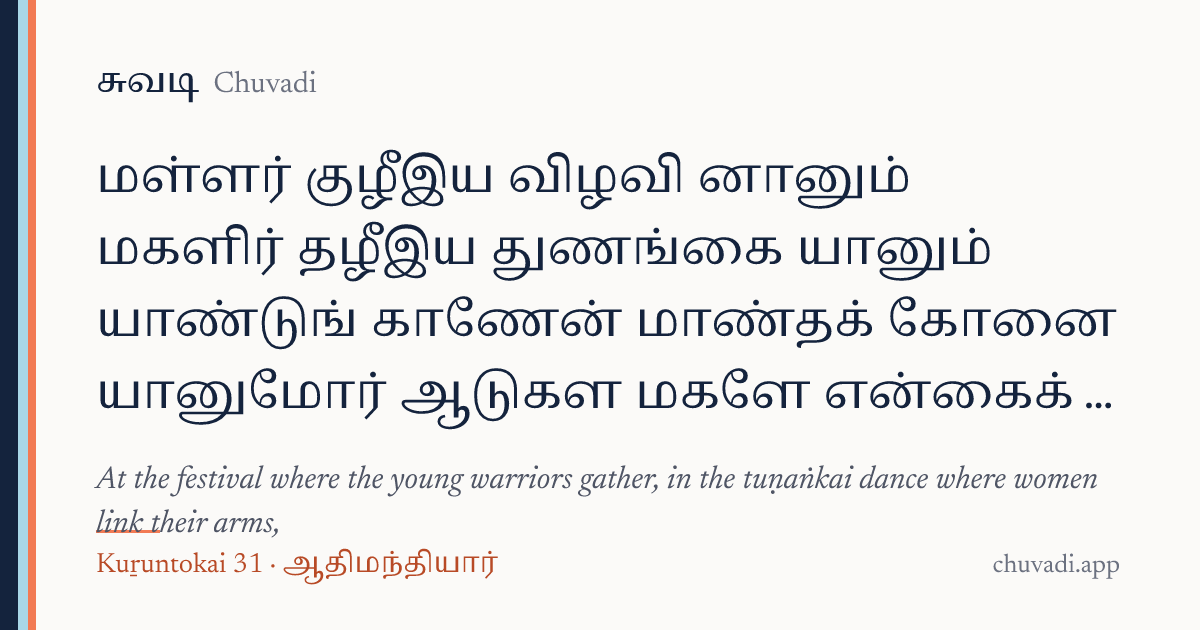
- At the festival where the young warriors gather,
- in the tuṇaṅkai dance where women link their arms,
- nowhere at all do I see my noble man;
- I too am a woman of the dancing ground; on my arm
- the shining bangles of cut conch he has loosened —
- that splendid lord too is a man of the dancing ground.
What the poem says
The heroine speaks. The poem is placed in the farming country (marutam), where festivals and public dances were held. She searches every gathering, the warriors' festival and the tuṇaṅkai (a dance in which women hold one another), but cannot find the man she loves.
The last three lines explain why she looks there. She is a dancer, and so is he. He has 'loosened her bangles', the standard image for a woman grown thin from longing, so that her bracelets slide off.
The poet, Ātimantiyār, is linked in Tamil tradition with the princess Ātimanti, whose husband Āṭṭaṉ Atti, a dancer, was said to have been swept away by the Kāviri river while she searched for him along its banks. Other Sangam poems allude to this story. Whether this poem is really hers, or was attached to her name because of the legend, cannot be known.