



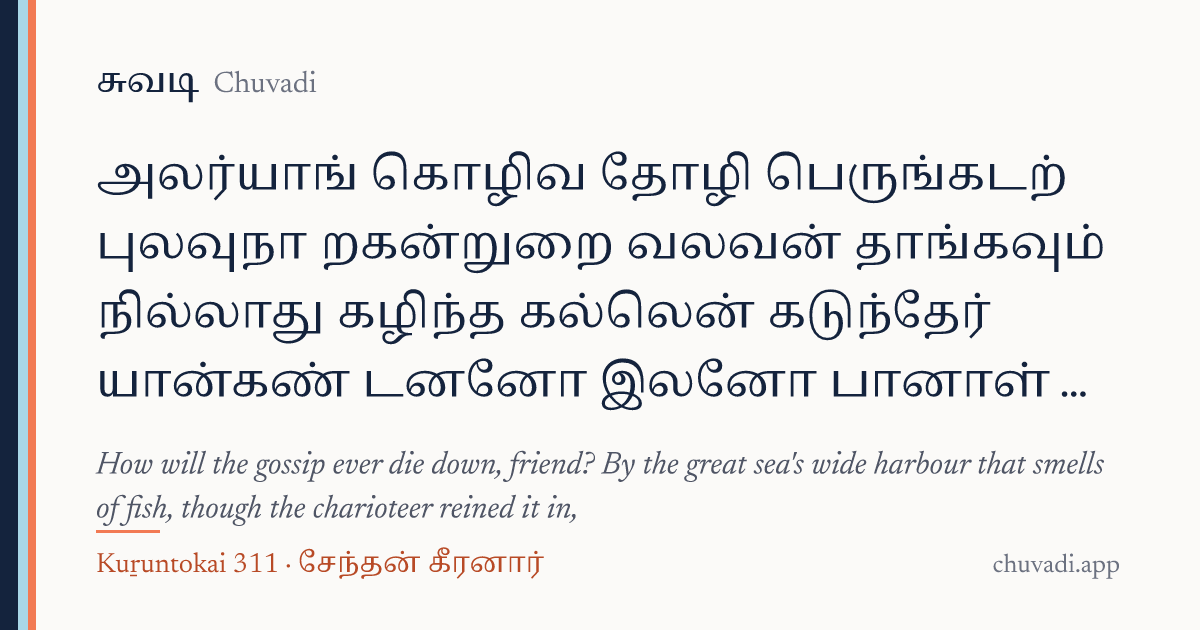

குறுந்தொகை 311
பாடல் · The poem
Tap a word to see where else it occurs.
பொருள் · Meaning in TamilAI
தோழி! இந்த அலர் இனி எப்படி ஓயும்? புலால் நாற்றம் வீசும் பெருங்கடலின் அகன்ற துறையில், தேரோட்டி கடிவாளத்தை இழுத்து நிறுத்த முயன்றும் நிற்காமல், கல்லென்று ஒலிக்கும் அவருடைய விரைந்த தேர் கடந்து சென்றது. அதை நான் கண்டேனோ, காணவில்லையோ? ஆனால் நடுப்பொழுதில், உயர்ந்த வெண்மணல் மேட்டில் தாழ்ந்து நிற்கும் புன்னை மரத்தின் மகரந்தம் நிறைந்த ஒளிரும் மலர்களைக் கொய்துகொண்டிருந்த தோழியர் கூட்டம் முழுவதும் அதை ஒருசேரக் கண்டுவிட்டது.
நெய்தல் திணை; தலைவி தோழியிடம் கூறுவது. தோழியர் எல்லாரும் தலைவனின் தேரைக் கண்டுவிட்டதால், களவு வெளிப்பட்டு ஊரில் அலர் பெருகும் என அஞ்சுகிறாள். ‘நான் கண்டேனோ இல்லையோ’ என்ற வினா, மறுக்க முடிந்தால் நன்று என்ற விளையாட்டுப் பாங்கில் அமைகிறது. ‘பானாள்’ பொதுவாக நள்ளிரவைக் குறிக்கும்; இங்கே பூக்கொய்தல் பற்றிப் பேசுவதால் நண்பகல் எனக் கொள்ளப்படுகிறது; இவ்வாசிப்பு உறுதியில்லை.
ஆங்கிலம் · English translationAI
Translation
- How will the gossip ever die down, friend? By the great sea's
- wide harbour that smells of fish, though the charioteer reined it in,
- the swift, clattering chariot that would not stop but rushed on past —
- did I see it, or did I not? At the middle of the day,
- beneath the punnai bending low over the high white sand,
- plucking its gleaming flowers thick with pollen,
- the whole company of girls saw it all at once.
What the poem says
The heroine speaks to her friend on the seashore (neytal). Her secret affair is in danger of discovery, and she explains why the village talk cannot now be stopped.
The hero's chariot came racing along the shore, so fast that even his driver could not hold the horses back. Whether she herself caught sight of it hardly matters, she says, because the other girls, gathering punnai flowers under the trees by the dunes, all saw it together. One glimpse shared by a whole band of companions is enough to start the gossip (alar) that akam poetry treats as the great threat to secret love.
The question 'did I see it or not?' is half playful, as if she wished she could deny it. The word for the time of day usually means midnight, but flower-gathering suggests the middle of the day here; the reading is uncertain.