



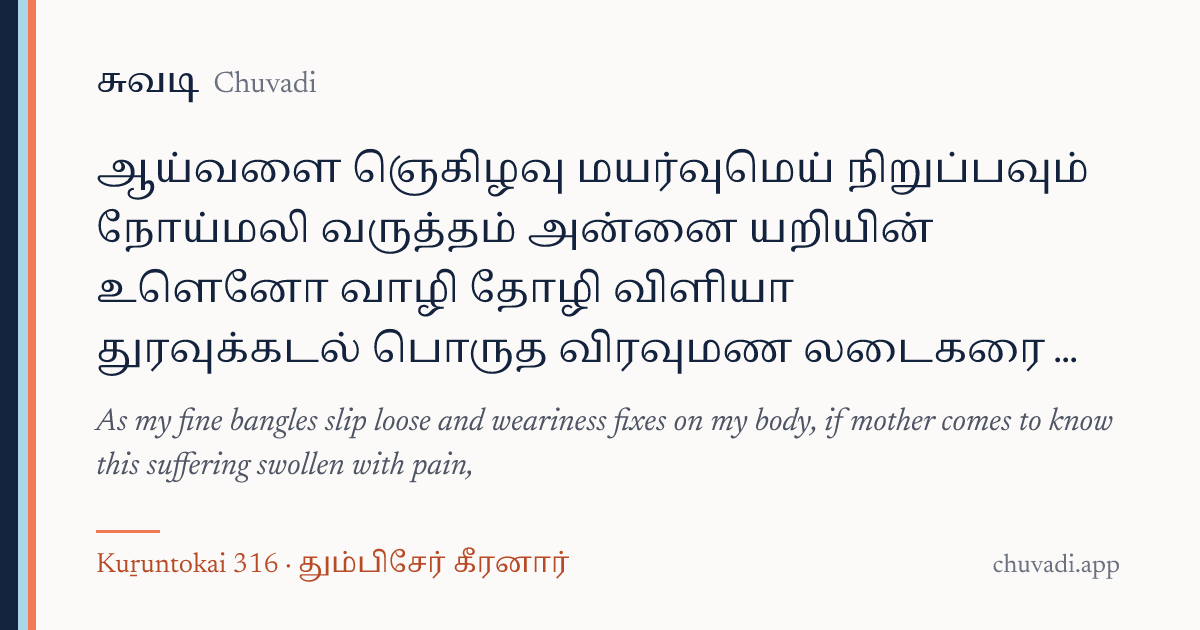

குறுந்தொகை 316
பாடல் · The poem
Tap a word to see where else it occurs.
பொருள் · Meaning in TamilAI
தோழி, நீ வாழ்க! அழகிய வளையல்கள் நெகிழ்ந்து கழல்வதையும், சோர்வு என் உடலில் நிலைத்துவிட்டதையும், நோய் மிகுந்த என் இந்த வருத்தத்தையும் அன்னை அறிந்துவிட்டால், நான் உயிரோடு இருப்பேனோ? ஓயாமல் முழங்கும் கடல் மோதும், கலந்த மணல் படிந்த கரையில், ஓரை விளையாடும் சிறுமியர் ஒன்றுகூடித் துரத்துவதால் துன்புற்று விரைந்தோடும் அழகிய நண்டின் வருத்தத்தை, உயர்ந்து வந்து விரியும் அலை போக்கிவிடுகிறது. அத்தகைய துறையின் தலைவனால் வந்ததோ, வேறு ஏதோ காரணத்தால் வந்ததோ இந்த நோய்?
நெய்தல் திணை; தலைவி தோழியிடம் கூறுவது. சிறுமியரால் துரத்தப்படும் நண்டு, பலர் கண்காணிப்பில் தவிக்கும் தலைவியைப் போன்றது; அதைக் காக்கும் அலைபோலத் தலைவன் வந்து மணந்து தன் துயரைப் போக்க வேண்டும் என்பது உள்ளுறை. இறுதி அடி அன்னை கேட்கப்போகும் கேள்வியாகவோ, தலைவி தன் நோயைப் பற்றித் தானே வியப்பதாகவோ கொள்ளலாம்; பொருள் உறுதியில்லை.
ஆங்கிலம் · English translationAI
Translation
- As my fine bangles slip loose and weariness fixes on my body,
- if mother comes to know this suffering swollen with pain,
- shall I live on? Long life to you, friend! Ceaselessly
- the roaring sea beats on the silted shore of mingled sand,
- where the girls at their ōrai game together drive it on,
- the comely crab, distressed, in its hurried flight,
- and the high-rising, spreading waves take its trouble away:
- is it the man of that shore — or is it something else?
What the poem says
The heroine speaks to her friend, frightened that her mother will notice the signs of her love-sickness: loose bangles and a tired, wasted body. If the cause is discovered, she asks, how can she go on living?
The middle of the poem is a small scene from the beach. Girls playing the ōrai game chase a crab, which scuttles away in distress until the high waves wash over it and end its ordeal. As implied meaning, the crab hunted by the girls is like the heroine pressed by watching eyes, and the wave that rescues it is what she hopes the hero will be for her, coming to marry her and end her trouble.
The last line is open to more than one reading. It may voice the question her mother will ask: is the man of the shore the cause, or something else? It may also be the heroine wondering about her own sickness.