




குறுந்தொகை 318
பாடல் · The poem
Tap a word to see where else it occurs.
பொருள் · Meaning in TamilAI
தாக்கும் சுறாமீன்கள் பெருகிய ஒளிரும் நீர்ப்பரப்பின் கரையில், மணமுள்ள ஞாழல் பூக்களும் புன்னைப் பூக்களும் உதிர்ந்து பரவி, வெறியாட்டு நடக்கும் களத்தைப் போலத் தோன்றும் துறையை உடையவன் அவன். அவன் அதை உண்மையாக நினைக்காவிட்டாலும், அவன் உள்ளத்தில் வேறு எதையும் அறியாதவனாக இருப்பதால், நானே அவனிடம் சொல்லட்டுமா? நான் மிகவும் தளர்ந்துவிட்டேன். மூங்கில் போன்ற அழகிய என் மென்மையான தோள்களை அவன் தழுவிய அந்த நாளில், ‘ஒருபோதும் தவறமாட்டேன்’ என்று உறுதிமொழி செய்தான். கள்வனும் அவனே; கடன்பட்டவனும் அவனே; இவற்றையெல்லாம் புனைந்தவனும் அவனே.
நெய்தல் திணை; மணம் செய்வதாக வாக்களித்த தலைவன் காலம் தாழ்த்துவதால் தளர்ந்த தலைவி தோழியிடம் கூறுவது. இறுதி அடியில் வரும் மூன்று குற்றச்சாட்டுகள் குறையும் உரிமைக்கோரிக்கையும் ஒருசேர உள்ளவை. பூ உதிர்ந்த கரை வெறியாட்டுக் களம்போலத் தோன்றுவது, அவள் காதல்நோயைத் தெய்வக் குற்றம் என்று எண்ணி வீட்டார் வெறியாட்டு நடத்திவிடுவார்களோ என்ற அச்சத்தைக் குறிக்கிறது. நான்காம், ஐந்தாம் அடிகளின் அமைப்பு சிக்கலானது; அவற்றின் சரியான பொருள் உறுதியில்லை.
ஆங்கிலம் · English translationAI
Translation
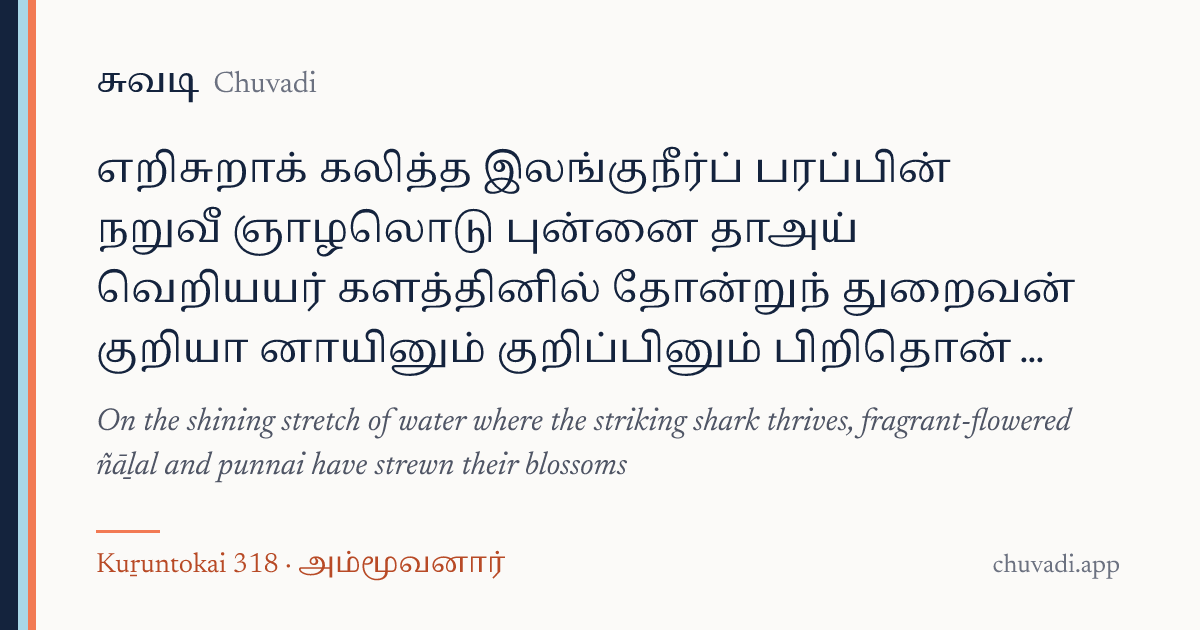
- On the shining stretch of water where the striking shark thrives,
- fragrant-flowered ñāḻal and punnai have strewn their blossoms
- so it looks like the ground where a veṟi rite is held: the man of that shore,
- even if he does not mean it, since in his thoughts he knows
- nothing else — shall I tell him? I am worn out; this
- soft shoulder, lovely as bamboo, he embraced, and on that day
- swore an oath that he would never fail me —
- he is the thief, he is the one who owes, and he made it all up himself.
What the poem says
The heroine speaks, worn out by waiting for a marriage the hero promised and has not delivered. On the day he first embraced her, he swore a solemn oath never to abandon her. Now she does not know whether he means to keep it, and wonders whether she should remind him.
The final line is a run of three accusations: he is the thief who stole her love, the debtor who owes her the fulfilment of his vow, and the one who invented the whole affair. Each is half a complaint and half a claim on him.
The shore image is unusual. The flowers scattered on the sand make it look like the ground prepared for a veṟi rite, the ecstatic dance performed to Murukaṉ when a girl's sickness was thought to be divine possession. The hint is ominous: if her family misreads her love-sickness, they may hold just such a rite. Lines 4 and 5 are tangled and their exact construction is uncertain.