



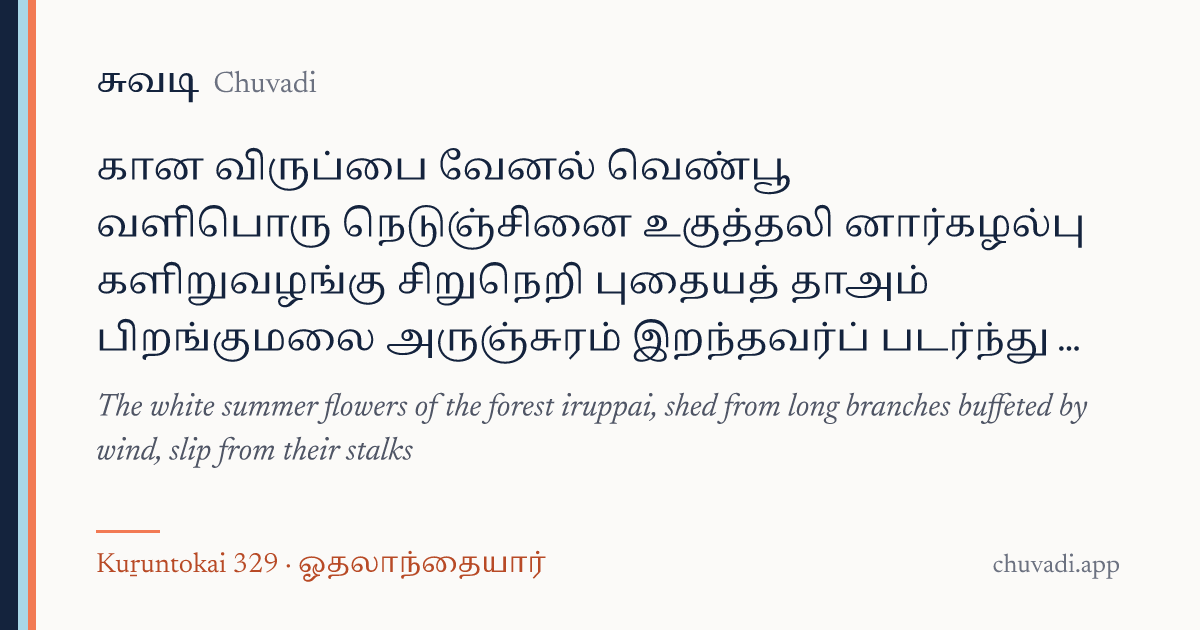

குறுந்தொகை 329
பாடல் · The poem
Tap a word to see where else it occurs.
பொருள் · Meaning in TamilAI
காட்டில் நிற்கும் இலுப்பை மரத்தின் கோடைக்கால வெண்பூக்கள், காற்று மோதும் நீண்ட கிளைகளிலிருந்து காம்பு கழன்று உதிர்ந்து, களிறுகள் நடமாடும் சிறிய வழி முழுவதும் மூடும்படி பரவிக் கிடக்கின்றன. உயர்ந்த மலைகளை உடைய அத்தகைய கடத்தற்கரிய பாலை வழியைக் கடந்து சென்றவரை நினைத்து, அடர்ந்த இருளுடைய நள்ளிரவில் உறக்கம் வராமல், தெளிந்த நீரில் பூத்த ஒளிரும் மலர்களைப் போன்ற, குளிர்ந்த என் அழகிய கண்களுக்குக் கண்ணீர் மிக எளிதாக வந்துவிடுகிறது.
பாலைத் திணை; பொருள் தேடப் பிரிந்த தலைவனை நினைத்து இரவில் உறங்காத தலைவி கூறுவது. இலுப்பைப் பூ மூடிய யானை வழி அழகும் அச்சமும் கலந்த தொலைவான நிலத்தைக் காட்டுகிறது. நீர்மலர் போன்ற கண்கள் இப்போது எப்போதும் நனைந்திருக்கின்றன. இறுதி அடியின் சொல் ஏட்டில் சிதைந்துள்ளது; ‘எளியவால்’ எனக் கொண்டு பொருள் கூறப்பட்டது. ‘பனி’ என்பது கண்ணீரையும் குளிரையும் குறிக்கும்.
ஆங்கிலம் · English translationAI
Translation
- The white summer flowers of the forest iruppai,
- shed from long branches buffeted by wind, slip from their stalks
- and spread so thickly that the narrow path where tuskers walk is buried —
- thinking of him who crossed that hard wilderness among towering mountains,
- at midnight in the thick darkness, sleep hard to find,
- resembling the bright flowers of clear water,
- tears come so easily to my fine, rain-dark eyes.
What the poem says
The heroine speaks in pālai, the mode of separation. Her husband has crossed the high wilderness, and at midnight she lies awake thinking of the road he took.
She pictures it in the hot season. The iruppai, the mahua tree, drops its pale fleshy flowers in the wind until the narrow track used by elephants is covered over. The image is of a harsh, lonely country, beautiful in its way but dangerous, and far from her.
The last lines turn to her eyes, once compared to water-lilies in a clear pool and now always wet. The word used for tears also means dew, and the phrase 'rain-dark eyes' is a common way of praising a woman's eyes. Here it becomes painfully literal. Line 6 is slightly uncertain in its construction, but its sense is the traditional comparison of eyes to flowers.