




குறுந்தொகை 337
பாடல் · The poem
Tap a word to see where else it occurs.
பொருள் · Meaning in TamilAI
அவள் முலைகள் மெல்ல மெல்ல அரும்பிவிட்டன. தலையில் அடர்ந்து வளர்ந்த மென்மையான கூந்தல் கீழே நீண்டு தொங்குகிறது. பால்பற்கள் விழுந்த இடங்களில் நெருங்கிய வரிசையான வெண்பற்கள் நிறைந்துவிட்டன. அழகுத் தேமல்களும் சில தோன்றிவிட்டன. அவள் ஆண்களை வருத்தும் ஆற்றல் உடையவள் என்பதை நான் அறிவேன்; அவளோ அதை அறியாள். பெரிய பழைய செல்வக்குடியினரின் ஒரே இளம் மகளான அவள் இனி என்ன ஆவாளோ?
குறிஞ்சித் திணை; தலைவன் தனக்குள்ளோ தன் தோழனிடமோ கூறுவது. பருவம் எய்திய ஒரு பெண்ணின் அடையாளங்களை ஒவ்வொன்றாக எண்ணுகிறான். அவளுக்குத் தெரியாத அவளுடைய அழகின் ஆற்றலைத் தான் அறிந்திருப்பதே பாடலின் மையம்; ‘அணங்குதல்’ என்பது தெய்வம் போல அச்சமும் வருத்தமும் தரும் ஆற்றலைக் குறிக்கும். செல்வக்குடியின் ஒரே மகள் என்பதால், அவளை அடைவது எளிதன்று என்ற கவலையும் இறுதி வினாவில் தொனிக்கிறது.
ஆங்கிலம் · English translationAI
Translation
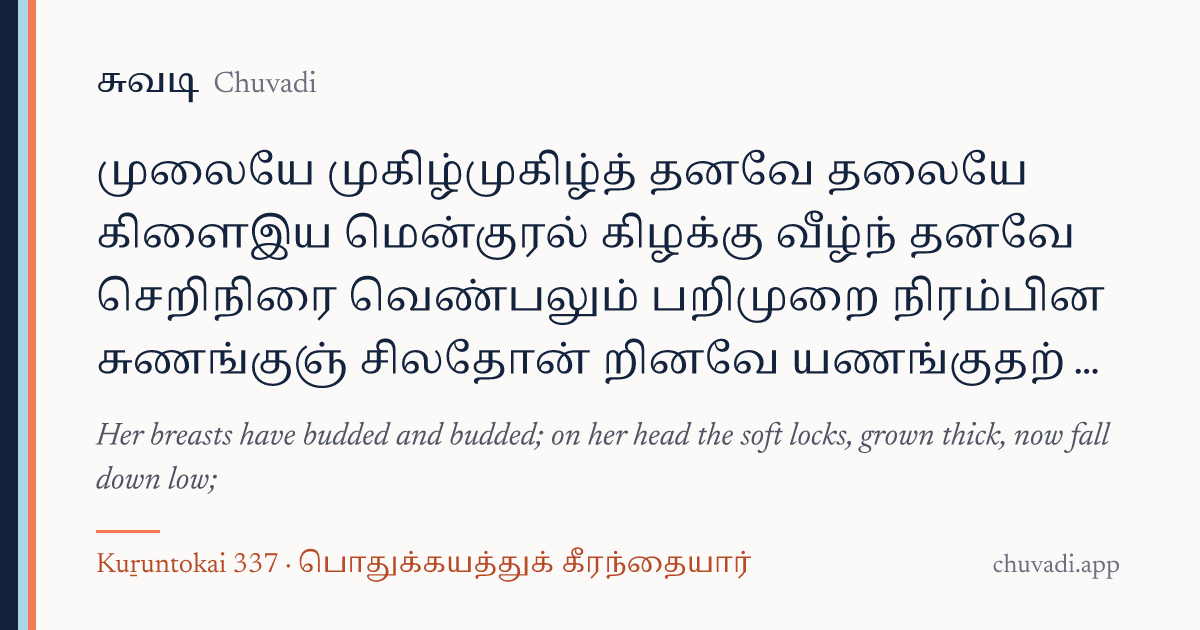
- Her breasts have budded and budded; on her head
- the soft locks, grown thick, now fall down low;
- her close-set white teeth have filled in after the milk teeth fell;
- and a few pale beauty spots have appeared; that she can torment,
- I myself know; she does not know it herself;
- what will become of her,
- the one young innocent daughter of a great old wealthy house?
What the poem says
The hero speaks to himself, or to his friend, about a girl who has only just come of age. He lists the signs, one by one: her breasts are budding, her hair has grown long, her second teeth have come in, and the pale golden spots that Tamil poetry counts among a woman's beauty marks have begun to appear.
The heart of the poem is the contrast in lines 4 and 5. He knows the power she has to torment a man with desire, but she has no idea of it herself. The word used carries a sense of sacred, dangerous power, as of a goddess.
The last lines add a worry. She is the only daughter of an old and wealthy family, so she will be well guarded and hard to win. 'What will become of her' may also mean 'what will become of me'. The poet's name appears to include a place name, Potukkayam, which may mean 'the common pond'.