



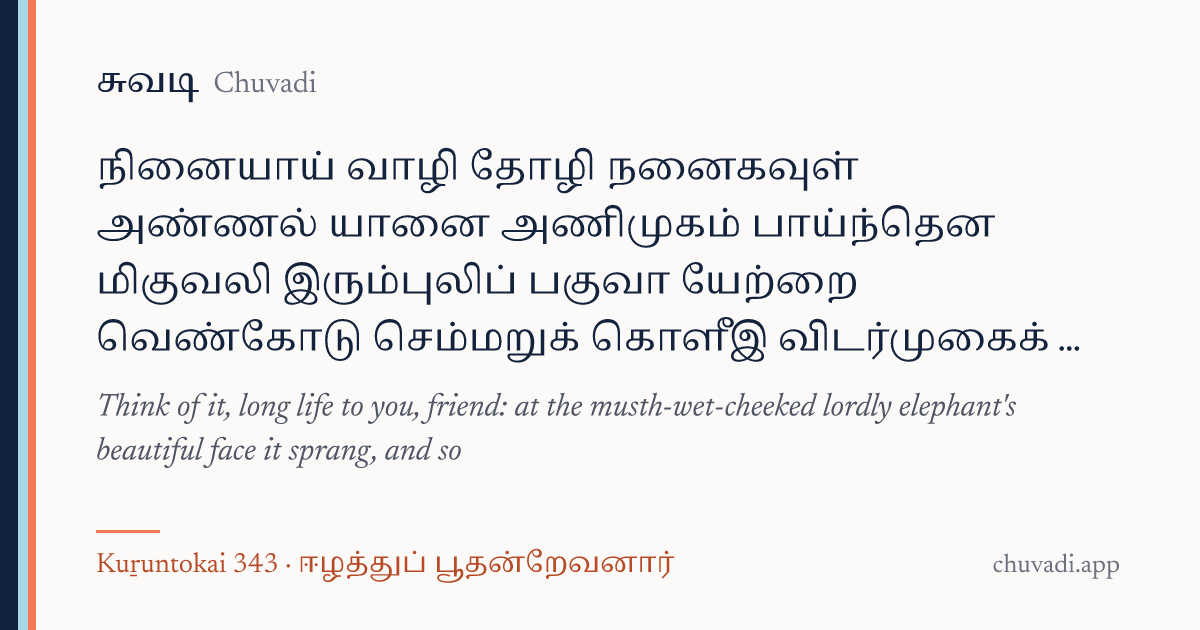

குறுந்தொகை 343
பாடல் · The poem
Tap a word to see where else it occurs.
பொருள் · Meaning in TamilAI
தோழி, நீ வாழ்க! இதைச் சற்று எண்ணிப் பார். மதநீரால் நனைந்த கன்னங்களை உடைய பெருமிதமான யானையின் அழகிய முகத்தின்மேல் பாய்ந்து, மிகுந்த வலிமையும் பிளந்த வாயும் உடைய பெரிய ஆண் புலி, அதன் வெண்ணிறத் தந்தத்தில் செந்நிறக் குருதிக்கறை படியச் செய்தது. இப்போது அந்தப் புலி மலைப்பிளவின் குகையில், கோடைக்காற்று மோதிய கரிய அடிமரத்தை உடைய வேங்கை மரத்தின் வாடிய பூக்கள் நிறைந்த கிளையின் கீழ்க் கிடக்கிறது. உயர்ந்த மலைநாட்டுத் தலைவனோடு நீ செல்லப்போகும் வழி இத்தகையது.
பாலைத் திணை; உடன்போக்குப் பற்றித் தோழி தலைவியிடம் கூறுவது. தலைவனோடு செல்லப்போகும் மலைவழியின் அச்சத்தை ஒரு கொடிய காட்சியால் காட்டி, நன்கு எண்ணிப் பார்க்கச் சொல்கிறாள். வரிப்புலியும் மஞ்சள் வேங்கைப் பூவும் ஒன்றுபோலத் தோன்றுவதால், உதிர்ந்த பூக்களிடையே கிடக்கும் புலி கண்ணுக்குத் தெரியாமல் மறைந்திருக்கிறது என்பதும் குறிப்பு. இதை எச்சரிக்கையாகவோ, துணிவைச் சோதிக்கும் சொல்லாகவோ கொள்ளலாம்.
ஆங்கிலம் · English translationAI
Translation
- Think of it, long life to you, friend: at the musth-wet-cheeked
- lordly elephant's beautiful face it sprang, and so
- the great tiger of surpassing strength, the gaping-mouthed male,
- stained the white tusk with red, and now, in a cleft of the cliff,
- beneath the black-trunked vēṅkai battered by the summer wind,
- it lies among the withered flowers of its branch:
- such is the road of going away with the man of that high-mountained land.
What the poem says
The friend speaks to the heroine in pālai. The question is whether the heroine should elope with the hero across the wild mountain country, and the friend asks her to consider seriously what that road is like.
She gives one frightening scene. A huge male tiger has leapt at a bull elephant, and the fight has left blood on the elephant's white tusk. Now the tiger lies hidden in a crevice under a wind-battered vēṅkai tree, among its fallen, faded flowers. Since the striped tiger and the yellow vēṅkai blossom are often compared, the beast is almost invisible there.
The poet's name, Īḻattup Pūtaṉtēvaṉār, ties him to Īḻam, the old Tamil name for Sri Lanka. Line 4 is uncertain: the 'white tusk' stained red may be the elephant's tusk, or the tiger's own fangs or claws.