



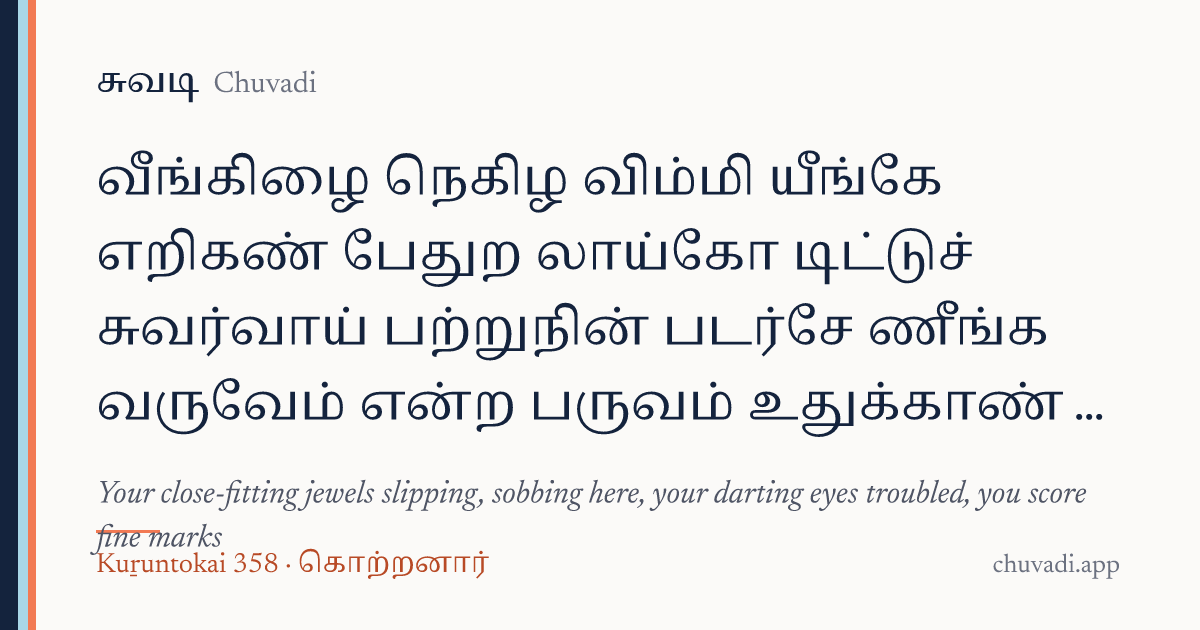

குறுந்தொகை 358
பாடல் · The poem
Tap a word to see where else it occurs.
பொருள் · Meaning in TamilAI
இறுக அணிந்த அணிகலன்கள் நெகிழ்ந்து கழல, விம்மி அழுது, இங்கே அலைபாயும் கண்களோடு மயங்கி, அவர் வரும் நாளை எண்ணிச் சுவரில் அழகிய கோடுகளைக் கீறி, அந்தச் சுவரையே பற்றிக்கொண்டு நிற்கிறாய். உன் நீண்ட துயர் நீங்கும்படி, ‘திரும்பி வருவோம்’ என்று அவர் சொல்லிச் சென்ற பருவம் அதோ வந்துவிட்டது, பார்! தனித்திருப்பவர்கள் வருந்தும் பனி மிகுந்த இந்த மாலையில், பல பசுக்களை உடைய கோவலர் சூடும் தலைமாலையைப் போன்ற மென்மையான முல்லை மொட்டுகள் அதைச் சொல்லுவனபோலத் தோன்றுகின்றன.
முல்லைத் திணை; கார்காலத்தில் மீள்வதாகச் சொல்லிப் பிரிந்த தலைவனுக்காக வருந்தும் தலைவியைத் தோழி தேற்றுவது. நாட்களைச் சுவரில் கோடு கீறி எண்ணுவது காத்திருப்பின் துயரைக் காட்டுகிறது. கார்காலத் தொடக்கத்தில் மலரும் முல்லை மொட்டுகள், அவன் வரும் காலம் வந்துவிட்டதை அறிவிக்கும் தூதர்கள் போலக் காட்டப்படுகின்றன. இரண்டாம் அடியின் சொல்லமைப்பு சற்றுக் கடினமானது.
ஆங்கிலம் · English translationAI
Translation
- Your close-fitting jewels slipping, sobbing here,
- your darting eyes troubled, you score fine marks
- and cling to the wall — to end your far-reaching sorrow,
- the season when he said 'we will return' — look, it is here!
- In the chill evening when those who are alone grieve,
- like the garlands that herdsmen with many cows wear,
- the soft mullai buds are announcing it.
What the poem says
The friend comforts the heroine, whose husband has gone away and promised to come back with the rains. This is mullai, the forest-pasture landscape of patient waiting, and its flower, the wild jasmine (mullai), opens at the start of the rainy season.
The first three lines show the heroine's state: bangles and jewels loose on a body grown thin, constant sobbing, and the habit of making marks on the wall to count the days until his return. The friend points out the mullai buds opening in the evening. They are like the garlands herdsmen wear, and they 'speak' the arrival of the promised season.
The comfort has a double edge. The season has come, but the hero has not, and the evening is the time 'when those who are alone grieve'. The friend's 'look!' may be meant as reassurance that he must arrive soon, but the heroine may hear only that the promised time has come and he is still away.