



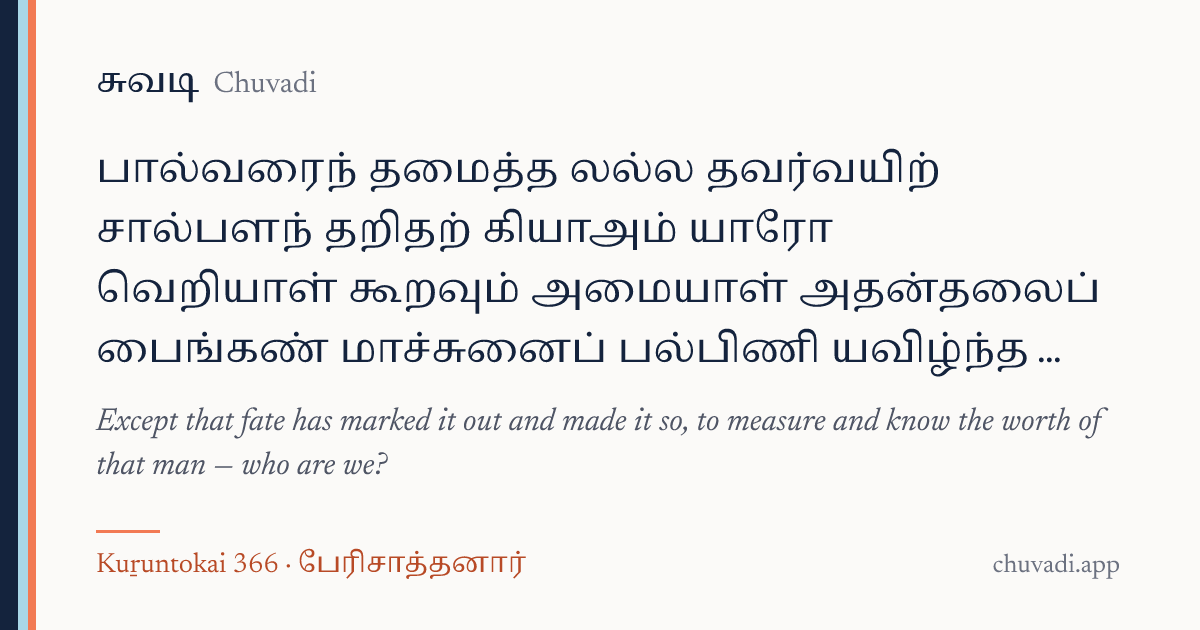

குறுந்தொகை 366
பாடல் · The poem
Tap a word to see where else it occurs.
பொருள் · Meaning in TamilAI
ஊழ்வினையே இந்த உறவை வரையறுத்து அமைத்ததே அல்லாமல், அவனுடைய பெருமையை அளந்து அறிவதற்கு நாம் யார்? கட்டுவிச்சி குறி சொல்லியும் இவள் அமைதியடையவில்லை. அதற்கு மேலும், பசுமையான கண்கள் போன்ற அறைகளை உடைய கரிய சுனையில், பல மடல்களாகக் கட்டியிருந்த மொட்டு அவிழ்ந்து மலர்ந்த பெரிய இதழ்களை உடைய நீலமலரைப் பார்த்து, உள்ளம் கொதித்து, கண்கள் சிவந்து கலங்கினாள். அழகிய அணிகலன்களை அணிந்த இவளுடைய இந்த உறுதியான முடிவு தவறானது அன்று.
குறிஞ்சித் திணை; தோழி செவிலியிடம் அறத்தொடு நிற்பது. தலைவியின் காதல் ஊழால் அமைந்தது, அதன் தகுதியை ஆராய்வது நம் வேலையன்று என்று தொடங்குகிறாள். மலைச்சுனையின் நீலமலர் தலைவனையோ, அவன் நாட்டையோ நினைவூட்டியதால் தலைவி கண் கலங்கினாள் என்று கொள்ளலாம். ‘வெறியாள்’ என்பதைக் குறிசொல்லும் பெண்ணாகக் கொள்ளப்பட்டது; ‘பழுத கண்ணள்’ என்ற தொடரின் பொருள் உறுதியாகத் தெரியவில்லை.
ஆங்கிலம் · English translationAI
Translation
- Except that fate has marked it out and made it so, to measure
- and know the worth of that man — who are we?
- Even when the diviner spoke, she would not be calmed; and more,
- in the dark pool with its green, eye-like cells, where the many-sheathed bud has opened,
- she gazed at the large-petalled blue lily, and with a burning inside,
- her eyes grew red and full;
- it is no mistake, this resolve of the girl with fine jewels.
What the poem says
The friend speaks, most likely to the foster-mother. Her purpose is to reveal, carefully, that the heroine already loves a man and has given her heart for good.
She begins by saying that the match was made by fate (pāl), so it is not for the family to weigh the man's merits. Then she describes what happened. The diviner gave her verdict, but the girl was not soothed. Then she saw a blue lily (nīlam) open in a dark mountain pool, and her eyes filled. The flower, from the hills, perhaps reminds her of the hero, or the lily's dark blue recalls her own eyes as he praised them.
The last line is the friend's conclusion: the girl's resolve is not a mistake. Lines 4 to 6 are hard. The phrase rendered 'with a burning inside' and the sense of 'paḻuta' (ripened, here taken as 'reddened' or 'brimming') are uncertain, and other readings are possible.