




குறுந்தொகை 369
பாடல் · The poem
Tap a word to see where else it occurs.
பொருள் · Meaning in TamilAI
பாலைவழியில் நிற்கும் வாகை மரத்தின் நெருங்கிய வெண்ணிற நெற்றுகள், பரல்கள் இட்ட சிலம்பைப் போல விதைகளை ஒலிக்கச் செய்யும்படி, கோடைக்காற்று அவற்றை அசைத்து ஆட்டும் காடு அது. தோழி! அங்கே நாம் செல்வோம்; நம்மவர் அன்போடு இசைந்துவிட்டார்.
பாலைத் திணை; தலைவன் தலைவியைத் தன்னுடன் அழைத்துச் செல்ல இசைந்ததைத் தோழி மகிழ்ந்து அறிவிப்பது. பாலைநிலத்தின் அச்சம் தரும் காட்சிக்குப் பதிலாக, காற்றில் சிலம்பு போல ஒலிக்கும் வாகை நெற்றுகளின் ஓசை மட்டும் சொல்லப்படுகிறது; காடே மணமகளை வரவேற்பதுபோல் தோன்றுகிறது. ‘நமரே’ என்பது தலைவனைக் குறிப்பதாகக் கொள்ளப்பட்டது; வீட்டாரைக் குறிக்கிறது என்றும் கொள்ள இடமுண்டு.
ஆங்கிலம் · English translationAI
Translation
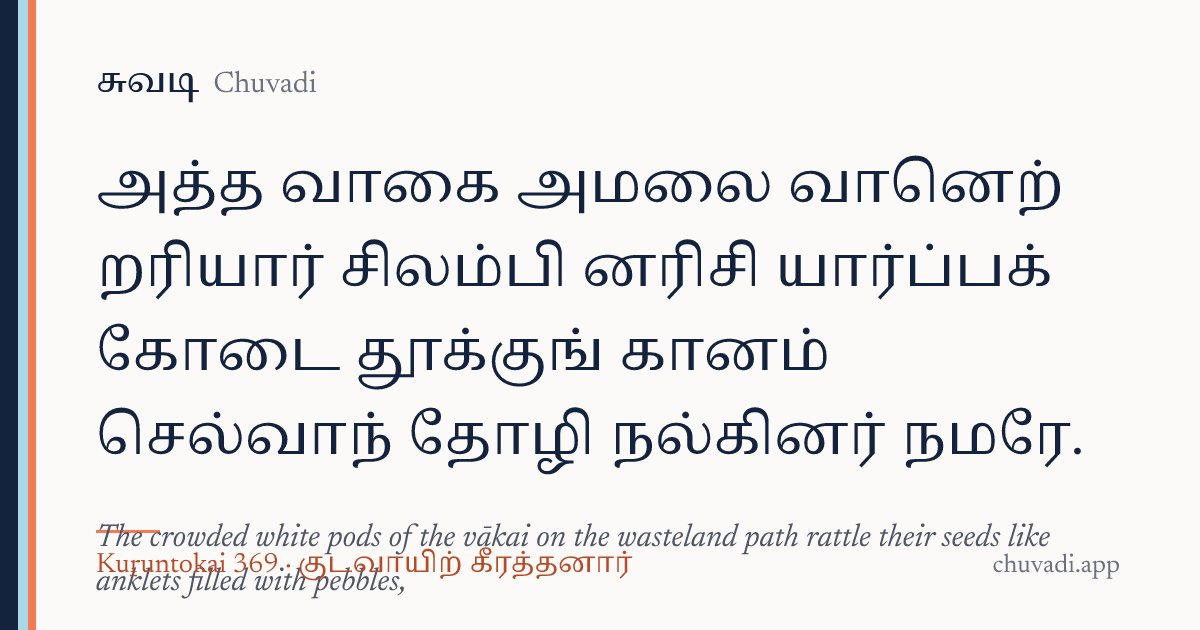
- The crowded white pods of the vākai on the wasteland path
- rattle their seeds like anklets filled with pebbles,
- as the hot west wind tosses them in the forest —
- we shall go there, friend; our man has been kind.
What the poem says
The friend speaks to the heroine with good news: the hero has agreed to take her with him. The poem is in pālai, the landscape of separation and harsh journeys. Here, the journey is the lovers' elopement, which the friend has helped arrange.
The wasteland is pictured through one small, vivid sound. The dry white pods of the vākai tree (a kind of acacia) rattle in the hot wind like girls' anklets with pebbles inside. The image softens the terror of the desert. Its noise is compared to the jingling ornaments of young women, as if the forest itself were dressed for a wedding.
The last line is brief and decisive. 'Our man' (namar) refers to the hero, and his 'kindness' is his willingness to share the dangerous road with her rather than leave her behind.