



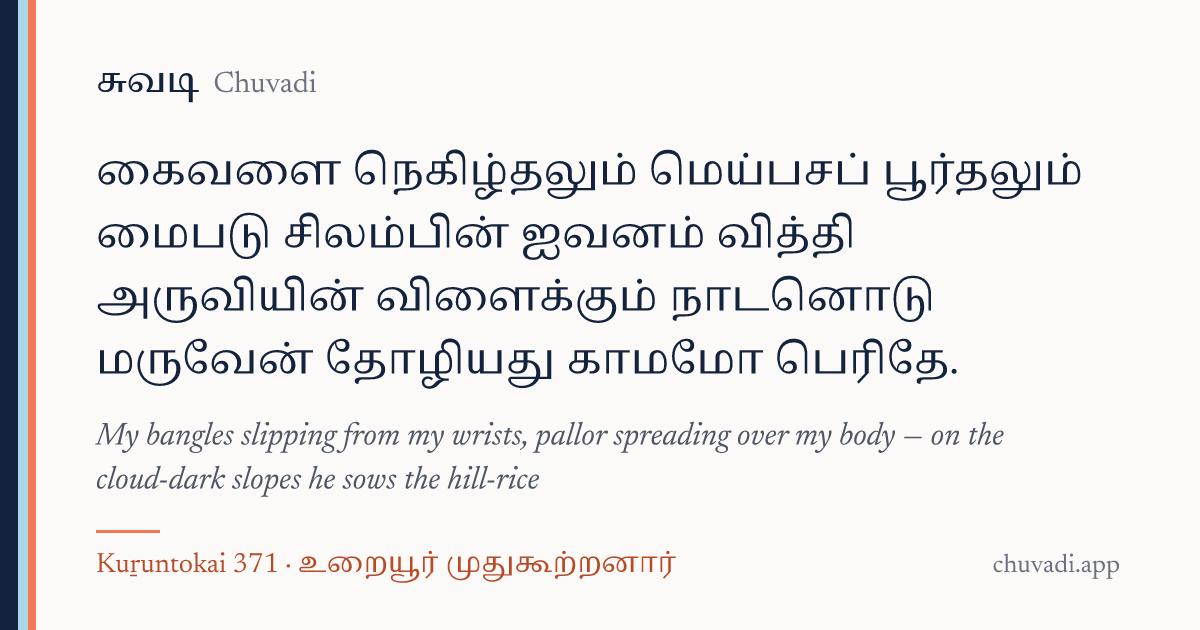

குறுந்தொகை 371
பாடல் · The poem
Tap a word to see where else it occurs.
பொருள் · Meaning in TamilAI
தோழி! என் கைவளையல்கள் நெகிழ்ந்து கழல்கின்றன; உடலில் பசலை படர்கிறது. மேகம் தவழும் மலைச்சாரலில் ஐவன நெல்லை விதைத்து, அருவி நீரால் அதை விளையச் செய்யும் நாட்டை உடையவனோடு நான் நெருங்கிப் பழகவில்லை; ஆனாலும் இந்தக் காதல் எத்தனை பெரிதாக இருக்கிறது!
குறிஞ்சித் திணை; தலைவி தோழியிடம் கூறுவது. மழையின்றி அருவிநீரால் மட்டும் விளையும் ஐவன நெல்போல, சிறிதளவே பழகியிருந்தும் தன் காதல் பெரிதாக வளர்ந்துவிட்டது என்பது இறைச்சி. ஐவனம் என்பது மலையில் விளையும் ஒருவகை நெல். ‘மருவேன்’ என்பதை ‘நெருங்கவில்லை’ என்றும், ‘நெருங்கியது சிறிதே’ என்றும் கொள்ளலாம்; பொருள் சற்று உறுதியில்லை.
ஆங்கிலம் · English translationAI
Translation
- My bangles slipping from my wrists, pallor spreading over my body —
- on the cloud-dark slopes he sows the hill-rice
- and ripens it with the waterfall's water — with the man of that land
- I have not even been close, friend; and yet how great this love is!
What the poem says
The heroine speaks to her friend, puzzled by her own state. Her bangles slip and the pallor of love (pacalai) spreads over her skin, yet she has had little or no real closeness with the hero.
The landscape image carries the suggested meaning (iṟaicci). In his country, the hill-folk sow aivaṉam, a hill rice, on the misty slopes, and it ripens with water from the waterfall rather than from rain. Her love has grown in the same way, with very little to feed it. A small, indirect source has produced a full crop.
The verb maruvēṉ in the last line can be read as 'I have not been close to him' or as 'I will not join him', and the two readings colour the poem differently. The first is taken here, because it fits the wonder in the final exclamation.