



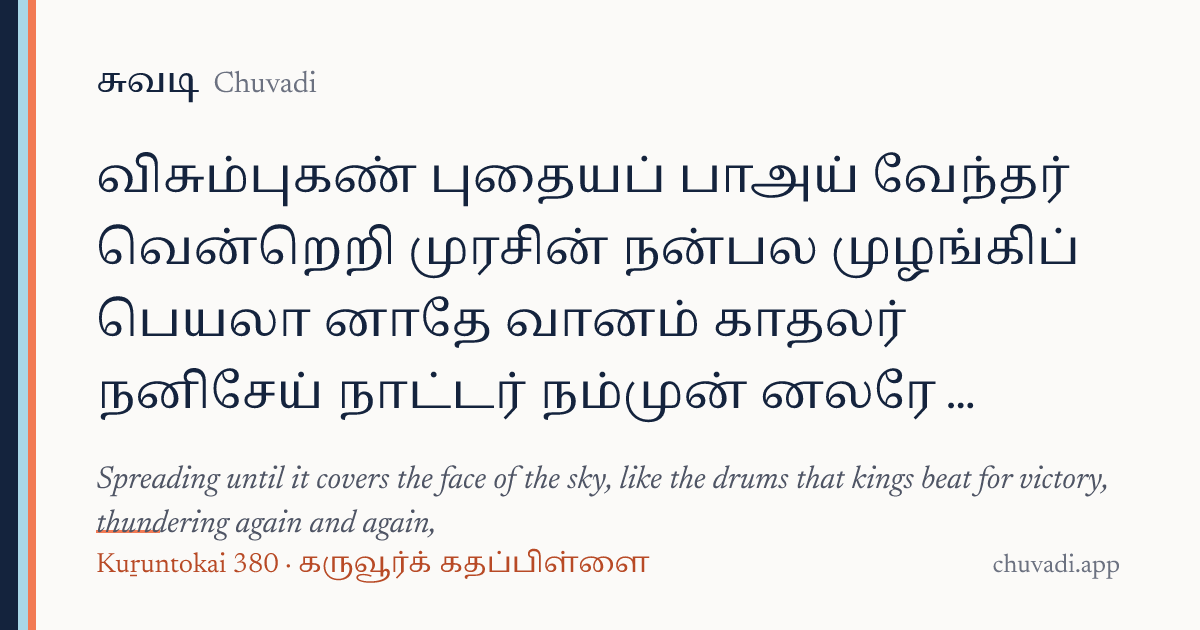

குறுந்தொகை 380
பாடல் · The poem
Tap a word to see where else it occurs.
பொருள் · Meaning in TamilAI
வானத்தின் முகம் முழுவதும் மறையும்படி பரவி, வேந்தர்கள் வெற்றிக்காக அடிக்கும் முரசுபோலப் பலமுறை நன்றாக முழங்கி, மேகம் மழை பொழிவதை நிறுத்தவில்லை. நம் காதலர் மிகத் தொலைவான நாட்டில் இருக்கிறார்; நம் முன்னால் இல்லை. தோழி! நாம் என்ன செய்வோம்? ஈங்கைச் செடியின் நிறமுடைய பஞ்சு போன்ற மலர்கள் உதிர, குளிர்மிகுந்த கடுமையான பனிக்காலமும் நம் முன்னே தோன்றுகிறது.
பாலைத் திணை எனத் தொகுக்கப்பட்டது; பிரிவுக்காலத்தில் தலைவி தோழியிடம் கூறுவது. தலைவன் மீள்வதாகச் சொன்ன கார்காலம் வந்தும் அவன் வரவில்லை; அதற்குள் பனிக்காலமும் நெருங்குகிறது. மழையின் இடிமுழக்கத்தை வேந்தரின் வெற்றி முரசோடு ஒப்பிடுவது, அவன் வேந்தனுக்காகப் போர்ப்பணியில் சென்றிருக்கலாம் என்பதையும் நினைவூட்டலாம். ஒவ்வொரு பருவமும் கழியக் கழியக் காத்திருப்பு கடினமாகிறது.
ஆங்கிலம் · English translationAI
Translation
- Spreading until it covers the face of the sky, like the drums
- that kings beat for victory, thundering again and again,
- the sky will not stop its rain; our beloved
- is in a far, distant country; he is not here before us;
- what are we to do, friend? The īṅkai's
- downy, coloured flowers falling,
- the cold, harsh season is already appearing ahead of us.
What the poem says
The friend speaks for the heroine (or with her) while the hero is away. The rains have come, the season by which absent husbands traditionally promise to return, and he has not.
The thunder is compared to kings' victory drums, a grand and threatening sound that can also remind the women that the hero may be away on royal or military business. Worse is to come: the īṅkai bush is dropping its downy flowers, and the cold dewy season is on its way. Each season that passes without him makes the waiting harder.
The poem belongs to pālai in the anthology's scheme, but its imagery of rain and seasonal change is close to mullai, the poetry of waiting. The question 'what are we to do?' expresses complete helplessness, which is the core of both.