



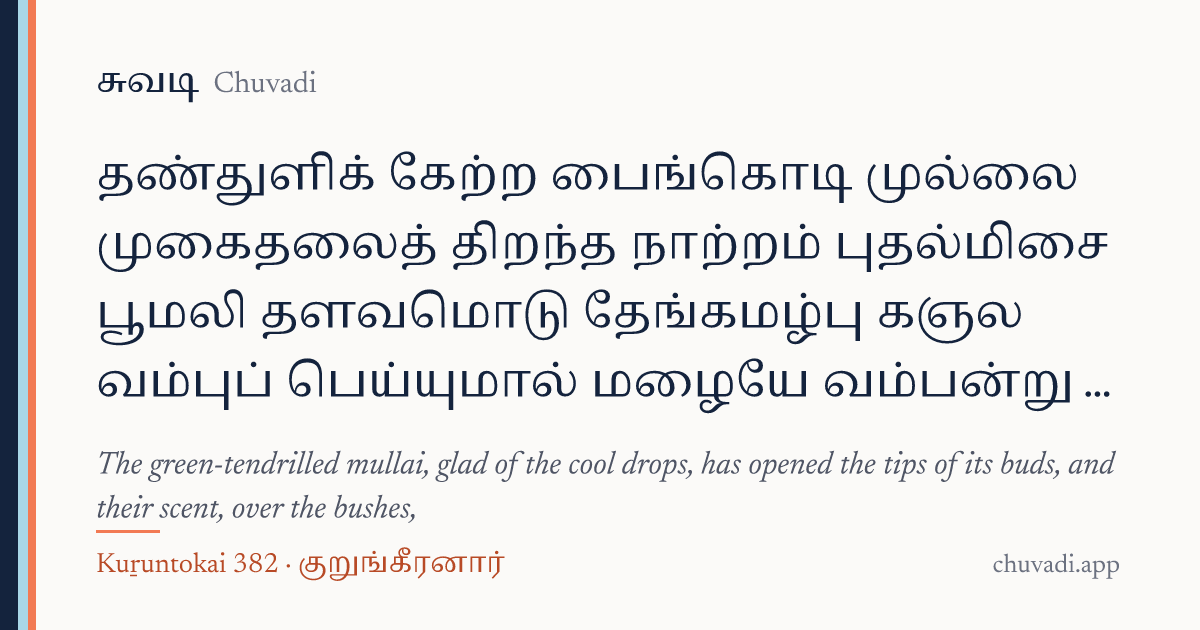

குறுந்தொகை 382
பாடல் · The poem
Tap a word to see where else it occurs.
பொருள் · Meaning in TamilAI
குளிர்ந்த மழைத்துளிகளை ஏற்று மகிழ்ந்த பசுமையான முல்லைக்கொடி தன் மொட்டுகளின் நுனிகளைத் திறந்துவிட்டது. அதன் மணம் புதர்களின்மேல், பூக்கள் நிறைந்த தளவக் கொடியோடு சேர்ந்து இனிமையாகக் கமழ்ந்து நிறைகிறது. மேகம் பருவம் தவறிய புதிய மழையைப் பெய்கிறது போலும். இது பருவம் தவறிய மழை அல்லாமல், உண்மையான கார்ப்பருவமாக இருந்தால், நம் காதலர் வராமல் இருப்பாரோ?
முல்லைத் திணை; கார்காலத்தில் மீள்வதாகச் சொன்ன தலைவன் வராததால் வருந்தும் தலைவியைத் தோழி தேற்றுவது. மழை பெய்து முல்லையும் தளவமும் பூத்திருந்தும் அவன் வரவில்லை; ஆகவே இது உண்மையான கார்காலம் அன்று, பருவம் தவறிய ‘வம்ப மழை’ என்று சொல்லி, தலைவனை ஐயுறாமல் பருவத்தையே ஐயுறுகிறாள். இந்த நயமான வாதம் முல்லைப் பாடல்களில் பல இடங்களில் வருகிறது.
ஆங்கிலம் · English translationAI
Translation
- The green-tendrilled mullai, glad of the cool drops,
- has opened the tips of its buds, and their scent, over the bushes,
- crowds sweet with the flower-laden taḷavam;
- the cloud pours down a stray, untimely rain; if it were not untimely,
- if this were truly the season of the rains,
- would he not have come, our beloved?
What the poem says
Kuṟuṅkīraṉār gives these words to the friend, who is comforting the heroine. The husband promised to return when the rains came. Now it is raining, the mullai (wild jasmine) and the taḷavam are in flower, and still he has not come.
The friend's argument is gentle sophistry. This must be a stray, untimely shower (vampu), not the real monsoon, because if it were the true season, he would certainly have come. Rather than doubting the hero, she doubts the weather. This argument appears in several mullai poems, the poetry of patient waiting.
The flowers tell a different story: the land itself has decided that the season has come. The reader sees what the friend will not quite say. The speaker could also be the heroine trying to persuade herself, but the anthology gives the poem to the friend.