



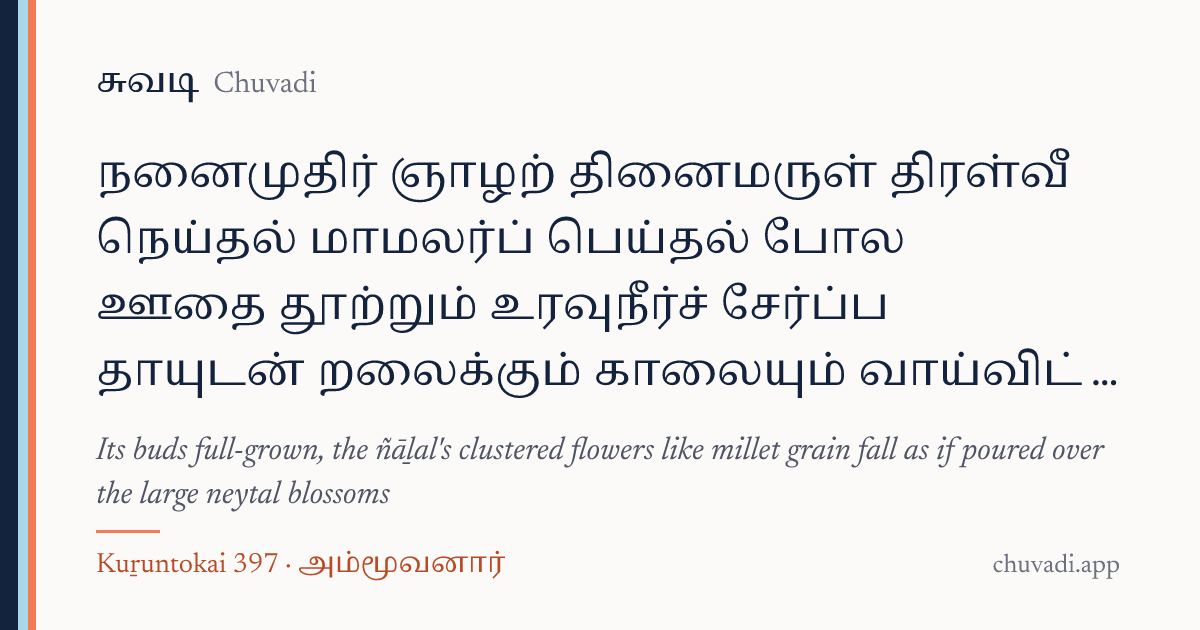

குறுந்தொகை 397
பாடல் · The poem
Tap a word to see where else it occurs.
பொருள் · Meaning in TamilAI
முற்றிய மொட்டுகள் மலர்ந்த ஞாழல் மரத்தின், தினை போன்ற திரண்ட சிறிய பூக்களை, நெய்தல் மலர்களின்மேல் கொட்டியதுபோல வாடைக்காற்று தூவும், வலிமையான கடலை உடைய சேர்ப்பனே! தாய் சினந்து அடிக்கும்போதும் வாய்விட்டு ‘அம்மா’ என்று அழும் குழந்தையைப் போல, நீ துன்பம் செய்தாலும், இனிதாக அருள் செய்தாலும், என் தோழி உன் காவலுக்கு உரியவளே. தான் படும் துயரை நீக்குபவர் வேறு யாரும் அவளுக்கு இல்லை.
நெய்தல் திணை; தோழி தலைவனிடம் தலைவிக்காக வேண்டுவது. அடிக்கும் தாயிடமே அழுது அடைக்கலம் தேடும் குழந்தை என்ற உவமை, துன்பம் தருபவனே அவள் ஒரே புகலிடம் என்பதை நெஞ்சைத் தொடும்படி சொல்கிறது. காற்று ஞாழல் பூக்களை நெய்தல் மலர்களின்மேல் தூவுவது, தலைவன் தலைவிக்கு அன்பைப் பொழிய வேண்டும் என்பதைக் குறிப்பாகக் காட்டலாம்.
ஆங்கிலம் · English translationAI
Translation
- Its buds full-grown, the ñāḻal's clustered flowers like millet grain
- fall as if poured over the large neytal blossoms
- when the north wind scatters them — lord of the shore of mighty waters!
- Even when its mother beats it in anger, opening its mouth
- like a little child that cries out 'mother!',
- whether you do her harm or treat her with sweet kindness,
- my friend belongs within your keeping;
- she has no one else to take away the sorrow she suffers.
What the poem says
The friend speaks to the hero of the seashore (neytal) and pleads for the heroine. Ammūvaṉār, the poet of the shore, frames the plea with one of the most moving similes in the anthology.
A small child, beaten by its mother, still cries out to her, because she is the only refuge it has. The heroine is the same. Whether the hero is cruel or kind, she is his and has no one else to turn to. Her pain can be healed only by the one who caused it.
The opening images belong to the shore. The north wind (ūtai) shakes the tiny, millet-like flowers of the ñāḻal tree onto the large neytal blossoms below. This may suggest the hero's power to shower either kindness or harm onto the girl. The poem is both a reproach and an act of complete trust.