



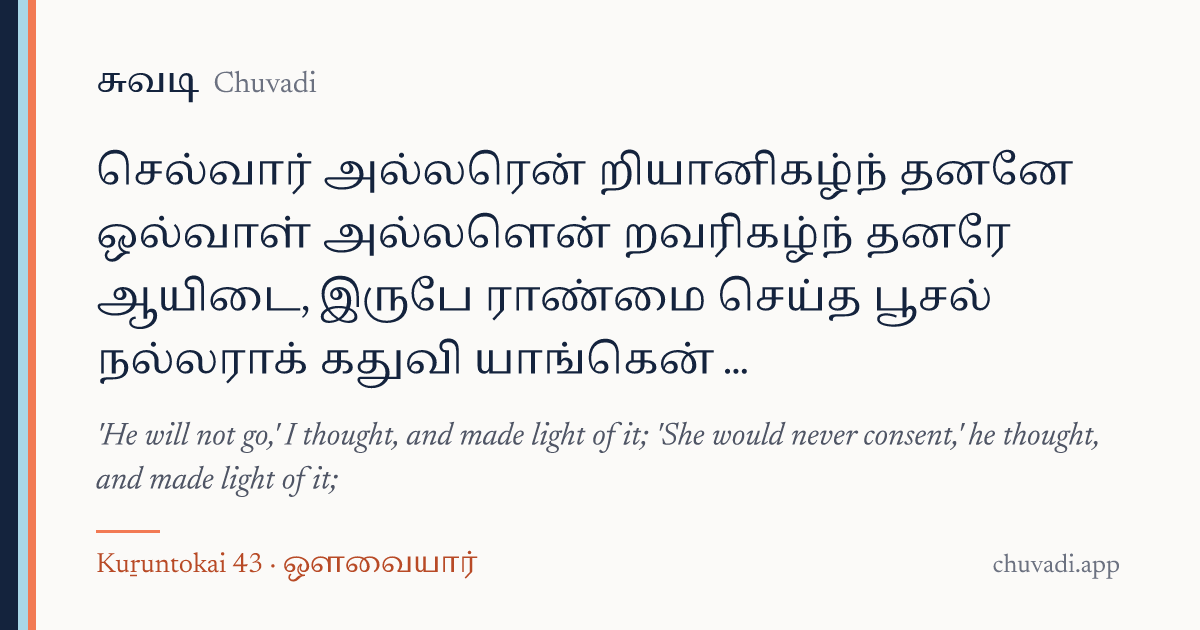

குறுந்தொகை 43
பாடல் · The poem
Tap a word to see where else it occurs.
பொருள் · Meaning in TamilAI
"அவர் பிரிந்து செல்லமாட்டார்" என்று நான் அலட்சியமாக இருந்துவிட்டேன். "இவள் பிரிவுக்கு இணங்கமாட்டாள்" என்று அவரும் அலட்சியமாக இருந்துவிட்டார். இப்படி எங்கள் இருவரின் பெரிய வீம்பும் இடையே ஏற்படுத்திய போராட்டத்தால், நல்ல பாம்பு கவ்வியதுபோல, துயரம் நிறைந்த என் நெஞ்சு சுழன்று துடிக்கிறது.
பாலைத் திணை; தலைவி கூற்று. தலைவன் பிரிந்த பின், நடந்த தவற்றை அவள் தெளிவாக உணர்கிறாள்: அவர் போகமாட்டார் என்று நம்பி அவள் தடுக்கவில்லை; அவள் ஒப்பமாட்டாள் என்று எண்ணி அவர் சொல்லிக்கொள்ளாமலே சென்றார். முதல் இரண்டு அடிகளும் ஒன்றையொன்று எதிரொலிப்பது அந்தப் புரிதலின்மையைக் காட்டுகிறது. நச்சுப்பாம்பு கடித்ததுபோல் துடிக்கும் நெஞ்சு என்ற உவமை அவள் வேதனையின் கடுமையை உணர்த்துகிறது.
ஆங்கிலம் · English translationAI
Translation
- 'He will not go,' I thought, and made light of it;
- 'She would never consent,' he thought, and made light of it;
- between us, the quarrel that our two great prides have made —
- like a good cobra striking, my
- troubled heart writhes in torment.
What the poem says
The heroine speaks in the wasteland (pālai), after her lover has left. She sees exactly what went wrong. She was sure he would never go, so she said nothing to stop him. He was sure she would never agree to his going, so he did not ask, and simply left. Each was too proud to speak first.
The two opening lines mirror each other almost word for word, which makes the misunderstanding plain. The 'two great prides' (iru pēr āṇmai) are both of theirs.
The final image is violent. Her heart writhes as though bitten by a cobra (nal arā, literally 'good snake', a common euphemism for the cobra). The word āṇmai, usually 'manliness' or 'strength', is here applied to both partners, and 'pride' is an interpretation. The poem is attributed to Auvaiyār.