



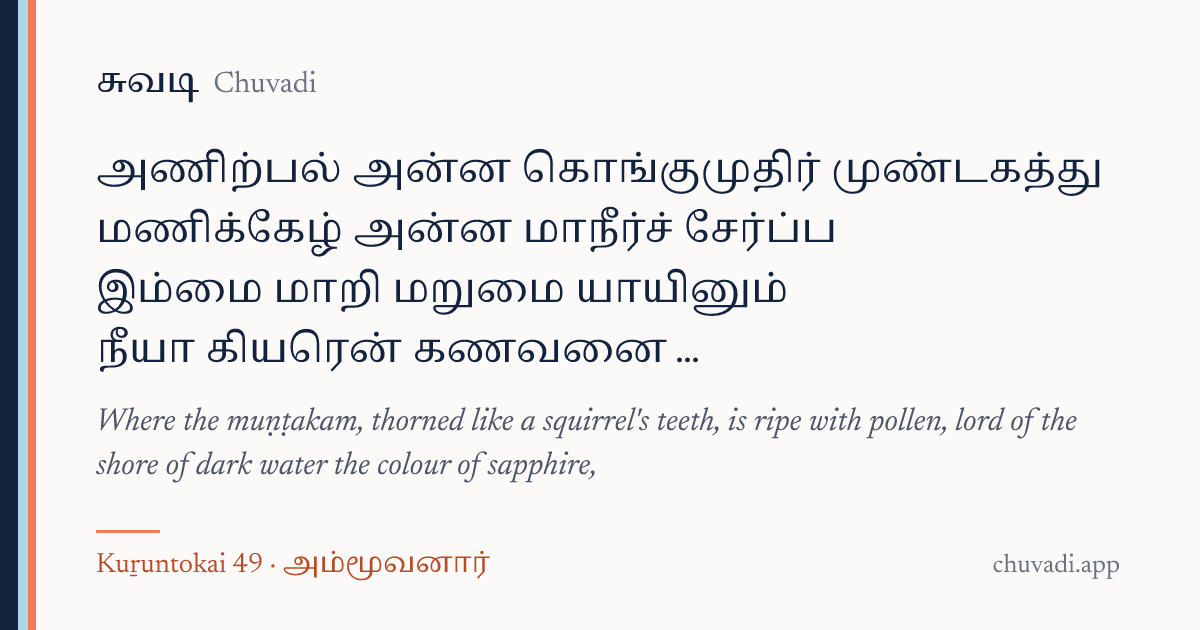

குறுந்தொகை 49
பாடல் · The poem
Tap a word to see where else it occurs.
பொருள் · Meaning in TamilAI
அணிலின் பல்லைப் போன்ற முள்ளையுடைய, பூந்தாது முற்றிய முண்டகச் செடிகள் வளரும், நீலமணியின் நிறம்போன்ற கரிய கடல்நீரையுடைய கடற்கரைத் தலைவனே! இந்தப் பிறவி முடிந்து மறுபிறவி வந்தாலும், நீயே என் கணவனாக இருப்பாயாக; நானே உன் நெஞ்சுக்கு உகந்தவளாக இருப்பேனாக.
நெய்தல் திணை; தலைவி தலைவனிடம் கூறியது. பரத்தமையால் பிரிந்து மீண்டு வந்த தலைவனுக்கு அவள் இவ்வாறு உறுதிமொழி கூறுவதாக மரபு கொள்ளும். இது முழுமையான அன்பின் வெளிப்பாடாகவும், "பிறரல்லர், நானே உன் நெஞ்சில் இருக்க வேண்டும்" என்ற மென்மையான கடிந்துரையாகவும் படிக்கக்கூடியது. முண்டகம் கடற்கரையில் வளரும் முட்செடி.
ஆங்கிலம் · English translationAI
Translation
- Where the muṇṭakam, thorned like a squirrel's teeth, is ripe with pollen,
- lord of the shore of dark water the colour of sapphire,
- even when this life is over and the next one comes,
- may you be my husband,
- and may I be the one who is close to your heart.
What the poem says
The heroine speaks to her husband, the man of the seashore, in the neytal landscape. The commentarial tradition connects the poem with a quarrel: he has been unfaithful and is asking to be taken back, and she answers with this vow. Not only in this life but in the next, may you be my husband and may I be the one your heart loves.
The vow can be read as pure devotion. It can also be read as a quiet rebuke, since it implies that she, not the other women, should hold his heart. The poem leaves both readings possible.
The muṇṭakam is a thorny shrub of the seashore whose curved spines are compared to a squirrel's teeth. The shore's dark water is likened to the colour of a sapphire (maṇi). The idea of a next birth (maṟumai) shows that ideas of rebirth were already part of the poetic world of the anthology. The poet is Ammūvaṉār, known for his seashore poems.