



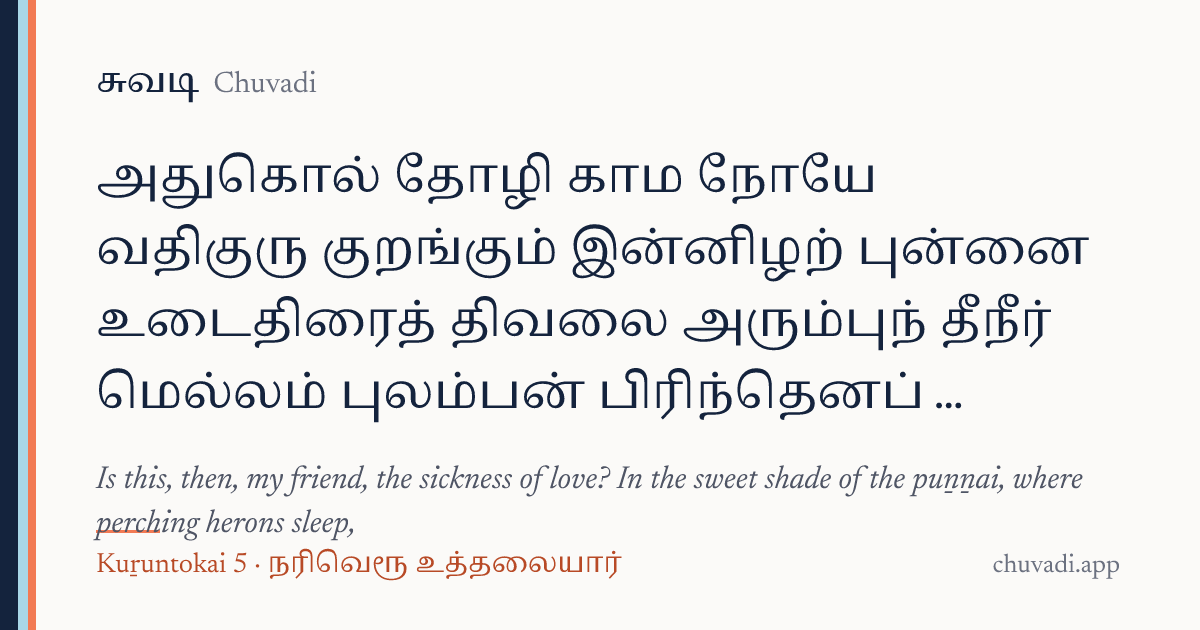

குறுந்தொகை 5
பாடல் · The poem
Tap a word to see where else it occurs.
பொருள் · Meaning in TamilAI
தோழி, காமநோய் என்பது இதுதானோ? தங்கியிருக்கும் நாரைகள் உறங்கும் இனிய நிழலையுடைய புன்னை மரத்தின் மேல், உடைந்து சிதறும் அலைகளின் நீர்த்துளிகள் அரும்புகளைப் போலத் தோன்றும், இனிய நீரையுடைய மென்மையான கடற்கரை நாட்டின் தலைவன் பிரிந்து சென்றான். அதனால், பல இதழ்களையுடைய மலரைப் போன்ற, மையுண்ட என் கண்கள் உறக்கம் கொள்ள மறுக்கின்றன.
நெய்தல் திணை; தலைவி தோழியிடம் கூறியது. தலைவன் பிரிந்ததால் உறக்கம் இழந்த அவள், இதுதான் காமநோயோ என்று வியப்போடு கேட்கிறாள். அவனுடைய கடற்கரையில் நாரைகள் அமைதியாக உறங்குகின்றன; அவளோ உறங்க முடியவில்லை — இந்த மாறுபாடே பாடலின் உயிர். நீர்த்துளிகள் புன்னையின் மேல் அரும்புவதாகக் கொள்வதா, கரையருகே காற்றில் தோன்றுவதாகக் கொள்வதா என்பது உறுதியாகத் தெரியவில்லை.
ஆங்கிலம் · English translationAI
Translation
- Is this, then, my friend, the sickness of love?
- In the sweet shade of the puṉṉai, where perching herons sleep,
- spray from the breaking waves sets out like buds, in that land of sweet water —
- since the gentle man of the seashore went away,
- my kohl-lined eyes, like many-petalled flowers, cannot sleep.
What the poem says
The heroine speaks to her friend. Her lover, the man of the seashore (neytal, the landscape of pining), has left her, and she cannot sleep. She asks, almost in surprise, whether this is what people mean by love-sickness.
The middle lines describe his shore. Herons sleep peacefully in the shade of the puṉṉai tree, and drops of spray thrown up by the waves settle on it like new buds. The calm sleep of the birds in his land is set against her own sleeplessness.
Line 3 is compressed. The spray may 'bud' on the puṉṉai itself or simply bead the air near the shore; the sense is clear either way. 'Sweet water' describes the shore's freshwater pools, and the phrase can also suggest how pleasant the place is.