




குறுந்தொகை 51
பாடல் · The poem
Tap a word to see where else it occurs.
பொருள் · Meaning in TamilAI
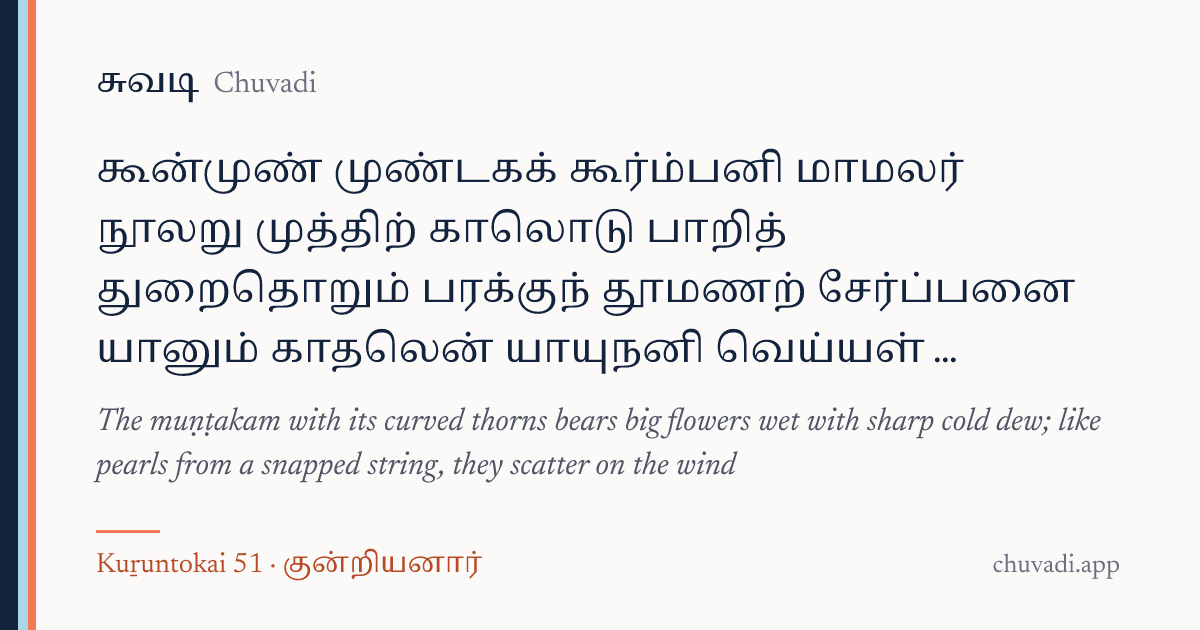
வளைந்த முள்ளையுடைய முண்டகச் செடியின் கூரிய பனி படிந்த பெரிய மலர்கள், நூல் அறுந்த முத்துமாலையின் முத்துகளைப் போலக் காற்றில் சிதறி, ஒவ்வொரு துறையிலும் பரவிக் கிடக்கும் தூய மணலையுடைய கடற்கரைத் தலைவனை நானும் விரும்புகிறேன்; இவளுடைய தாயும் மிகவும் விரும்புகிறாள்; தந்தையும் இவளை அவனுக்கே மணம் செய்து கொடுக்க விரும்புவான். அலர் பேசும் இவ்வூரும் இவளை அவனோடு சேர்த்தே பேசுகிறது.
நெய்தல் திணை; தோழி கூற்று, களவில் வரும் தலைவன் கேட்கும்படி சொல்வதாகக் கொள்ளலாம். மணத்துக்குத் தடை எதுவும் இல்லை, அவன் பெண் கேட்டு வருவது ஒன்றே மீதம் என்பது அவள் குறிப்பு. அறுந்த மாலையின் முத்துகள் போலச் சிதறிய மலர்கள், ஊரெங்கும் பரவும் அலரைக் குறிப்பதாகக் கொள்ளலாம்.
ஆங்கிலம் · English translationAI
Translation
- The muṇṭakam with its curved thorns bears big flowers wet with sharp cold dew;
- like pearls from a snapped string, they scatter on the wind
- and spread over every landing — the lord of that shore of clean sand:
- I too love him; my mother wants him very much;
- my father too would wish to give her to him;
- and the gossiping town already speaks of her as his.
What the poem says
The heroine's friend speaks in the seashore landscape (neytal), most likely within the hearing of the hero, who has been meeting the heroine in secret. Her message is that there is no obstacle left: she herself approves of him, the mother is fond of him, the father would be willing to give the girl, and even the town's gossip already pairs the two. All that remains is for him to ask for her hand.
The opening image of muṇṭakam blossoms blown loose like pearls from a broken string and strewn over every landing place can be read as a hint at the gossip itself, which has scattered news of the affair everywhere along the shore. The friend turns that gossip, normally a threat in these poems, into one more argument for a quick marriage.
Line 4 is spoken as "I love him" in the friend's own voice. She stands in for the heroine, as friends often do in this convention, so the line is less odd in Tamil than it may sound in English.