



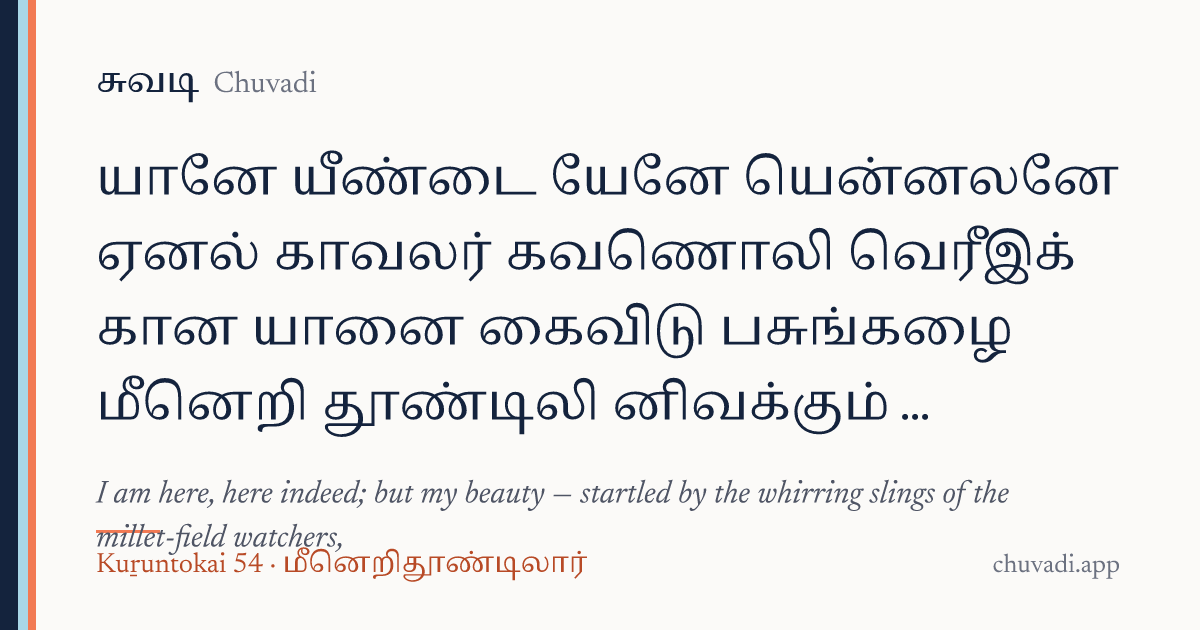

குறுந்தொகை 54
பாடல் · The poem
Tap a word to see where else it occurs.
பொருள் · Meaning in TamilAI
நான் இங்கேதான் இருக்கிறேன்; ஆனால் என் அழகோ, அங்கே காட்டுநாட்டுத் தலைவனோடு தங்கிவிட்டது. தினைப்புனம் காப்பவர்களின் கவண் ஒலிக்கு அஞ்சி, காட்டு யானை தன் துதிக்கையிலிருந்து விட்டுவிட்ட பச்சை மூங்கில், மீனைத் தூக்கி எறியும் தூண்டில் கோல்போல விசையோடு மேலெழும் காட்டுநாடு அவனுடையது.
குறிஞ்சித் திணை; தலைவி கூற்று, தோழியிடம் கூறியதாகக் கொள்ளலாம். உடல் இங்கே இருந்தாலும், காதலால் வந்த அவள் பொலிவு அவனிடமே போய்விட்டது. யானை விட்ட மூங்கில் சட்டென்று நிமிர்வதுபோல, அவள் நலமும் சட்டென்று அவனிடம் சென்றுவிட்டது என்பது உள்ளுறை. புலவர் பெயர் இப்பாடலின் தூண்டில் உவமையிலிருந்து வந்தது.
ஆங்கிலம் · English translationAI
Translation
- I am here, here indeed; but my beauty —
- startled by the whirring slings of the millet-field watchers,
- the green bamboo that a forest elephant lets go from its trunk
- springs up like a fishing rod that flings out a fish —
- has stayed there, with the man of the forest country.
What the poem says
The heroine speaks, probably to her friend, in the hill country (kuṟiñci). Her body is here at home, but her beauty, the bloom of a girl in love, has left her and remained with the hero in his forest land.
The middle lines carry the hidden comparison (uḷḷuṟai). An elephant has pulled down a green bamboo stem to feed, then, frightened by the slingshots of the millet guards, lets it go; the stem springs back upright with the sudden snap of a rod jerking a fish from water. The heroine's beauty has gone back to the hero just as abruptly. The noise that frightens the elephant may also hint at the watchfulness of her family, which has cut short the lovers' meetings.
The poet's name, Mīṉeṟitūṇṭilār, means "the poet of the fish-flinging rod". As with several Kuṟuntokai poets, the real name was lost and the name was taken from the poem's memorable image.