



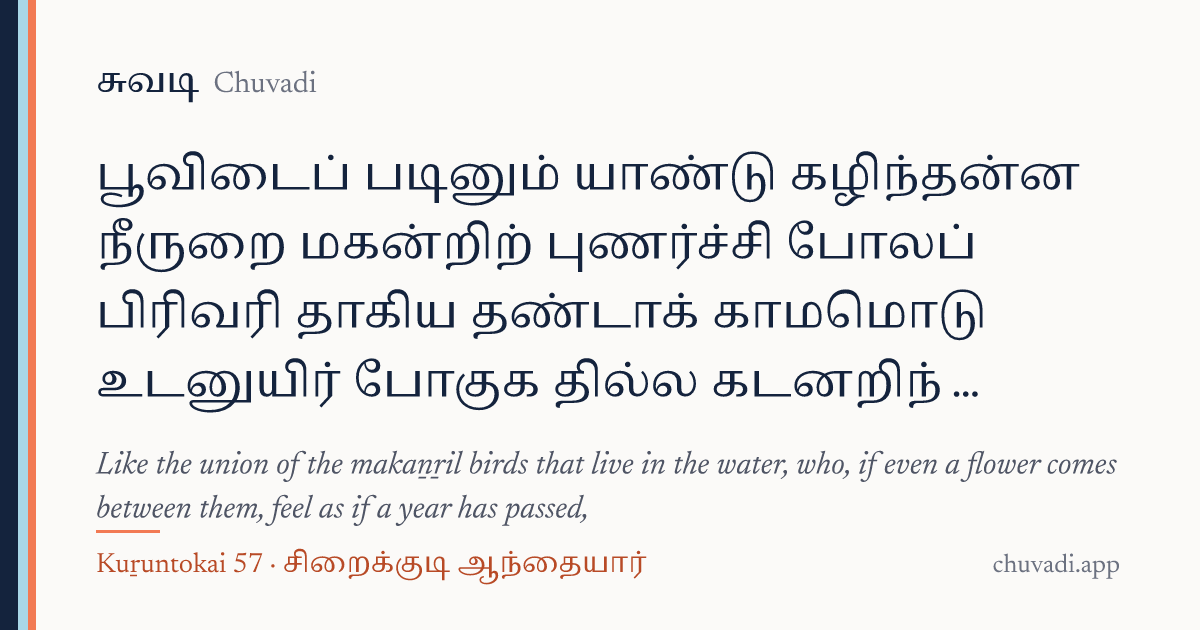

குறுந்தொகை 57
பாடல் · The poem
Tap a word to see where else it occurs.
பொருள் · Meaning in TamilAI
நீரில் வாழும் மகன்றில் பறவைகள், தம்மிடையே ஒரு பூ குறுக்கிட்டாலும் ஓர் ஆண்டு கழிந்ததுபோல வருந்தும்; அவற்றின் இணைபோல, பிரிவைத் தாங்க முடியாத, குறையாத காதலோடு நாம் இருவரும் ஒன்றாகவே உயிர்விடுவோமாக! இருவராக வாழ்ந்த இவ்வுலகில், ஒருவர் மட்டும் தனித்து வாழும் இழிநிலையிலிருந்து நாம் தப்புவதற்காக.
நெய்தல் திணை; தலைவி தோழியிடம் கூறியது. தலைவன் பிரிந்திருக்கும் அல்லது பிரியவிருக்கும் நிலையில், சாவு வந்தால் இருவரையும் ஒருசேரக் கொண்டு போகட்டும் என்று விரும்புகிறாள். மகன்றில் துணையைப் பிரியாத பறவையாகப் போற்றப்படுகிறது. "கடனறிந்து" என்ற தொடரின் பொருள் தெளிவாக இல்லை; உறவின் கடமையை அறிந்து என்று கொள்ளலாம்.
ஆங்கிலம் · English translationAI
Translation
- Like the union of the makaṉṟil birds that live in the water,
- who, if even a flower comes between them, feel as if a year has passed,
- with an unceasing desire that cannot bear parting,
- may our lives go out together — so that, having known our bond,
- in this world where we have been two,
- we may escape the misery of being one alone.
What the poem says
A wish to die together is the heart of this neytal (seashore) poem, spoken by the heroine to her friend. The hero is away, or about to go, and the thought of being left behind makes her wish that when death comes it should take them both at once.
The makaṉṟil is a water bird celebrated in Tamil poetry for never leaving its mate: so close are such pairs that even a flower drifting between them feels like a separation of a year. The heroine wants a love like that, where neither partner has to survive alone. The last three lines contrast the world in which they have been "two" with the wretchedness of being "one", the one left behind.
The exact identity of the makaṉṟil is uncertain; it is often taken to be a kind of duck or other paired water bird. The phrase translated "having known our bond" (kaṭaṉ aṟintu) can also mean "knowing what is fitting" or "knowing our duty", and the grammar of the last lines is compressed.