



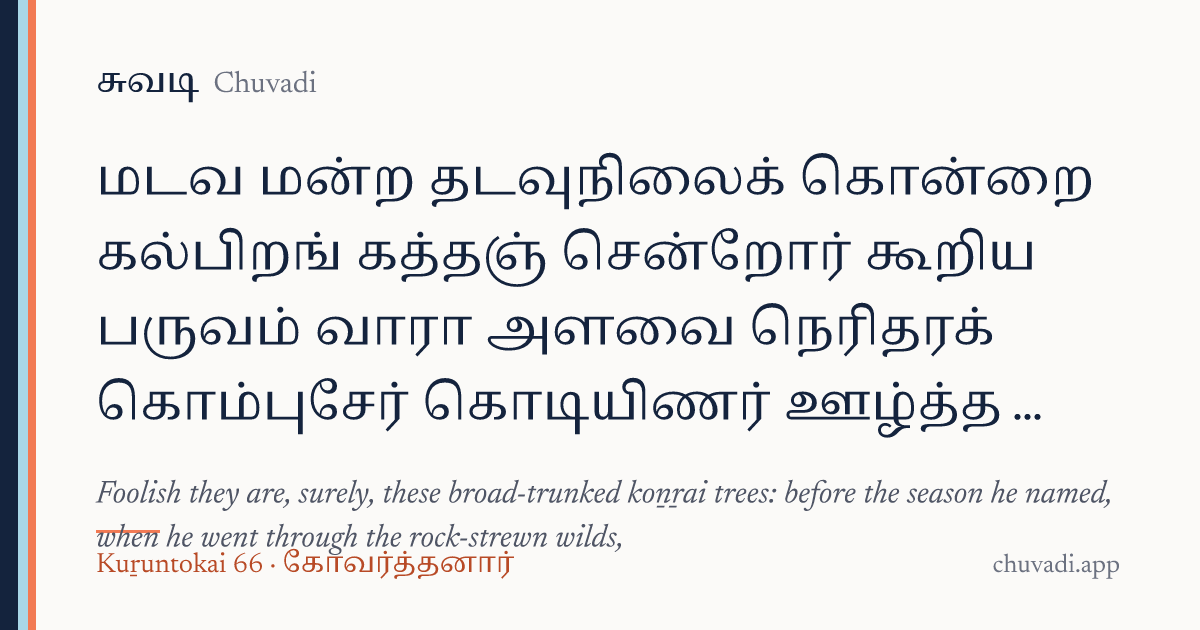

குறுந்தொகை 66
பாடல் · The poem
Tap a word to see where else it occurs.
பொருள் · Meaning in TamilAI
அகன்ற அடிமரத்தையுடைய இந்தக் கொன்றை மரங்கள் உண்மையாகவே அறியாமை உடையவை! பாறைகள் நிறைந்த பாலைவழியில் சென்றவர் குறித்துச் சொன்ன பருவம் வருவதற்கு முன்பே, பருவமல்லாத காலத்தில் பெய்த மழையைக் கார்காலம் என்று எண்ணி, கிளைகள்தோறும் நெருக்கமாக நீண்ட பூங்கொத்துகளை மலர்த்திவிட்டனவே.
முல்லைத் திணை; தோழி தலைவியிடம் கூறியது. கொன்றை பூத்ததைக் கண்டு, கார்காலம் வந்தும் தலைவன் வரவில்லையே என்று கலங்கும் தலைவியைத் தோழி தேற்றுகிறாள்: மரங்கள்தான் பருவம் தவறிய மழையைக் கண்டு ஏமாந்துவிட்டன, அவர் சொன்ன பருவம் இன்னும் வரவில்லை. இயற்கையையே பிழை என்று சொல்லித் தேற்ற வேண்டியிருப்பதில் அந்த ஆறுதலின் வலுவின்மையும் தெரிகிறது.
ஆங்கிலம் · English translationAI
Translation
- Foolish they are, surely, these broad-trunked koṉṟai trees:
- before the season he named, when he went through the rock-strewn wilds,
- has come, crowding thickly,
- they have let their long hanging clusters burst out along the branches,
- taking this stray rain to be the true monsoon.
What the poem says
The friend speaks to the heroine in the mullai landscape. The hero promised to be back by the rainy season, and now the koṉṟai trees have burst into their long golden flower-chains, the sure sign that the rains have come. The heroine is in despair. The friend answers that the trees are simply foolish: they have mistaken an untimely shower for the monsoon, and the season he named has not yet arrived.
The reassurance is gentle and not quite convincing, and the poem's charm lies there. The friend has to call nature itself mistaken to keep the heroine's hope alive. The koṉṟai (Indian laburnum) is a standard sign of the rains in Tamil poetry, so her argument goes against what everyone would expect.
The word taṭavu in line 1 can mean large, broad or curved; it describes the trees' trunks or their spreading growth.