



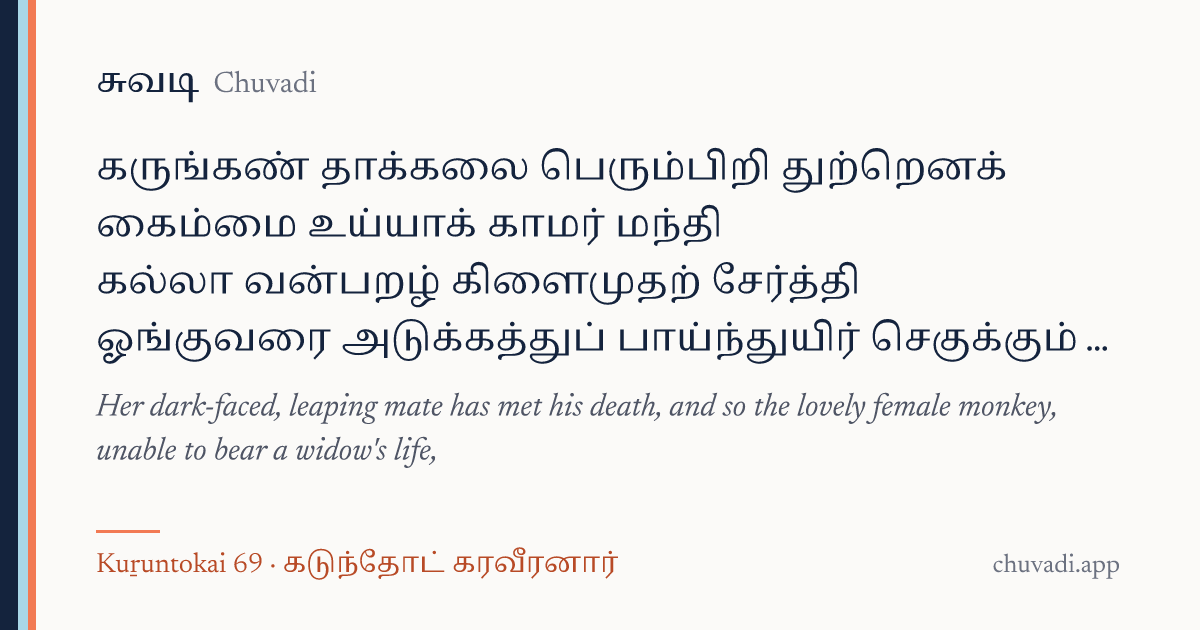

குறுந்தொகை 69
பாடல் · The poem
Tap a word to see where else it occurs.
பொருள் · Meaning in TamilAI
கரிய முகத்தையுடைய, தாவிச் செல்லும் தன் ஆண்குரங்கு இறந்துவிட்டதால், கைம்மை வாழ்வைத் தாங்க முடியாத அழகிய பெண்குரங்கு, இன்னும் மரம் தாவக் கற்றுக்கொள்ளாத தன் குட்டியைச் சுற்றத்தாரிடம் ஒப்படைத்துவிட்டு, உயர்ந்த மலையுச்சியிலிருந்து குதித்து உயிர்விடும் மலைச்சாரல் நாட்டை உடையவனே! நள்ளிரவில் வராதே; நீ வாழ்வாயாக! நீ அப்படி வருவதால் வருந்துவது நாங்கள்தான்.
குறிஞ்சித் திணை; தோழி தலைவனிடம் கூறியது. ஆபத்தான மலைவழிகளில் இரவில் களவுக்குறிக்கு வரும் தலைவனை, இனி அப்படி வர வேண்டாம், விரைவில் மணம் செய்துகொள் என்று வேண்டுகிறாள். துணையை இழந்த பெண்குரங்கு உயிர்விடுவது இறைச்சி: வழியில் அவனுக்கு ஏதேனும் நேர்ந்தால், தலைவியும் உயிர் வாழமாட்டாள் என்பது குறிப்பு.
ஆங்கிலம் · English translationAI
Translation
- Her dark-faced, leaping mate has met his death, and so
- the lovely female monkey, unable to bear a widow's life,
- leaves her young one, still untaught, in the care of her kin,
- and leaping from the high ridge of the mountain, ends her life —
- man of such slopes, in the middle of the night
- do not come, bless you; it is we who suffer.
What the poem says
The friend speaks to the hero in the hill country (kuṟiñci). He has been coming to meet the heroine at night, crossing dangerous mountain paths, and the friend begs him to stop. The friend wants him to stop risking these night journeys and to marry the heroine instead.
The image of the monkey is one of the most often remembered in the collection. When her mate dies, the female monkey cannot face widowhood; she hands her infant over to her troop and throws herself from a cliff. This is the iṟaicci, the suggested meaning: if anything happens to you on these paths, the heroine will not survive you either.
The scene reflects the severe ideal of widowhood found in parts of Sangam literature, in which a wife might choose death over life without her husband. It is shown here among animals, not as a rule for people, but the parallel is unmistakable.