



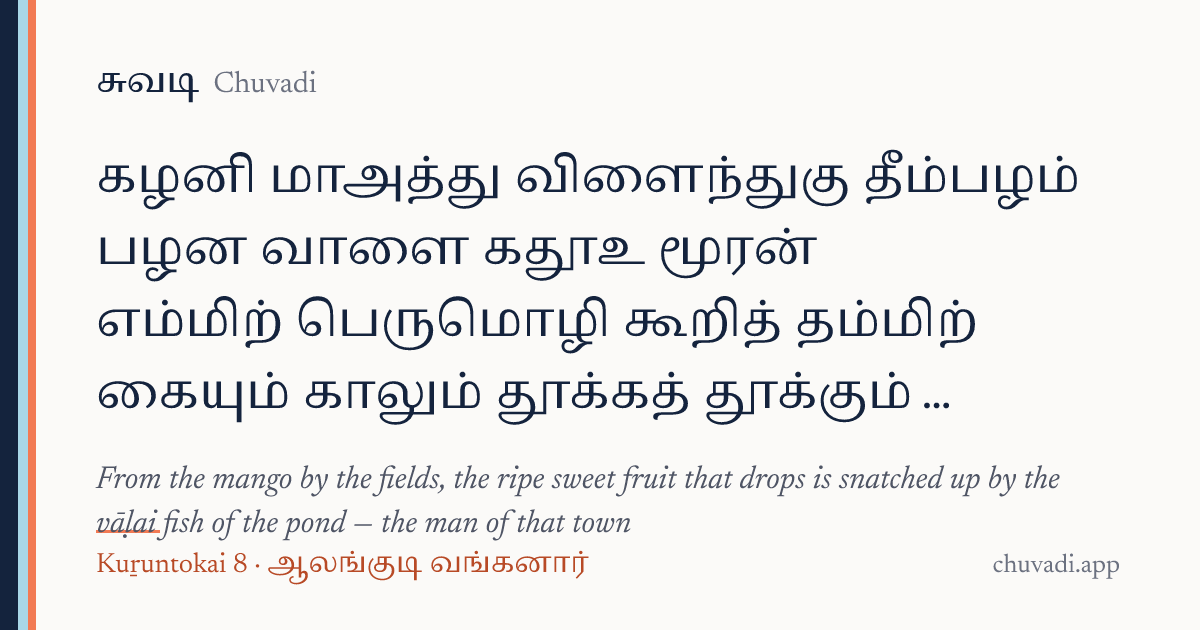

குறுந்தொகை 8
பாடல் · The poem
Tap a word to see where else it occurs.
பொருள் · Meaning in TamilAI
வயலருகே நிற்கும் மாமரத்திலிருந்து பழுத்து உதிரும் இனிய பழத்தை, பொய்கையில் வாழும் வாளைமீன் கவ்விக்கொள்ளும் ஊரைச் சேர்ந்தவன் அவன். எம் வீட்டில் இருக்கும்போது பெரிய பெரிய சொற்களைப் பேசுகிறான். தன் வீட்டிலோ, முன்னே நிற்பவர் கையையும் காலையும் தூக்கும்போது தானும் அப்படியே தூக்கும் கண்ணாடிப் பாவையைப் போல, தன் மகனின் தாய் விரும்புவதையெல்லாம் செய்கிறான்.
மருதத் திணை; காதற் பரத்தை கூற்று. தலைவனால் விரும்பப்பட்ட பரத்தை, அவன் தன் மனைவிக்கு அடங்கி நடப்பதை எள்ளி நகையாடுகிறாள். தானே உதிர்ந்து விழும் பழத்தை முயற்சியின்றி வாளைமீன் பற்றிக்கொள்வதுபோல, தலைவனும் உழைப்பின்றி இன்பத்தை நுகர்கிறான் என்பது உள்ளுறை. மனைவியைப் "புதல்வன் தாய்" என்று சுட்டுவது, அவனைக் கட்டியிருக்கும் குடும்பத்தை நினைவூட்டும் குத்தலான சொல்.
ஆங்கிலம் · English translationAI
Translation
- From the mango by the fields, the ripe sweet fruit that drops
- is snatched up by the vāḷai fish of the pond — the man of that town
- talks big in our house, but in his own house,
- as hands and feet are raised, it raises them too —
- like the image in a mirror,
- he does whatever pleases the mother of his son.
What the poem says
The speaker is the hero's beloved courtesan (kātaṟ parattai), in the farming country (marutam). This is the landscape of the husband's infidelity and the wife's sulking. She mocks him. In her house he boasts and makes grand promises, but at home with his wife he copies her every wish, like a reflection in a mirror that lifts its arms and legs exactly when you lift yours.
The opening image is an implied comparison (uḷḷuṟai). A ripe mango falls by itself from a tree beside the fields, and the vāḷai fish in the pond simply opens its mouth and takes it. So too the man takes his pleasures without any effort of his own.
'The mother of his son' is a pointed way of naming the wife. It reminds him of the household that really holds him.