



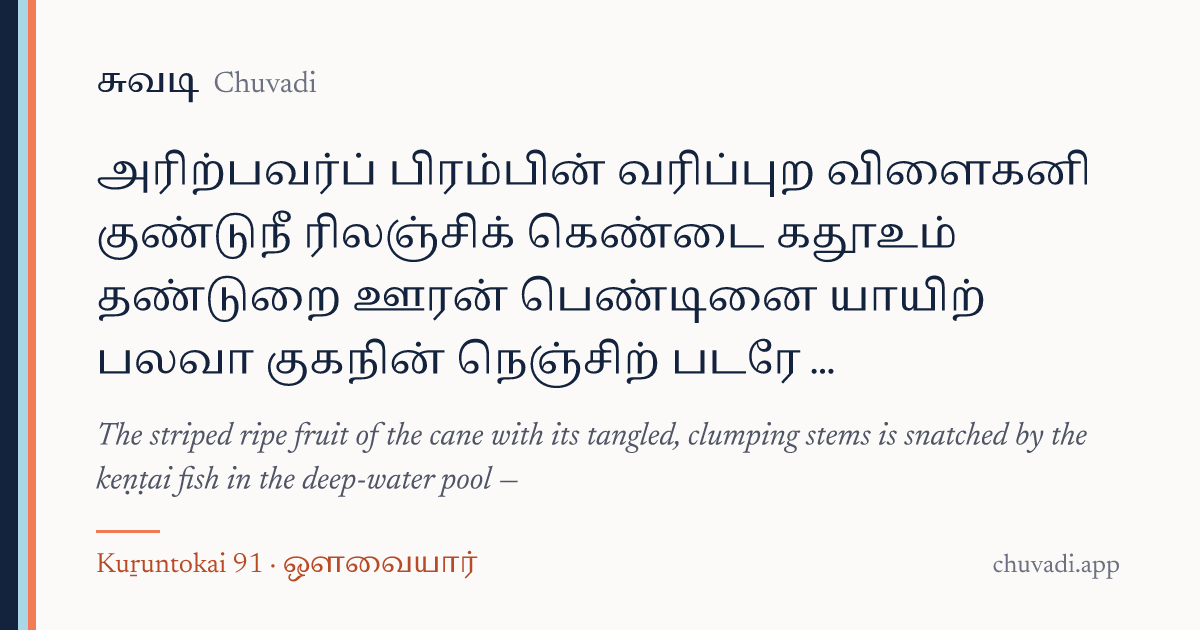

குறுந்தொகை 91
பாடல் · The poem
Tap a word to see where else it occurs.
பொருள் · Meaning in TamilAI
பின்னிப் பிணைந்த தண்டுகளையுடைய பிரம்பின் வரிகளோடு கூடிய முற்றிய பழத்தை, ஆழமான நீரையுடைய மடுவில் கெண்டைமீன் கவ்விக்கொள்ளும் குளிர்ந்த துறையுடைய ஊரனுக்கு நீ பெண்டாக ஆனால், உன் நெஞ்சில் துயரங்கள் பலவாகட்டும்! ஓயாமல் மழைபோல் வழங்கும் வள்ளன்மை மிக்க கையையும், கடுமையான ஆண்யானைகளையும், நெடிய தேர்களையும் உடைய அஞ்சியின் போர்முனையில் உள்ள இரவூரைப் போல, நீ உறங்கும் நாள்கள் சிலவாகட்டும்!
மருதத் திணை; தலைவி கூற்று. இது சாபம்போல ஒலித்தாலும், கசப்பான முன்னறிவிப்பே: இவனோடு உறவு கொள்ளும் எவளும் துயரத்தையும் உறக்கமில்லாத இரவுகளையுமே அடைவாள். நீரில் விழுந்த பழத்தை அருகிலிருக்கும் மீன் கவ்விக்கொள்வதுபோல, தலைவனும் அருகிலுள்ள எவளாலும் எளிதில் பற்றப்படுகிறான் என்பது உள்ளுறை. அஞ்சி என்பது அதியமான் நெடுமான் அஞ்சி; இரவூர் அவன் போர்முனையில் இருந்த ஊர் என்பதற்கு மேல் அதைப் பற்றி அதிகம் தெரியவில்லை.
ஆங்கிலம் · English translationAI
Translation
- The striped ripe fruit of the cane with its tangled, clumping stems
- is snatched by the keṇṭai fish in the deep-water pool —
- if you are a woman of the man of that town of cool landings,
- may the sorrows in your heart be many;
- he of the generous hand that gives like rain without ceasing,
- Añci of fierce bull elephants and tall chariots —
- like Iravūr on the deadly front of his wars,
- may the days you sleep be few.
What the poem says
The heroine speaks in the farmland setting (marutam), where the husband strays. Her words sound like a curse, but they are more a bitter prophecy. Whoever takes up with this man, she says, whether a new courtesan or anyone else who becomes "his woman", will know nothing but sorrow and sleepless nights. She may also be speaking in part to herself.
The opening image is the uḷḷuṟai. A ripe fruit falls from the cane growing over a pond and is snapped up by a fish. The hero is like that fruit, quickly seized by whoever is nearby. It will bring the one who takes him no lasting good.
The comparison in the last lines draws on war. Añci is Atiyamāṉ Neṭumāṉ Añci, the chieftain whom Auvaiyār, the poet named for this poem, praised in many Puṟanāṉūṟu poems. Iravūr was evidently a town on the front line of his campaigns, where no one could sleep in peace; nothing else is known of it.