



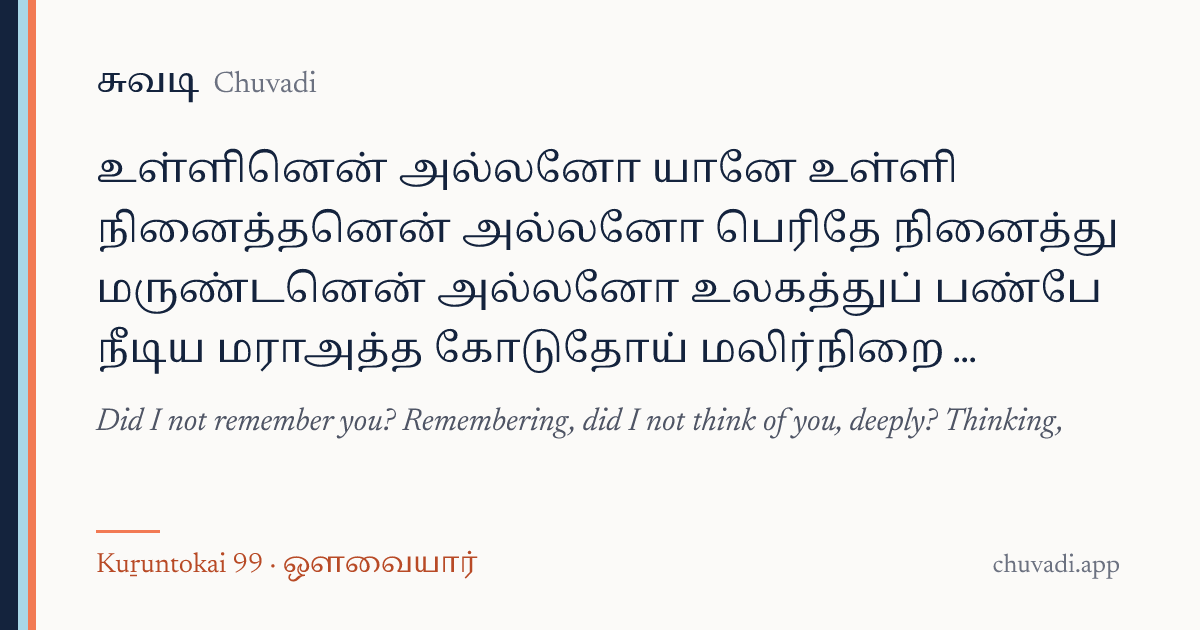

குறுந்தொகை 99
பாடல் · The poem
Tap a word to see where else it occurs.
பொருள் · Meaning in TamilAI
நான் உன்னை நினைக்கவில்லையா? நினைத்து, ஆழ்ந்து எண்ணவில்லையா? எண்ணி, மனம் மருளவில்லையா? ஆனால் உலகத்தின் இயல்பு இது: உயர்ந்த மராமரத்தின் கிளைகளைத் தொடும்படி பெருகிய வெள்ளம், பின்னர் வற்றி, கையால் இறைத்துக் குடிக்கும் அளவுக்குக் குறைந்துவிடுவதுபோல, அத்தகைய பெருங்காமமும் திரும்பி வந்து அடங்கி நிற்க வேண்டியதாயிற்று.
முல்லைத் திணை; தலைவன் கூற்று. நீண்ட பிரிவுக்குப் பின் திரும்பி வந்தவனை, தன்னை மறந்துவிட்டான் என்று தலைவியோ தோழியோ குறைகூற, அவன் விடை சொல்கிறான். ஒவ்வொரு கேள்வியும் முந்தைய கேள்வியின் இறுதிச் சொல்லை எடுத்துத் தொடங்குவது அவன் உணர்வின் தொடர்ச்சியைக் காட்டுகிறது. கடமை அழைக்கும்போது, கரைபுரண்ட வெள்ளம் வடிவதுபோலப் பெருங்காதலையும் அடக்கிக்கொள்ள வேண்டியிருந்தது என்பது அவன் விளக்கம்.
ஆங்கிலம் · English translationAI
Translation
- Did I not remember you? Remembering,
- did I not think of you, deeply? Thinking,
- was I not bewildered? But such is the way of the world:
- like a swelling flood that touched the branches of the tall marā tree
- shrinking until it can be scooped up by hand and drunk,
- so such great desire had to turn back and be held in bounds.
What the poem says
The hero speaks after his return from a long absence. The heroine, or her friend, has accused him of forgetting her. He answers with a chain of questions, each picking up the last word of the one before: did I not remember? remembering, did I not think? thinking, was I not bewildered? Of course he did.
Then he gives his reason: such is the way of the world. A man has duties that take him away, and he must master his feelings to carry them out. The flood image explains how. A river in spate rises so high it touches the branches of trees on its banks, but in time it falls until a person can scoop up its water in the hand. His overwhelming desire was likewise brought down and contained, not lost, until he could come home.
The poem is attributed to Auvaiyār. Its classification as mullai fits the return of the husband after waiting. The phrase mīṇṭu kaṭaikkoḷa in the last line is difficult; it may mean "turned back and was restrained" or "came round to its end", and the translation follows the first sense.