



நற்றிணை Invocation
பாடல் · The poem
Tap a word to see where else it occurs.
பொருள் · Meaning in TamilAI
பெரிய நிலமே அவனுடைய சிவந்த திருவடிகள்; தூய நீரையுடைய, சங்குகள் ஒலிக்கும் கடலே அவன் உடுத்தும் ஆடை; வானமே அவன் உடல்; திசைகளே அவன் கைகள்; குளிர்ந்த கதிர்களையுடைய நிலவும் ஒளிவீசும் கதிரவனும் அவன் கண்கள். உண்டான எல்லாப் பொருள்களிலும் கலந்து நின்று, அவற்றைத் தன்னுள்ளே அடக்கிக் கொண்டவன் அவன். குற்றம் சிறிதும் இல்லாமல் விளங்கும் சக்கரத்தை ஏந்தியவனே வேதங்களுக்கு முதல்வன் என்று பெரியோர் சொல்வர்.
இது நூலின் தொடக்கத்தில் உள்ள கடவுள் வாழ்த்து; அகப்பாடல் அன்று, ஆகவே திணையும் கூற்றும் இல்லை. கடவுளின் பெயர் சொல்லப்படவில்லை; ஆனால் சக்கரத்தை ஏந்தியவன், உலகமே உடலாகக் கொண்டவன் என்பவை திருமாலைக் குறிக்கின்றன. 'என்ப' என்ற சொல், இது மரபாகச் சொல்லப்பட்டு வரும் கருத்து என்பதைக் காட்டுகிறது.
ஆங்கிலம் · English translationAI
Translation
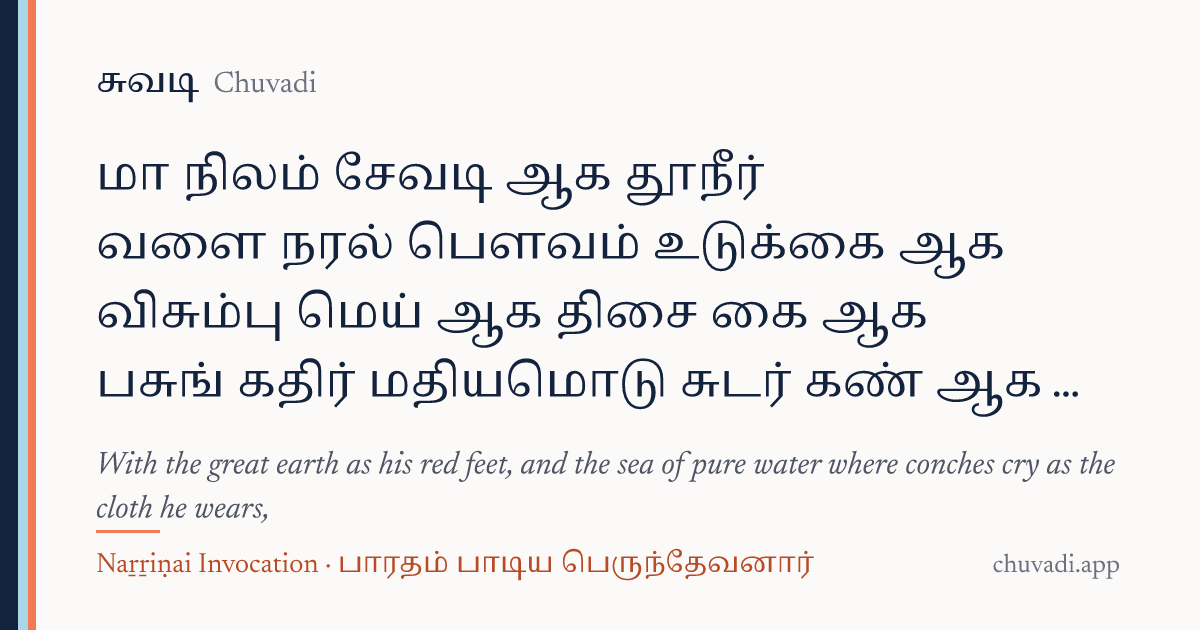
- With the great earth as his red feet, and the sea of pure water
- where conches cry as the cloth he wears,
- with the sky as his body and the directions as his arms,
- the moon of cool rays and the blazing sun as his eyes,
- he has entered all that exists and holds it within himself:
- he is the First One of the Vedas, they say,
- he who bears the discus, shining, free of all evil.
What the poem says
This is the invocation (kaṭavuḷ vāḻttu) set at the head of Naṟṟiṇai, credited to Pāratam Pāṭiya Peruntēvaṉār, 'Peruntēvaṉār who sang the Bhārata', to whom the invocations of several Sangam anthologies are attributed. It is a prayer, not a love poem, so it has no tiṇai or speaker.
The god is pictured as the cosmos itself: the earth is his feet, the conch-filled ocean his garment, the sky his body, the four directions his arms, the moon and the sun his two eyes. He has passed into every created thing and contains it all.
He is never named. 'The one with the discus' (tikiri) and 'the First One of the Vedas' point clearly to Viṣṇu (Tirumāl), and the image of a god whose body is the universe belongs to that tradition. The phrase 'they say' (eṉpa) presents this as received teaching rather than the poet's own vision.