




நற்றிணை 103
பாடல் · The poem
Tap a word to see where else it occurs.
பொருள் · Meaning in TamilAI
நெஞ்சே! ஏதாவது ஒன்றை ஆராய்ந்து முடிவு செய்து சொல். மெல்லிய அடியும் சிறிய இலைகளும் உடைய வேம்பின் பெரிய கிளைகளை முறித்து, மதம் பொங்கிய கடுங்கோபமும் வலிமையும் உடைய ஆண் யானை நின்றுவிட்டுச் சென்றது. அது விட்டுச் சென்ற, நீரால் அல்லாத ஈரத்தில், பால் வற்றிய தோல் போன்ற முலைகளையுடைய வயிற்றை நிலத்தில் அழுத்தி, பசி வாட்ட, சுருண்டு கிடக்கிறது பசுமையான கண்களையுடைய பெண் செந்நாய். தவறாத வேட்டைக்குச் சென்ற அதன் துணை, பொய்க்காத இயல்புடைய தன் பெண்ணை நினைத்து இரங்குகிறது. அத்தகைய புதிய, கொடிய காட்டில் நாம் வருந்துகிறோம். செய்ய வந்த செயலுக்காக மேலே செல்வோமா, திரும்பிச் செல்வோமா என்பதை நீயே துணிந்து முடிவு செய்.
பாலைத் திணை; பொருள் தேடிப் பிரிந்த தலைவன், வழியில் பாலை நிலத்தில் தளர்ந்த தன் நெஞ்சைக் கடிந்து சொன்னது. பசியோடு கிடக்கும் பெண் நாயை நினைத்து இரங்கும் ஆண் செந்நாய், தலைவியை நினைக்கும் தலைவனைக் குறிக்கும் இறைச்சி. அவன் மேலே சென்றானா, திரும்பினானா என்பதைப் பாடல் சொல்லவில்லை.
ஆங்கிலம் · English translationAI
Translation
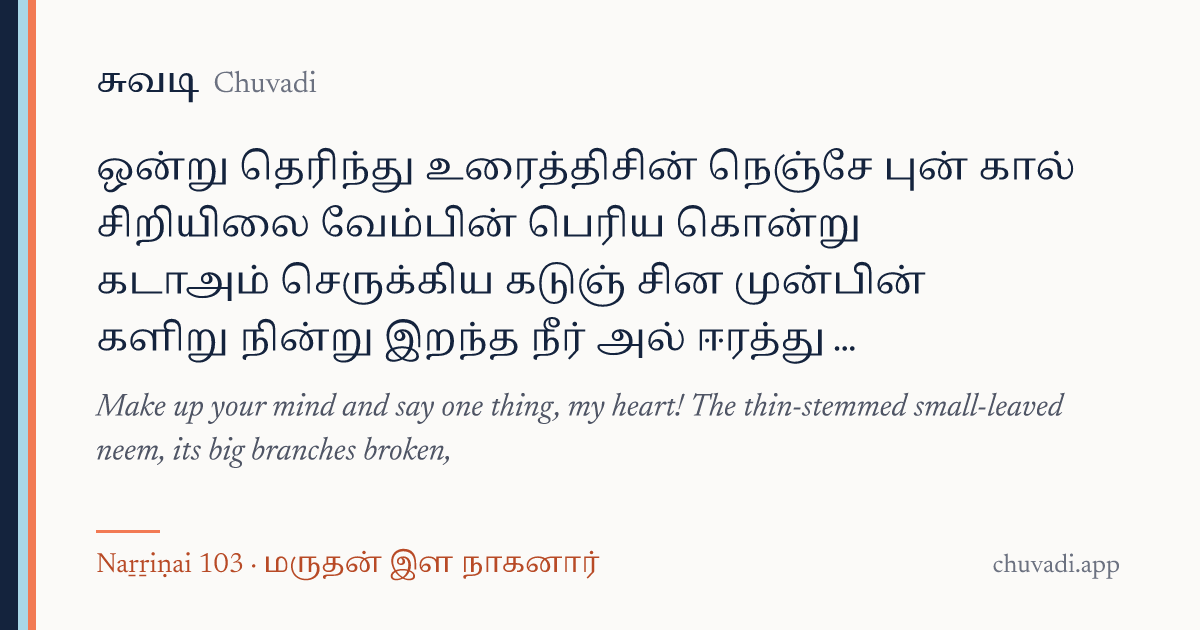
- Make up your mind and say one thing, my heart! The thin-stemmed
- small-leaved neem, its big branches broken,
- by a bull elephant of fierce rage and strength, swollen with must,
- who stood there and then went on; in the dampness he left, which is not water,
- pressing her belly, with its leathery teats dried of milk, to the ground,
- lies curled up, beaten by hunger, the green-eyed wild bitch;
- her mate, who has gone off on a hunt that never fails,
- thinks of his mate of faithful ways and grieves:
- in this strange and burning forest we are suffering.
- Whether we go on and leave for the work we set out to do,
- or whether we turn back, it is for you to decide.
What the poem says
The hero, who left home to earn wealth, finds his heart failing him halfway across the wasteland, and speaks to it sharply (pālai, by Marutaṉ Iḷanākaṉār).
The landscape is grim. A bull elephant in must has smashed a neem tree and moved on, and in the damp patch he left behind, which is not water, a starving wild dog bitch lies pressed to the ground, her teats dry. Her mate is away hunting and, the poet says, thinks of her with pity. That pairing is the iṟaicci: even the wild dog grieves for the mate he left, and the hero cannot stop thinking of his wife.
The frame is a demand for decision. The heart wavers between going on and going back, and the hero tells it to stop dithering and choose. Pālai often stages this inner quarrel between duty and love; the poem ends without saying which way he goes.