




நற்றிணை 106
பாடல் · The poem
Tap a word to see where else it occurs.
பொருள் · Meaning in TamilAI
பாகனே, இதை நீ அறிவாயா? பெருங்கடலின் மோதும் அலைகள் குவித்த மணல்மேட்டில், அஞ்சி ஆடும் வரிகளையுடைய நண்டு ஓடியபோது, அதைத் தொடர்ந்து ஓட முடியாமல், சோர்ந்து பின்தங்கி நின்றாள் குற்றமற்ற ஓர் இளம்பெண். அவளிடம் நான் வருத்தத்தோடு சென்று என் உள்ளத்தின் நோயைச் சொன்னேன். அவளால் மறுமொழி சொல்ல முடியவில்லை. மணமுள்ள பூக்களையுடைய ஞாழலின் அழகிய கிளையில் தாழ்ந்து தொங்கிய பூங்கொத்தைக் கோதி, இளந்தளிர்களைக் கையால் கசக்கி உதிர்த்தவளாக, அறிவு கலங்கிய அழகிய பேதை நிலையில் நின்றாள்.
நெய்தல் திணை; பருவம் வந்தபோது முன்பு நிகழ்ந்த ஒரு நிகழ்ச்சியை நினைத்துத் தாங்க முடியாமல் திரும்பும் தலைவன் தன் தேர்ப்பாகனிடம் சொன்னது. அவள் பதில் சொல்லாமல் தளிர்களைக் கசக்கியது நாணத்தையும் மறுக்காத உள்ளத்தையும் காட்டுகிறது. அந்த நினைவே அவனைத் திரும்பச் செய்கிறது.
ஆங்கிலம் · English translationAI
Translation
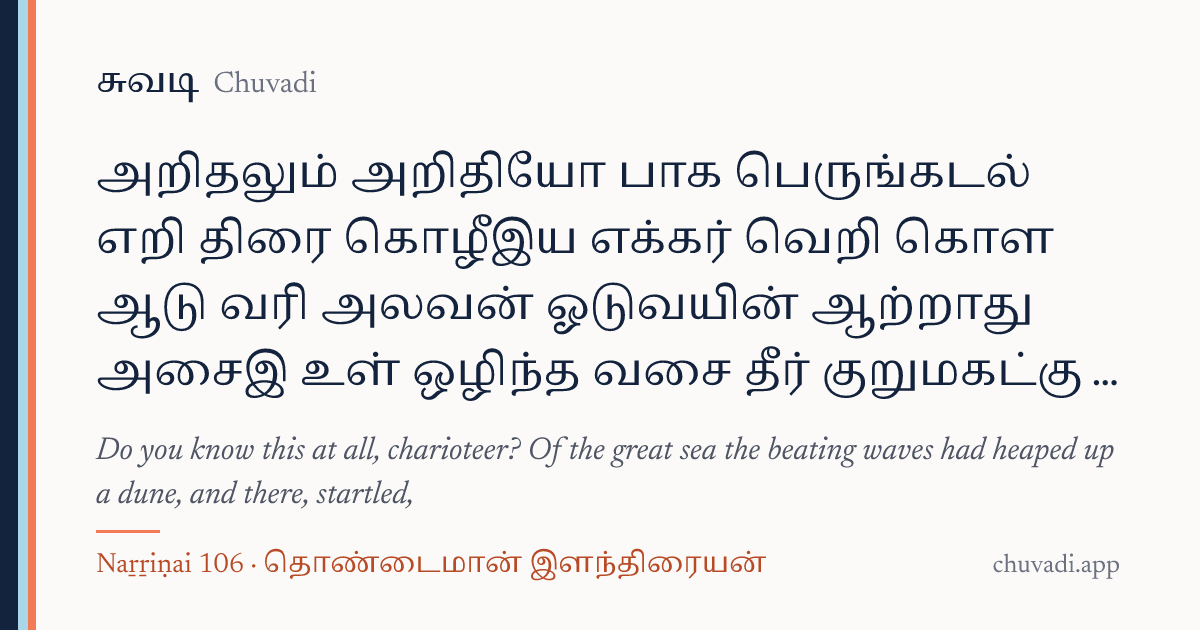
- Do you know this at all, charioteer? Of the great sea
- the beating waves had heaped up a dune, and there, startled,
- the dancing striped crab ran off; she could not keep up with it,
- and tired, she stayed behind, the young girl without fault; to her
- I went in my anguish and told her the pain inside me;
- she could not bring herself to answer; of the fragrant
- ñāḻal's lovely branch she raked through the low-hanging cluster,
- her hands rubbing the young shoots and letting them fall,
- in her sweet, innocent state, her mind in a daze.
What the poem says
The season has come, and with it the hero remembers a scene from the beginning of their love; unable to bear the memory, he turns back and tells his charioteer about it (neytal, by Toṇṭaimāṉ Iḷantiraiyaṉ, the chieftain-poet of Kāñci).
The memory is small and exact. On a sand dune by the sea the girls were chasing a crab, which scuttled off too fast; one girl, tired, fell behind. He took his chance, went up to her and told her what he felt. She could not answer. Instead she pulled at a hanging cluster of ñāḻal flowers and crushed the tender leaves in her fingers until they fell.
That silence and the fidgeting hands say more than words: she was shy, confused, and not refusing. Recalling it is enough to make him abandon whatever errand he was on. The poem's question to the charioteer ("Do you know?") lets the hero relive the scene while seeming only to tell it.