



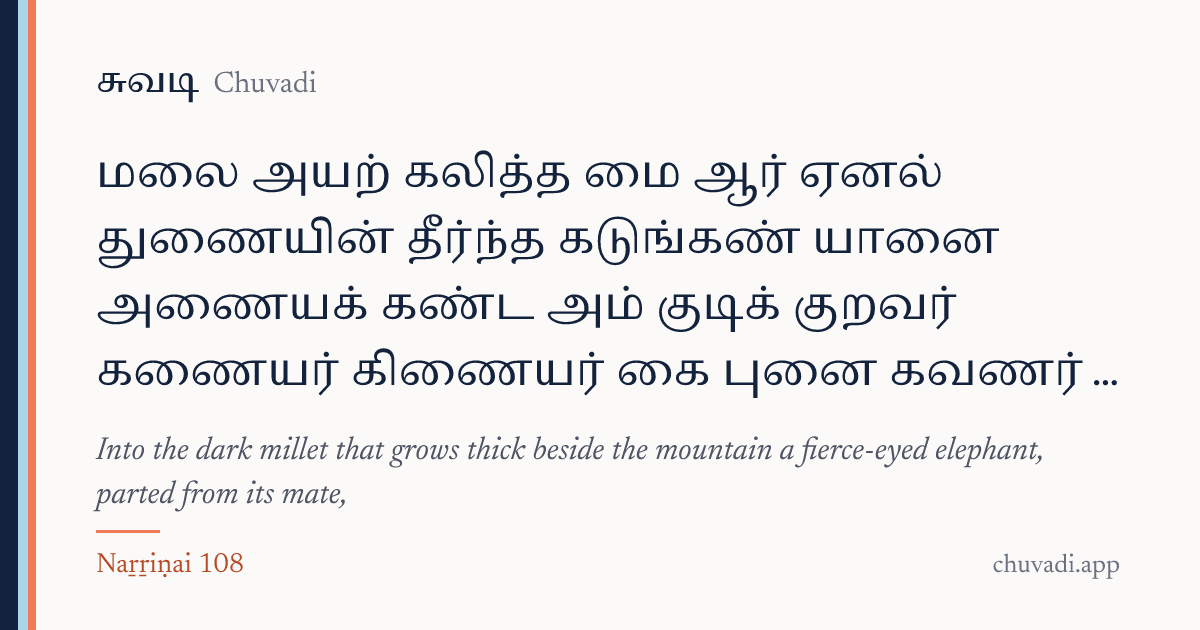

நற்றிணை 108
பாடல் · The poem
Tap a word to see where else it occurs.
பொருள் · Meaning in TamilAI
மலையின் அருகே செழித்து வளர்ந்த கரிய தினைப்புனத்தில், தன் துணையைப் பிரிந்த கடுமையான பார்வையுடைய யானை நெருங்குவதைக் கண்ட அழகிய ஊரின் குறவர்கள், அம்புகளோடும் கிணைப்பறைகளோடும் கையால் செய்த கவண்களோடும், கூச்சலிட்டு, ஊரின் புறத்தில் உள்ள குடிகளில் ஆரவாரம் செய்யும் நாட்டை உடையவனே! பழகிய பகைவரைப் பிரிவதுகூடத் துன்பம் தரும். மொட்டுகள் போன்ற அழகிய ஒளிரும் பற்களும் இனிய சிரிப்பும் உடைய இந்தப் பெண்ணின், சுடர் போன்ற அழகிய நெற்றி பசலை படர்கிறது. எங்களோடு உள்ள தொடர்பை எப்படி விட்டுவிட்டாய்? அதை நினைத்து நானே வருந்துகிறேன்.
குறிஞ்சித் திணை; மணம் செய்யாமல் நீண்ட காலம் களவில் வந்து போகும் தலைவனிடம், பொறுக்க முடியாத தோழி தலைவியின் துயரத்தைச் சொல்லி மணம் செய்யும்படி வற்புறுத்தியது. துணையைப் பிரிந்த யானை தலைவியைப் பிரிந்திருக்கும் தலைவனையும், ஆரவாரம் செய்யும் ஊரார் அலர் பேச்சையும் குறிக்கும் உள்ளுறை. பாடியவர் பெயர் கிடைக்கவில்லை.
ஆங்கிலம் · English translationAI
Translation
- Into the dark millet that grows thick beside the mountain
- a fierce-eyed elephant, parted from its mate,
- was seen to come close; and the hill-folk of the lovely village,
- with arrows, with kiṇai drums, with slings made by hand,
- with shouts, raise an uproar in the outer houses: man of that country,
- even parting from a familiar enemy is painful;
- the girl with bright teeth lovely as buds and a sweet smile,
- her fine brow that shone like a flame is turning pale;
- how could you let our bond go? It is I who feel the hurt.
What the poem says
The hero has kept coming in secret for a long time without proposing marriage. The friend, who can bear it no longer, tells him of the heroine's suffering and presses him to marry (kuṟiñci; the poet is unknown).
The opening scene is the uḷḷuṟai. A lone elephant, separated from its mate, comes near the millet, and the whole village rises against it with arrows, drums, slings and shouting. The elephant apart from its mate stands for the hero away from the heroine; the noisy village suggests the gossip that is already gathering around the affair.
Line 6 sounds like a proverb: even when you part from an old enemy you feel a pang, so how much more when parting from someone you love. The heroine's bright brow, once glowing like a flame, is going pale. The last words turn to the friend herself: "it is I who feel the hurt", a reproach that also shows how closely she shares the heroine's pain.