



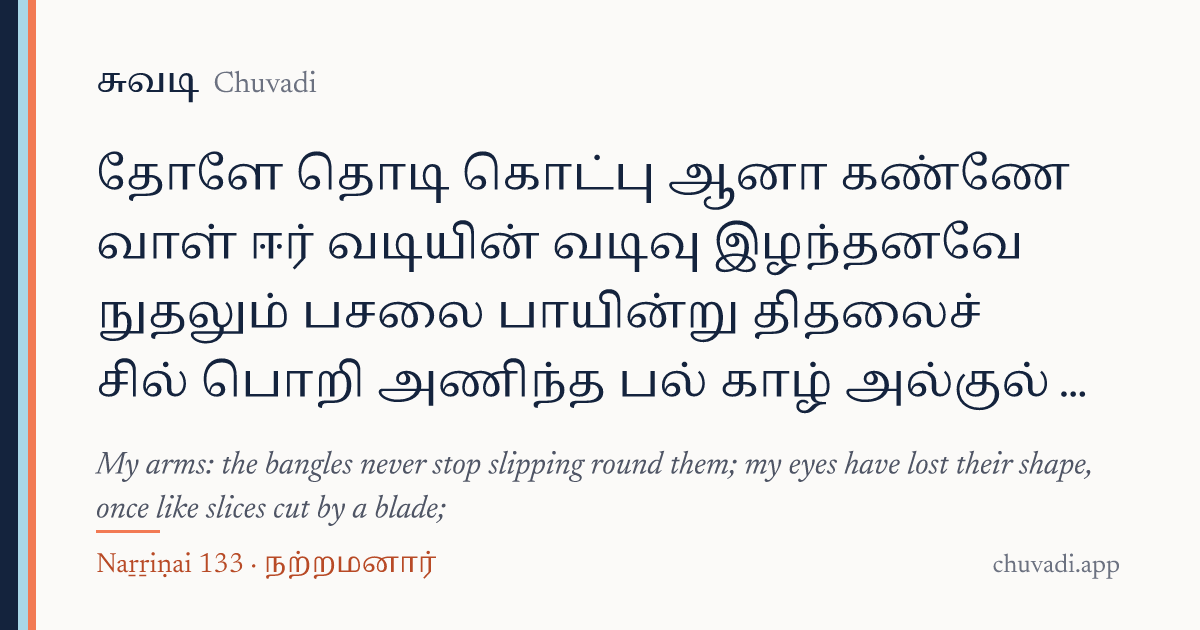

நற்றிணை 133
பாடல் · The poem
Tap a word to see where else it occurs.
பொருள் · Meaning in TamilAI
என் தோள்களில் வளையல்கள் சுழன்று நழுவுவது நிற்கவில்லை. கத்தியால் அரிந்த மாவடுவைப் போல இருந்த என் கண்கள் தம் அழகிய வடிவை இழந்துவிட்டன. நெற்றியிலும் பசலை படர்ந்துவிட்டது. சில திதலைப் புள்ளிகள் அழகு செய்யும், பல வடங்களையுடைய மேகலை அணிந்த இடையையும், நீலமணி போன்ற அழகிய கூந்தலையும் உடைய இந்தக் கரியவளுக்கு இப்படியாயிற்றே என்று, கொடிய வாயையுடைய பெண்கள் பழிச்சொல்லைப் பரப்புகிறார்கள். அவர் நமக்குத் துயரம் செய்யமாட்டார் என்று என் அன்புக்குரிய தோழி அன்பான சொற்களைச் சொல்கிறாள். இரும்பு வேலை செய்யும் கொல்லன், கொதிக்கும் உலையில் நீரில் தோய்த்த மடலால் தெளிக்கும் சிறிதளவு நீரைப் போல, நோய் நிறைந்த என் நெஞ்சுக்கு அச்சொற்கள் தரும் ஆறுதல் மிகச் சிறியதே.
குறிஞ்சித் திணை; மணத்துக்காகத் தலைவன் பிரிந்திருந்தபோது, ஆற்றுவிக்கும் தோழிக்குத் தலைவி சொல்லியது. கொதிக்கும் உலையில் தெளிக்கும் சில துளி நீர் உடனே ஆவியாவது போலத் தோழியின் ஆறுதல் சொல் பயனற்றுப் போகிறது என்பது கருத்து. இரண்டாம் அடியில் கண்ணை மாவடுவோடு ஒப்பிட்டதாகக் கொண்டோம்; அது உறுதியன்று.
ஆங்கிலம் · English translationAI
Translation
- My arms: the bangles never stop slipping round them; my eyes
- have lost their shape, once like slices cut by a blade;
- my brow too is overspread with pallor. "For this dark girl with the few
- titalai spots adorning her, the many-stranded girdle at her hips,
- the five-part hair as lovely as sapphire," so saying,
- while the hot-tongued women spread their scandal,
- "He will not cause the grief we suffer," says
- my loving friend, in her words of tender love;
- like the little water that the iron-working smith
- sprinkles from a dipped frond onto his blazing forge,
- to my heart, so full of sickness, they are a comfort, but a small one.
What the poem says
The hero has gone away to prepare for the wedding, and the delay is wearing the heroine down. Her friend keeps telling her that he will not bring them sorrow. The heroine replies (kuṟiñci; poem by Naṟṟamaṉār).
She lists the signs of her pining: bangles slipping round her thinned arms, eyes that have lost their shape, a brow spread with pallor (pacalai). The town's sharp-tongued women have noticed, and their gossip is quoted with its mocking praise of her beauty: the titalai (freckle-like spots thought beautiful on a woman's skin), the girdle of many strands, the hair dressed in five parts.
The closing simile is homely and exact. A blacksmith flicks a few drops from a wet frond onto his roaring fire; they hiss and vanish, and the fire burns on. Her friend's kind words do the same for her heart. Line 2 is slightly uncertain: the eyes are compared to something cut by a blade, most likely slices of mango, the usual comparison for a woman's eyes.