



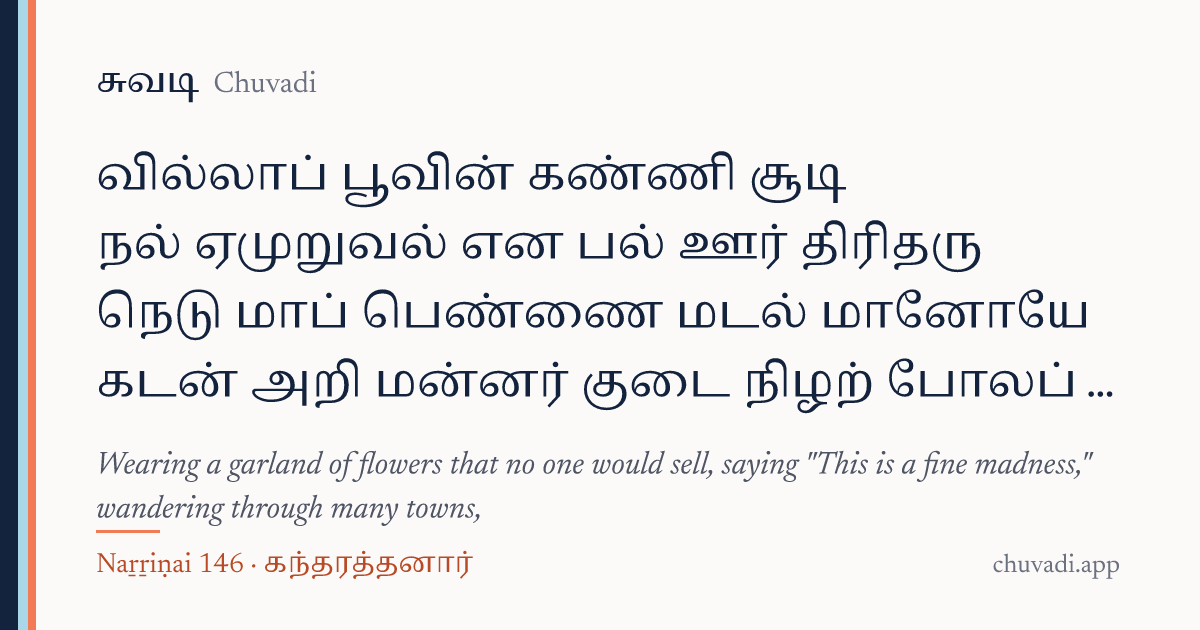

நற்றிணை 146
பாடல் · The poem
Tap a word to see where else it occurs.
பொருள் · Meaning in TamilAI
யாரும் விற்காத பூக்களால் ஆன கண்ணியைச் சூடி, இது நல்ல மயக்கம் என்று சொல்லிக்கொண்டு பல ஊர்களிலும் திரியும், நெடிய பனையின் மடலால் செய்த குதிரையில் ஏறியவனே! கடமை அறிந்த மன்னர்களின் குடை நிழலைப் போலப் பெரிதும் குளிர்ந்த இந்த மர நிழலில் சிறிது இறங்கி இருந்து, வெயில் தணிந்தபின் செல்வாயாக என்று இரக்கத்தோடு கூடிவரும் அன்புடைய மக்கள் சொல்கிறார்கள். சிறந்தவன் என்று புகழப்படும் கைதேர்ந்த ஓவியன் வரைந்தது போன்ற காணத்தக்க அழகுடைய மென்மையான கரியவள் வருத்தியதால் மயங்கிய என் நெஞ்சம் என் சொல்லைக் கேட்குமானால் நல்லது!
குறிஞ்சித் திணை; விடாமல் பின்தொடரும் தலைவன், யாரையும் நேரே விளிக்காமல், தோழி கேட்கும்படி சொல்லியது. காதல் மறுக்கப்பட்டவன் எருக்கம்பூ மாலை அணிந்து பனைமடல் குதிரையில் ஊர்வலம் வருவது மடலேறுதல் எனப்படும்; அதைச் செய்யத் துணிந்துவிட்டதாகக் குறிப்பால் உணர்த்துகிறான். மூன்றாம் அடியில் யாரை விளிக்கிறான் என்பதும், எட்டாம் அடியின் பொருளும் உறுதியாகத் தெரியவில்லை.
ஆங்கிலம் · English translationAI
Translation
- Wearing a garland of flowers that no one would sell,
- saying "This is a fine madness," wandering through many towns,
- you who ride the horse made from the tall palmyra's stem!
- "Like the shade of the parasol of kings who know their duty,
- here is the great cool shade of the tree; get down a little,
- sit, and then go on when the sun has passed over," so
- say the eager people who gather round in pity;
- as if drawn by a master painter whose work is praised as the finest,
- with a beauty well worth the seeing,
- the delicate dark girl has struck it down,
- this bewildered heart; if only it would take my word!
What the poem says
According to the colophon, the hero who keeps pursuing the heroine speaks this aloud, not to anyone directly, but so that her friend will hear (kuṟiñci; poem by Kantarattaṉār).
The figure at the centre is the maṭal rider. A lover who was refused could threaten to ride through the streets on a "horse" made of palmyra stems, wearing a garland of erukku, flowers nobody sells, until the town shamed the girl's family into giving her to him. Here someone, probably the hero picturing himself, is already that rider, calling his state a fine madness, and kind-hearted onlookers urge him to rest in the shade, as cool as a just king's protecting parasol, and go on later.
The last lines give the reason he cannot stop: the girl is as lovely as a picture by a master painter, and his heart, struck by her, will not listen to him. The line about the painter (8) is not certain in its wording, and it is not quite clear whom "you" in line 3 addresses. The threat behind the poem is plain enough for the friend to hear.