




நற்றிணை 152
பாடல் · The poem
Tap a word to see where else it occurs.
பொருள் · Meaning in TamilAI
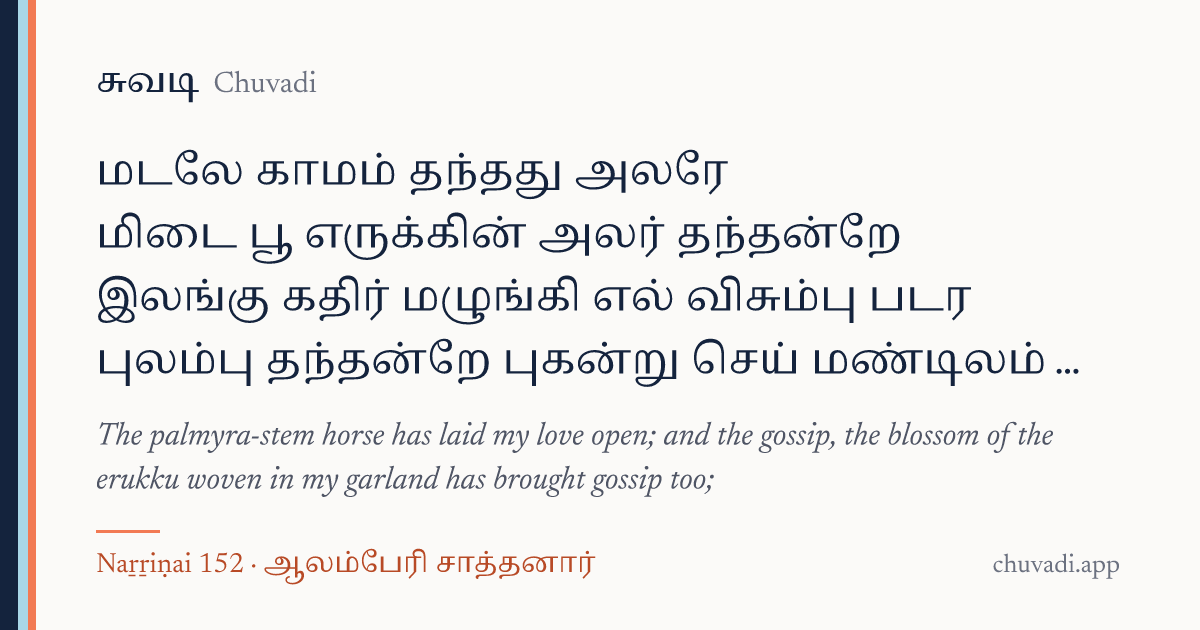
பனைமடல் குதிரை என் காதலை ஊரறியச் செய்துவிட்டது. மாலையாகத் தொடுத்து அணிந்த எருக்கம்பூவோ அலரைக் கொண்டுவந்தது. ஒளிவிடும் கதிர்கள் மழுங்கி, மாலை வானம் எங்கும் செம்மை படர, விரும்பித் தன் பணியைச் செய்த கதிரவன் தனிமைத் துயரைத் தந்துவிட்டான். இவை எல்லாம் தந்தவற்றுக்கு மேலும், வாடைக்காற்று மெல்லத் தூறலைத் தூவ, கூட்டில் தன் பெடையோடு கூடியிருக்கும் அன்றில் பறவையின் வாடிய குரலும் கலந்து, இரவும் எனக்குச் செயலற்ற நிலையைத் தந்தது. இரங்கத்தக்க நான் இனி என்ன ஆவேனோ?
நெய்தல் திணை; மடலேறத் துணிந்த தலைவன், யாரையும் நேரே விளிக்காமல், தோழி கேட்கும்படி சொல்லியது. அலர் என்ற சொல் பூ என்றும் பழிச்சொல் என்றும் இருபொருள் தரும்; எருக்கம்பூ மாலையே ஊரார் பழியைக் கொண்டுவந்தது என்பது நயம். பெடையோடு கூடியிருக்கும் அன்றில், தனித்திருக்கும் தலைவனின் துயரை மிகுவிக்கிறது.
ஆங்கிலம் · English translationAI
Translation
- The palmyra-stem horse has laid my love open; and the gossip,
- the blossom of the erukku woven in my garland has brought gossip too;
- as the bright rays dim and spread across the evening sky,
- loneliness it has brought, the sun that did its work so eagerly;
- on top of all these things it brought, softly
- the north wind sprinkles its drizzle, and in the nest
- the aṉṟil joined with its mate gives its weary call, and mingling with it
- the night as well has brought me helplessness;
- what will become of me, wretched as I am?
What the poem says
The colophon puts this in the mouth of the hero, who has resolved to ride the maṭal, the palmyra-stem "horse" of a rejected lover. He speaks to no one directly, but so that the heroine's friend will hear (neytal; poem by Ālampēri Cāttaṉār).
The poem is built on a chain of things that have "brought" him something. The maṭal has made his love public; the erukku flowers of the rider's garland have brought him alar, a word that means both "blossom" and "gossip," so the flower and the scandal are the same thing. The setting sun has brought loneliness, and the night, with the north wind's drizzle and the cry of the aṉṟil bird nestled beside its mate, has brought utter helplessness.
The aṉṟil, the bird thought to die if parted from its mate even for a moment, sits contented in its nest while he is alone; the contrast sharpens his misery. His closing question is a cry of despair, and also a warning to the friend that he has nothing left to lose.