




நற்றிணை 155
பாடல் · The poem
Tap a word to see where else it occurs.
பொருள் · Meaning in TamilAI
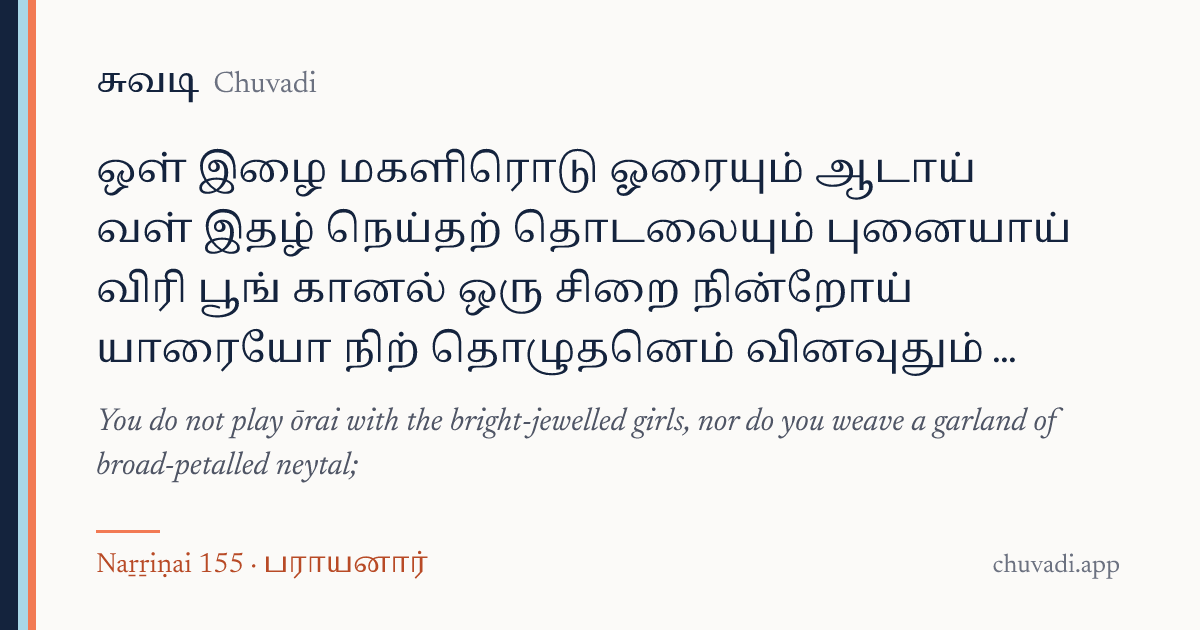
ஒளிவீசும் அணிகலன் அணிந்த தோழியரோடு ஓரை விளையாட்டும் ஆடவில்லை; பெரிய இதழ்களையுடைய நெய்தல் மாலையும் தொடுக்கவில்லை; மலர்கள் விரிந்த கடற்கரைச் சோலையின் ஒரு பக்கத்தில் தனியே நிற்பவளே! நீ யார்? உன்னை வணங்கிக் கேட்கிறேன். கண்டவர் கண்டு தீராத அழகுடையவளே! தெளிந்த அலைகளையுடைய பெருங்கடலின் பரப்பில் விரும்பி வாழும் தெய்வமகளோ நீ? அல்லது கரிய உப்பங்கழியின் அருகே நிலைகொண்டு வாழ்பவளோ? பெண்ணே, இனிச் சொல் என்றேன். அதற்கு விடையாக, அவளுடைய கூர்மையான பற்கள் புன்னகையில் தெரிந்தன; பல இதழ்களையுடைய மலர் போன்ற மையுண்ட கண்களிலும் நீர் பரவியது.
நெய்தல் திணை; இரண்டாம் முறை தலைவியைக் கண்ட தலைவன் சொல்லியது; உணர்த்தியும் தணியாத ஊடலின்போது தலைவன் சொன்னது என்றும் கொள்வர். அவள் அழகைக் கண்டு மானிடப் பெண்ணோ தெய்வமோ என்று ஐயுறுவது காதலின் தொடக்கத்தில் வரும் மரபு. அவளுடைய புன்னகையும் கண்ணீரும் சொல்லாமலே அவள் உள்ளத்தைக் காட்டுகின்றன.
ஆங்கிலம் · English translationAI
Translation
- You do not play ōrai with the bright-jewelled girls,
- nor do you weave a garland of broad-petalled neytal;
- you who stand apart in the seaside grove of spreading flowers,
- who are you? We have bowed to you, and we ask:
- you, with a beauty those who see it never tire of, are you
- a goddess who dwells at ease on the expanse of the great sea with its clear waves,
- or have you made your home beside the dark backwater?
- "Tell me now, young woman," I said; in answer
- her sharp little teeth opened in a smile,
- and her kohl-lined eyes, like many-petalled flowers, brimmed with tears.
What the poem says
The hero meets the heroine for the second time on the seashore and addresses her (neytal; poem by Parāyaṉār). The colophon offers a second setting as well: the hero speaking during a sulk that will not yield to coaxing.
He finds her standing alone in the flowering grove, not joining the other girls in their ōrai games or their garland-making. Her beauty seems more than human, and he asks, half in earnest, whether she is an aṇaṅku, a goddess of the sea or of the backwater. The question of whether the girl is a woman or a goddess is a conventional moment in early love, though here it is tender rather than fearful.
Her reply is entirely in her face. She smiles, and her eyes fill with tears. The smile shows her welcome; the tears, which can be tears of joy or of feeling too strong to hold, show how much the meeting means to her. Read in the second setting, the tears belong to her grievance and the smile to her softening.