




நற்றிணை 157
பாடல் · The poem
Tap a word to see where else it occurs.
பொருள் · Meaning in TamilAI
அகன்ற இடமுடைய இவ்வுலகத்தில் இங்கே நடக்கும் உழவுத் தொழில்களுக்கு உதவும்படி பெருமழை பொழிந்து முடிந்த பின்வரும் நாள்களில், பல புள்ளிகளையுடைய பாம்பு ஊர்ந்து செல்லும் முதுகைப் போல ஆற்று மணல் நுண்ணிய அலைவரிகளாகப் படிந்திருக்கும் இளவேனிலின் தொடக்க காலத்தில், பூங்கொத்துகள் நிறைந்த மாமரத்தில் இருக்கும் இணைசேர்ந்த குயில் கூவும்போதெல்லாம், நம்மையே நினைக்கும் நெஞ்சோடு, அதைக் கேட்கும்போதெல்லாம் அளவுகடந்து பெரிதும் அழுவாள், காட்டில் சிறு குன்றின் அருகே நிற்கும் நெடிய அடிமரத்தையுடைய வேங்கை அழகிய பூந்தாதுவை உதிர்த்தது போன்ற, நுண்ணிய பல தேமல் புள்ளிகளையுடைய மாநிறத்தவள்.
பாலைத் திணை; பொருள் தேடிப் பிரிந்த தலைவன், இளவேனில் வந்ததை உணர்ந்த தன் நெஞ்சுக்குச் சொல்லியது. இணைசேர்ந்த குயிலின் கூவல் காதலர் கூடும் பருவத்தை நினைவூட்டித் தனித்திருக்கும் தலைவியை அழவைக்கிறது. அவளுடைய மேனிப் புள்ளிகள் வேங்கையின் பொன்னிறத் தாதுக்கு உவமை.
ஆங்கிலம் · English translationAI
Translation
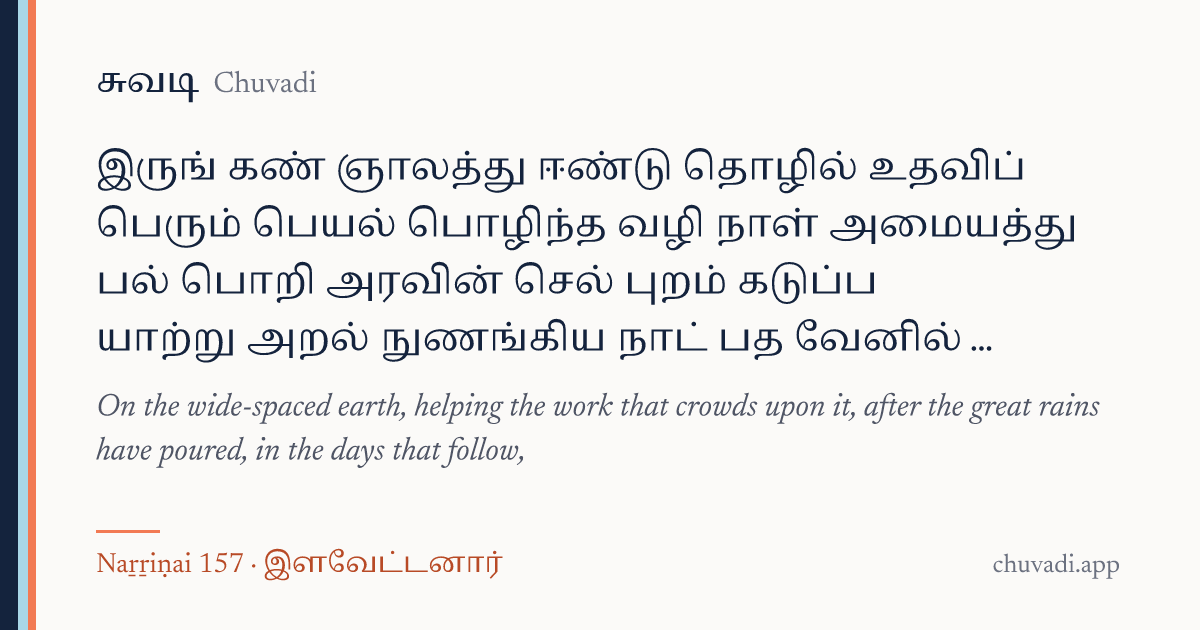
- On the wide-spaced earth, helping the work that crowds upon it,
- after the great rains have poured, in the days that follow,
- like the moving back of a many-spotted snake
- the river's sand has rippled fine, in the early days of spring;
- in the mango thick with clusters, each time the mated koel calls,
- with a heart that thinks of us, past all bearing,
- each time she hears it, she weeps, and weeps hard: like the forest's
- long-stemmed vēṅkai standing by the little hillock
- when it sheds its lovely pollen,
- with her many fine freckles, the dark woman.
What the poem says
The hero is far away earning wealth when spring comes, and his heart recognises the season. He speaks to it (pālai; poem by Iḷavēṭṭaṉār).
He traces the turn of the year. The great rains have done their work for the farms; afterwards the river has sunk, leaving its sand rippled like the back of a spotted snake on the move; the early spring has come, the mango trees are heavy with blossom, and the koels, now paired, are calling. The koel's call is the signal of spring and of lovers' reunion.
So he imagines his wife at home, hearing it each time and weeping for him. The poem ends with a picture of her: dark-skinned and dusted with fine freckles (titti), like a tall vēṅkai beside a hillock in the forest when its golden pollen falls. The comparison is unusual and affectionate, and it shows that his thoughts have already turned home.