



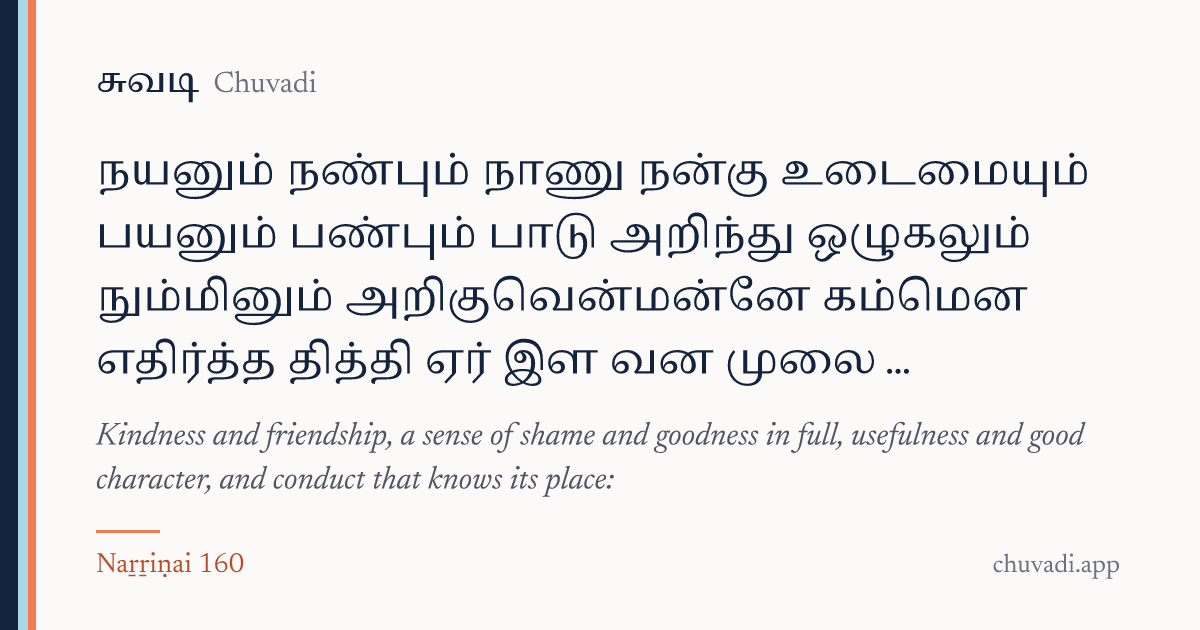

நற்றிணை 160
பாடல் · The poem
Tap a word to see where else it occurs.
பொருள் · Meaning in TamilAI
அன்பும் நட்பும் நாணமும் நல்லவற்றை நன்கு உடைமையும், பயனும் பண்பும், தகுதி அறிந்து நடந்துகொள்ளுதலும் ஆகியவற்றை உங்களைவிட நானே நன்றாக அறிந்திருந்தேன். ஆனால் அது, எழுச்சியோடு எதிர்நோக்கி நிற்கும் தேமல் படர்ந்த அழகிய இளமையான மார்பகங்களையும், தூவி உதறினாற் போன்ற அழகிய நுண்ணிய சுணங்கையும், ஐந்து பகுதியாகப் பிரித்து முடித்த கூந்தலையும், சிவந்த பொட்டால் பொலிவுபெற்ற அழகிய நெற்றியையும், வண்டுகள் பாயும் கூந்தலையும் உடைய இவளுடைய, பழைய நீருடைய குளத்தில் பூத்த குவளை மலர்கள் இரண்டை எதிரெதிராக வைத்துக் கட்டிய இணைமாலை போன்ற, செவ்வரி படர்ந்த, செருக்கு மிக்க, குளிர்ந்த கண்களைக் காண்பதற்கு முன்புதான்.
குறிஞ்சித் திணை; தன்னைக் கடிந்துரைத்த பாங்கனுக்குத் தலைவன் மறுமொழி சொல்லியது. நல்லொழுக்கம் எல்லாம் எனக்குத் தெரியும், ஆனால் இவள் கண்களைக் கண்டபின் அவை என்னைக் காக்கவில்லை என்பது கருத்து. காணா ஊங்கே என்னும் முடிவு பாடலின் இறுதி வரை நிறுத்தி வைக்கப்பட்டுள்ளது.
ஆங்கிலம் · English translationAI
Translation
- Kindness and friendship, a sense of shame and goodness in full,
- usefulness and good character, and conduct that knows its place:
- I knew them better than you do, surely; swiftly
- rising to meet the gaze, her lovely young breasts with their titti spots,
- her fine, lovely pallid freckles, as if sprinkled and shaken over her,
- her hair parted into five strands, her red-dotted,
- fine brow made splendid, the tresses where the bees swarm,
- and like water-lilies blooming in an ancient pool,
- a garland of two blossoms set face to face, are her
- proud, red-veined, rain-cool eyes; before I saw them.
What the poem says
The colophon calls this "the answer to a rebuke." The hero's companion (pāṅkaṉ) has scolded him for losing his head over a girl, and he replies (kuṟiñci; the poet is not named).
He grants every virtue his friend is defending: kindness, friendship, a sense of shame, goodness, usefulness, good character, and conduct that knows its proper bounds. He knew all of them, he says, better than his friend does, until he saw her.
The rest of the poem is the reason, given as a catalogue of her beauty: young breasts marked with titti spots, a body dusted with pale freckles (cuṇaṅku), hair dressed in five parts, a brow with a red mark, tresses humming with bees. It ends on her eyes, like two water-lilies opening face to face in an old pool, wet, proud and streaked with red. All the moral sense in the world, he implies, could not stand against those eyes. The whole poem is one sentence, and "before I saw" is held back until the very last line.