




நற்றிணை 162
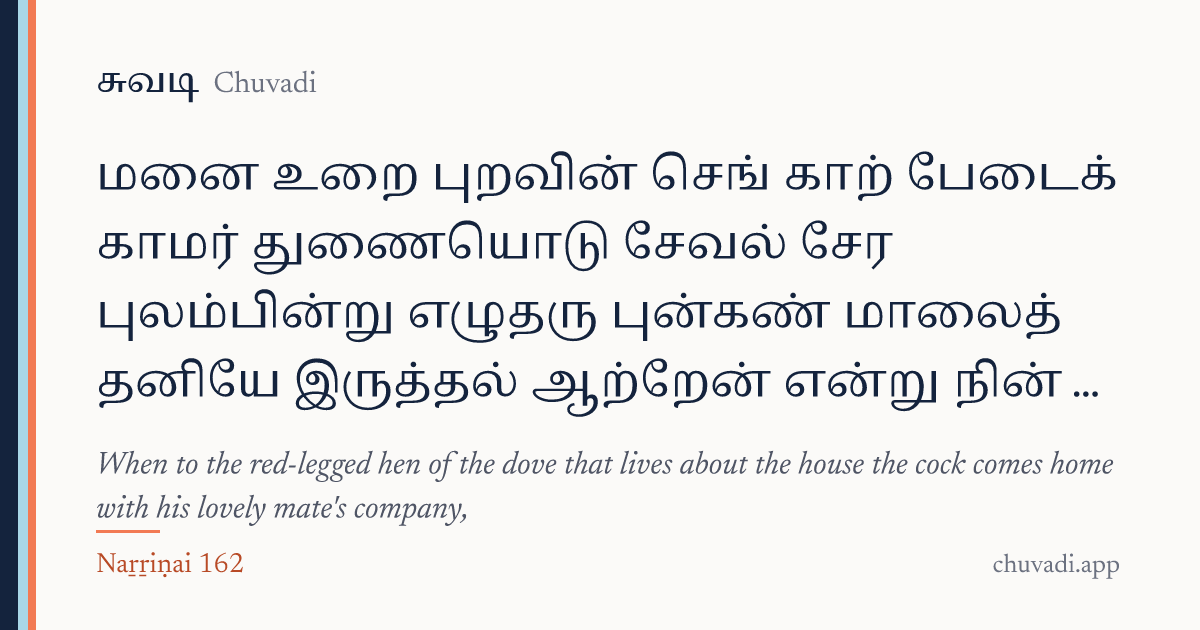
பாடல் · The poem
Tap a word to see where else it occurs.
பொருள் · Meaning in TamilAI
வீட்டில் வாழும் புறாவின் சிவந்த கால்களை உடைய பெண்புறாவிடம் அதன் அழகிய துணையான ஆண்புறா வந்து சேர்கின்றது. தனிமைத் துயரோடு எழுகின்ற துன்பமான மாலைப்பொழுதில், நான் இங்குத் தனியே இருக்கப் பொறுக்கமாட்டேன் என்று சொல்லி, உன் குளிர்ந்த மையுண்ட கண்கள் கண்ணீர் வடித்து வருந்திக் கலங்க, உம்மோடு நானும் வருவேன் என்றாய். பெரும் புகழ்பெற்ற உன் தந்தையின் நீண்ட புகழுடைய உயர்ந்த மாளிகையில், தாயோடு இருக்கும் மிக இளமையான மென்மையான பெண் நீ. நம் முன்னே உள்ள பாலை வழியில், வேனிற்காலத்து இத்தி மரத்தின் நிலத்தைத் தொடாத நீண்ட விழுதுகள் நாரால் ஆன ஊஞ்சலைப் போலத் தொங்குகின்றன; மேல்காற்று அவற்றை அசைக்கும் போதெல்லாம் அவை உறங்கும் பெண்யானையைத் தடவுகின்றன. அப்படிப்பட்ட காட்டுவழியில் என்னோடு நடந்துவர உனக்கு வலிமை இருக்குமோ?
பாலைத் திணை; உடன்போக்கில் தானும் வருவேன் என்ற தலைவிக்குத் தலைவன் சொல்லியது. மாலையில் துணையோடு சேரும் புறா அவள் அஞ்சும் தனிமையை நினைவூட்டுகிறது. நிலம் தொடாத விழுதுகளும் உறங்கும் யானையும் வறண்ட காட்டின் வெறுமையைக் காட்டி, அவளைத் தடுக்கும் நோக்கில் சொல்லப்படுகின்றன.
ஆங்கிலம் · English translationAI
Translation
- When to the red-legged hen of the dove that lives about the house
- the cock comes home with his lovely mate's company,
- in the sorrowful evening that rises full of loneliness,
- 'I cannot bear to stay here alone,' you say, and your
- cool, kohl-lined eyes, brimming with tears, stream in distress;
- 'I will come with you,' you said. With me —
- you who, in the tall mansion of long fame of your father of great name,
- beside your mother are so very tender — ahead
- lies the wasteland where the long aerial roots of the summer iṟṟi, not touching the ground,
- hang like a swing of fibre beside the way, and each time the west wind sways them
- they stroke the sleeping she-elephant:
- could you have the strength for that?
What the poem says
The hero is about to leave on a journey through the wasteland, and the heroine has said she will go with him (pālai). He answers her.
He first gives back her own words: at dusk, when the house-dove's mate comes home to her, she cannot bear to sit alone, and so she wants to come. The dove pair, together at evening, is the picture of what she fears to lose. Then he sets against her wish the life she has known: the great house of her famous father, where she is still a tender girl at her mother's side.
The last image is the road itself. In the dry season the iṟṟi (a fig) lets down long roots that never reach the ground; the hot wind swings them like a rope swing over a sleeping elephant. The picture is strange and quiet rather than violent, but it tells how empty and harsh the country is. His question, whether she could bear it, is meant to hold her back.