




நற்றிணை 164
பாடல் · The poem
Tap a word to see where else it occurs.
பொருள் · Meaning in TamilAI
மழை பெய்யாமல் கைவிடப்பட்ட காட்டுநிலத்தை அதற்குரிய செங்கதிர்ச் செல்வனாகிய ஞாயிறு சுட்டெரித்ததால் மண் வெடித்துப் பிளந்தது; உலகம் மிகவும் வருந்தித் துயரத்தால் கதறிய அந்தக் காலத்தில், அவர் பிரிந்து சென்றாராயினும் நல்ல காரியத்துக்காகவே சென்றார் என்று சொல்லி நான் உன்னைத் தெளிவிக்க முயன்றேன்; ஆனால் நீ தெளியவில்லை. ஏனெனில், சிவந்த அம்பும் வளைந்த வில்லும் உடைய ஆடவர்கள் புதியவர்களாக வந்த வழிப்போக்கர்களின் உயிரைப் போக்கியதால், வெப்பமான காட்டில் இலைகளால் மூடப்பட்ட உடல்களின் நாற்றத்தைச் சூழ்ந்து, கடும் பசியுடைய சிறிய நரியும் அருகே செல்லாமல் புறங்காட்டித் திரும்பிப் போகும் அந்தக் கொடிய வழியில் அவர் துன்பமின்றி இருப்பார் என்று நீ நினைக்கவே இல்லை.
பாலைத் திணை; பொருள் தேடி முடித்துத் தலைவன் திரும்பி வந்தான் என்று ஏவலர் வழியாகக் கேட்ட தோழி தலைவிக்குச் சொல்லியது. கடந்த காலத்து அச்சத்தை நினைவூட்டி, இப்போது வந்த மகிழ்ச்சியைச் சொல்லாமலே உணர்த்துகிறாள். பசித்த நரியும் அஞ்சி விலகும் பிணநாற்றம் பாலை வழியின் கொடுமையைக் காட்டுகிறது.
ஆங்கிலம் · English translationAI
Translation
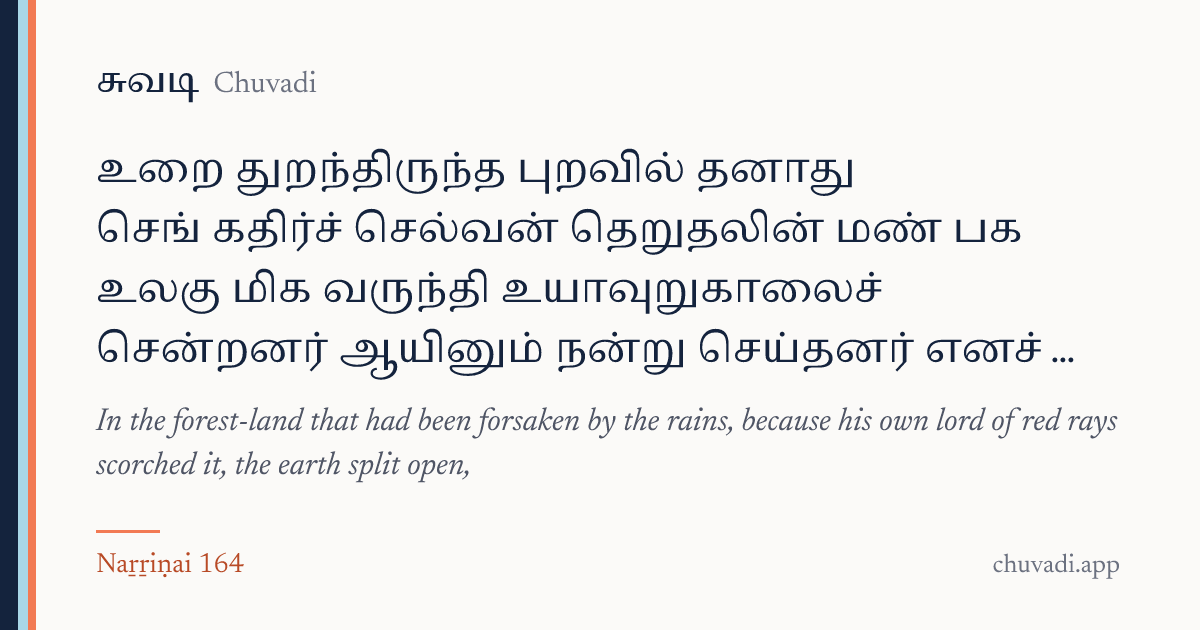
- In the forest-land that had been forsaken by the rains, because his own
- lord of red rays scorched it, the earth split open,
- and the world, in great distress, cried out in pain; at that time
- 'Though he has gone, he has done a good thing,' so
- I spoke to make you clear of doubt, yet you would not be cleared,
- for there men with red-shafted arrows and curved bows
- had driven the life out of travellers, strangers to the land,
- and in the hot forest, around the reeking flesh that lay beneath heaped leaves,
- the small jackal, though sharp with hunger, will not go near
- but turns its back and goes away — on that road,
- you could not believe that he would come to no harm.
What the poem says
The heroine's friend has heard from the household attendants that the hero is back, his quest for wealth complete (pālai). She reminds the heroine of the time of waiting.
Then, when the sun had burned the rainless land until the earth cracked, the friend tried to comfort her: he has gone, but for a good purpose. The heroine would not be comforted, because she could think only of the road: bandits with bows who killed passing strangers, and corpses left under heaps of leaves, so foul that even a starving jackal turned away. She could not believe he would come through unhurt.
The poem stops at the fear and leaves the happy ending unspoken; the colophon supplies it. 'His own lord of red rays' (line 1–2) is the sun, called the land's own lord. The covering of the slain with leaves is a pālai image of death on the road.