




நற்றிணை 174
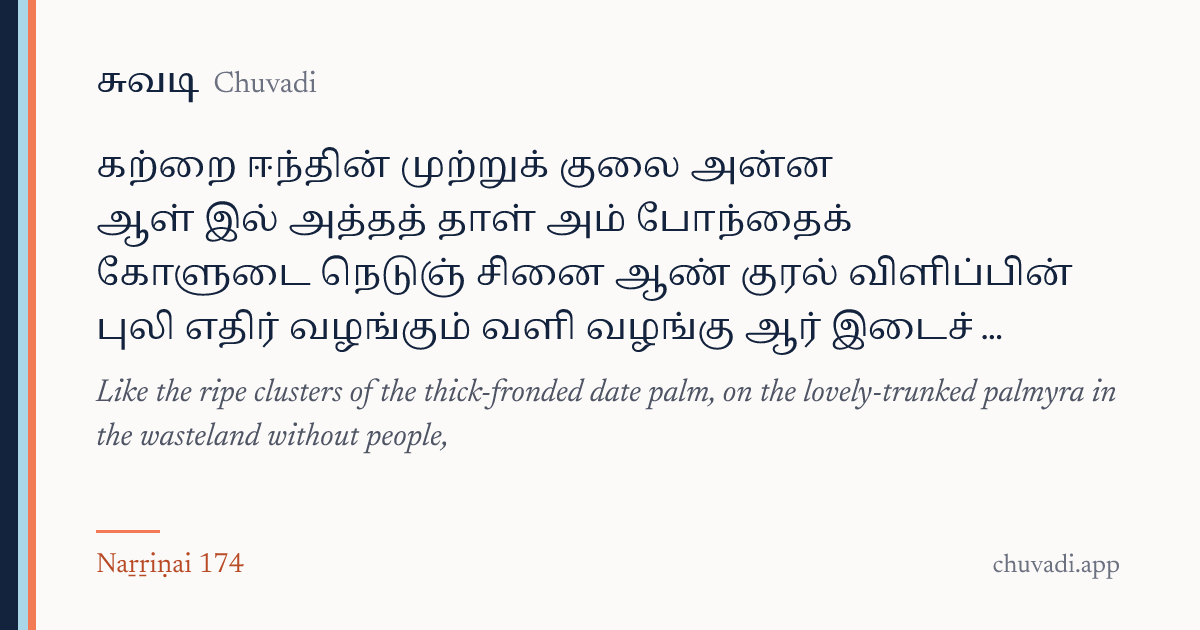
பாடல் · The poem
Tap a word to see where else it occurs.
பொருள் · Meaning in TamilAI
தோழி, மக்கள் இல்லாத பாலை வழியில், அடர்ந்த ஈந்தின் முற்றிய குலைகளைப் போன்ற குலைகளை உடைய அழகிய அடிமரத்தையுடைய பனையின் நீண்ட கிளையிலிருந்து ஆண் குரல் ஒன்று அழைத்தால் புலி அதை எதிர்கொண்டு வரும். காற்று வீசும் அத்தகைய அரிய வழியில் சென்ற உன் காதலர் திரும்பி வந்து இனிமையாகத் தழுவி, பிரியாமல் உன்னோடு ஒரே இடத்தில் இருக்கிறார்; அப்படியிருந்தும் இளம்பெண்ணே, நீ மிகவும் அழிந்து வாடுகிறாய் என்கிறாய். அதன் உண்மையை அறியாதவர்களுக்கு அப்படித் தோன்றலாம். வீழ்வதில்லை என்ற கொள்கையுடையதாக இருந்தும் பிறருக்குக் கொள்ளைப்பொருளாக வீழ்ந்துவிட்ட அவருடைய வளமான மார்பை அவர் என்னோடு அணைத்தார்தான்; ஆனால் அன்பு இல்லாத இடத்தில் தழுவுவதால் என்ன பயன்?
பாலைத் திணை; வினைமுடித்து வந்த பின்னும் ஆற்றாமல் இருந்த தலைவியைத் தோழி தேற்றியபோது அவள் சொல்லியது. அவன் அன்பு வேறிடம் சென்றுவிட்டதாக அவள் ஐயுறுவதாகத் தோன்றுகிறது; அப்படியானால் இது மருதத்துக்குரிய ஊடல் போன்றது. முதல் மூன்று அடிகளின் பொருளும், கொண்டி என்னும் சொல் அமைந்த அடியின் பொருளும் உறுதியாகத் தெரியவில்லை.
ஆங்கிலம் · English translationAI
Translation
- Like the ripe clusters of the thick-fronded date palm,
- on the lovely-trunked palmyra in the wasteland without people,
- from its long, laden branch, when a male voice calls,
- tigers come out to meet it — along that hard, windswept way
- your lover went; now he has come back, embraced you sweetly,
- and stays with you in one place, never parting; yet, greatly broken,
- 'you are wasting away, young woman,' you say, my friend.
- It may seem so to those who do not know.
- That prize of plunder, fallen though its rule was never to fall,
- his rich chest — he did press it to me;
- but what is an embrace worth where there is no love?
What the poem says
The colophon: the hero has come home, his work finished, yet the heroine is still unable to be comforted, and when her friend tries to reassure her she gives this answer (pālai).
The friend's words fill lines 1–7. The hero went by a fearful road, where a palmyra stands in the empty wasteland and tigers answer a call from its branches; now he is home, embraces her, never leaves her side, and still she pines. Why?
The heroine's reply is bitter and obscure. Outsiders might think her foolish; but the chest he presses to her is, she says, a koṇṭi, a 'plunder' or 'prize', fallen in spite of its rule never to fall. This may mean that he has given himself to other women, so that his embrace has no love in it. That reading would make this a sulking poem of marutam type under a pālai label. Lines 1–3 (the date palm and the palmyra, and whose 'male voice' calls) and line 9 are genuinely uncertain.