




நற்றிணை 177
பாடல் · The poem
Tap a word to see where else it occurs.
பொருள் · Meaning in TamilAI
பரந்து பரவும் கூரிய காட்டுத்தீ காட்டை அழிக்க, மரங்கள் தீப்பற்றி உச்சிகள் எரியும் காட்டில் உள்ள, கடந்து செல்ல அரிய வெப்பமான பாலை வழியை அவர் கடந்துவிட்டதைப் போலவே ஆகிவிட்டது. அதை அவருடைய குறிப்புகளால் நான் கண்டுகொண்டேன். முறைப்படி அவருடைய வேலின் ஒளிவீசும் இலைபோன்ற முனையைத் துடைக்கிறார்கள்; கேடயத்துக்கும் மயில்தோகை சூட்டி மணிகள் அணிவிக்கிறார்கள். முன்பைவிட மிகப் பலவாக என்னிடம் அன்பு காட்டுகிறார். ஆகவே தோழி, இனி என் மை தீட்டிய அழகிய கண்களின் பாவைகள் வருந்தி வருந்திப் பெருகும் கண்ணீர் வெள்ளத்தில் நீந்தும் நாள் வந்துவிட்டது போலும்.
பாலைத் திணை; தலைவன் பிரியப்போவதைக் குறிப்பால் அறிந்த தலைவி தோழிக்குச் சொல்லியது. வேலைத் துடைப்பதும் கேடயத்தை அணிசெய்வதும் வழக்கத்தைவிட மிகுதியாக அன்பு காட்டுவதும் பிரிவின் அறிகுறிகள். இரண்டாம் அடியில் உள்ள மகிழ் என்னும் சொல் ஒரு மரத்தின் பெயராகவும் இருக்கலாம்; அவ்வடியின் பொருள் உறுதியாகத் தெரியவில்லை.
ஆங்கிலம் · English translationAI
Translation
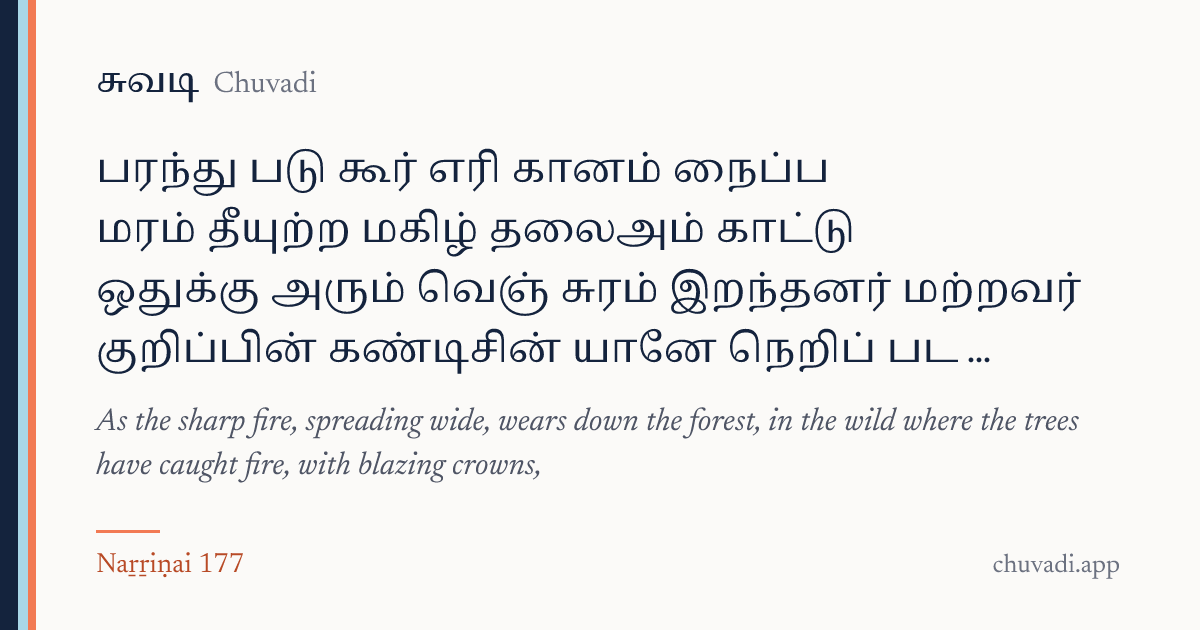
- As the sharp fire, spreading wide, wears down the forest,
- in the wild where the trees have caught fire, with blazing crowns,
- the hot wasteland, hard to pass through — he has as good as crossed it;
- I have seen it from his signs: properly
- his spear's bright blade is being wiped, and his shield too
- is crowned with peacock feathers and decked with bells;
- he shows me far more tenderness than before; so now
- it seems it has come, friend, the day when, aching and aching,
- the pupils of my painted, lovely kohl-lined eyes
- must swim in an overflowing flood.
What the poem says
The heroine has guessed from small signs that her husband is about to leave, and she tells her friend (pālai).
The signs are concrete: his spear-blade is being wiped clean, his shield is being fitted with peacock feathers and bells, and he is gentler with her than ever. That last sign is the most telling, a man being tender before a parting. She already speaks of him as if he had crossed the burning wasteland, where wildfire runs through the forest and the treetops are aflame.
The poem ends with her eyes: the day has come when the pupils (pāvai, literally 'the dolls') of her painted eyes will swim in a flood of tears. The word makiḻ in line 2 is taken here loosely, as the trees' 'blazing crowns'; it may instead name the makiḻ tree, and the line's exact sense is uncertain.