



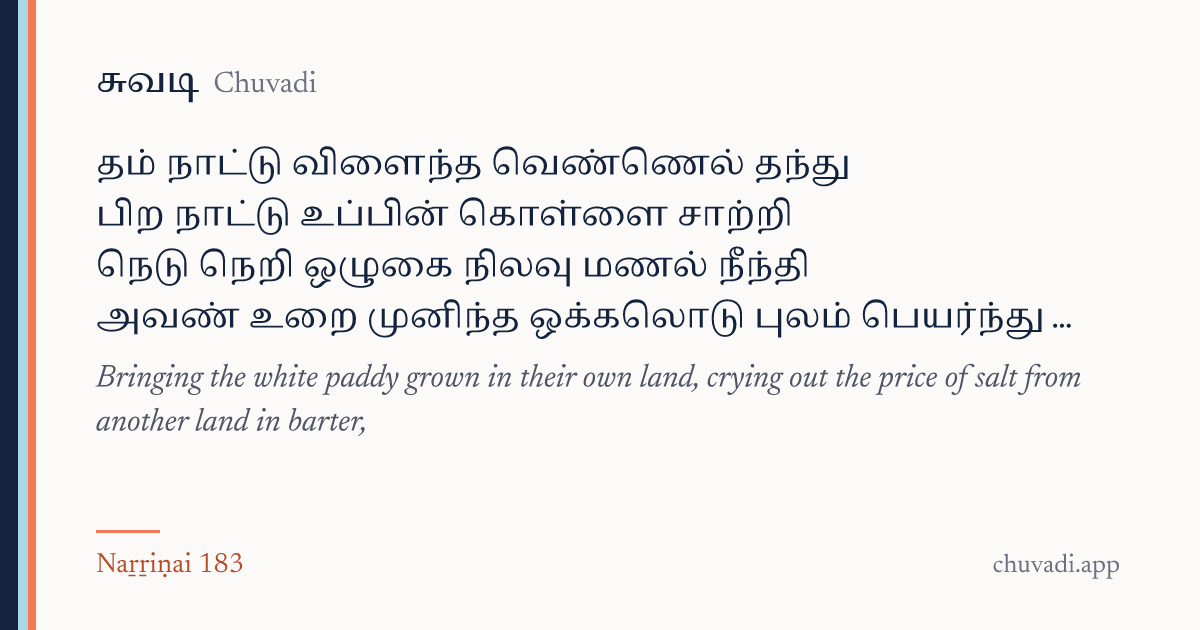

நற்றிணை 183
பாடல் · The poem
Tap a word to see where else it occurs.
பொருள் · Meaning in TamilAI
தங்கள் நாட்டில் விளைந்த வெண்ணெல்லைக் கொண்டுவந்து, வேற்றுநாட்டு உப்புக்குப் பண்டமாற்று விலையைக் கூவி அறிவித்து, நீண்ட வரிசையான வண்டிகள் நிலவொளி படர்ந்த மணலில் நீந்திச் செல்ல, அங்கே தங்கியிருப்பதை வெறுத்த சுற்றத்தாரோடு இடம்பெயர்ந்து உமணர்கள் புறப்பட்டுப் போவதும்கூடத் துன்பமானதே. கடற்றுறைத் தலைவனே, நீ உண்மையில் அறியாமை உடையவன். எல்லா இடங்களிலும் கொடுமையாக வருத்தும் வாடைக்காற்றோடு, நீ இல்லாத தனிமை நிறைந்த மாலைப்பொழுதும் இவ்விடத்துக்கு உண்டு. கூட்டமான மீன்களை வயிறார உண்ட வெண்ணிறக் கொக்கு மிதித்த, நீர் வற்றிய குளத்தின் நெய்தல் மலரைப் போல இவள் உயிர் வாழமாட்டாள் என்பதை நீ எண்ணிப் பார்க்கவில்லை.
நெய்தல் திணை; திருமணத்தைப் பின்னர் வைத்துப் பிரிந்து செல்லும் தலைவனிடம் தோழி சொல்லியது. உமணர் பிரிவும் வாடையும் மாலையும் பிரிவுத் துயரைப் பெருக்குகின்றன. நீர் வற்றிக் கொக்கால் மிதிக்கப்பட்ட நெய்தல் மலர், கைவிடப்பட்ட தலைவியின் வாட்டத்தைக் குறிக்கிறது.
ஆங்கிலம் · English translationAI
Translation
- Bringing the white paddy grown in their own land,
- crying out the price of salt from another land in barter,
- their long train of carts swimming through the moonlit sand,
- with their kin, weary of staying there, moving to new ground,
- the salt-traders depart, and even that is painful.
- Surely you are simple, lord of the shore. In every place,
- together with the north wind that torments so cruelly,
- this place has a lonely evening, too, when you are not here.
- Trampled by the white heron that has fed full on shoals of fish,
- like the neytal flower in water run dry,
- she will not live: you have not thought of that.
What the poem says
The hero is going away for a time and promises to marry on his return; the friend answers him (neytal).
She begins with the umaṇar, salt-traders who barter paddy for salt and move with their families and long lines of carts across the moonlit sand. Even watching them leave is sad. How much worse, then, his going. He is 'simple' if he does not see that this shore holds more than the cold north wind; it also holds the lonely evening without him.
The closing image is the neytal flower, the waterlily that gives this tiṇai its name, in a pool that has dried out and been trampled by a heron that has fed on the fish there. The heroine, left behind, will wither like that. Whether the well-fed heron hints at the hero himself is not said.