



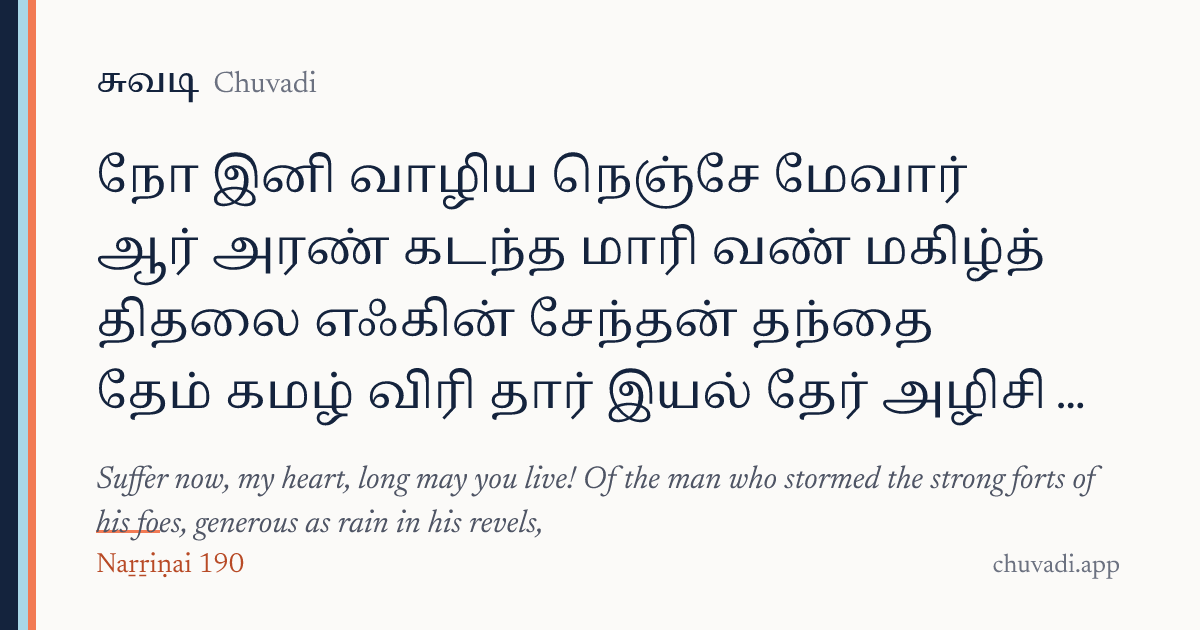

நற்றிணை 190
பாடல் · The poem
Tap a word to see where else it occurs.
பொருள் · Meaning in TamilAI
நெஞ்சே, நீ வாழ்க! இனி நீ வருந்து. பகைவர்களின் அரிய அரண்களைக் கடந்து வென்றவனும், மழையைப் போல வாரி வழங்கும் களிப்புடையவனும், தேமல் போன்ற புள்ளிகளுடைய வேலை ஏந்தியவனுமாகிய சேந்தனின் தந்தை அழிசி. தேன் மணக்கும் விரிந்த மாலையும் நன்கு ஓடும் தேர்களும் உடைய அவனுடைய ஆர்க்காடு, வண்டுகள் மொய்க்கும் நெய்தல் மலர்கள் நெற்பயிர்களின் இடையே மலரும், கள் வளமுடைய அழகிய வயல்களை உடையது. அந்த ஆர்க்காட்டைப் போன்ற அழகிய மூங்கில் போன்ற தோள்களின் நலம் சிறப்புற்ற, வலையில் சிக்கிய மானின் மருண்ட பார்வை போன்ற குளிர்ந்த கண்களையுடைய இளம்பெண்ணின், சில சொற்களே பேசும் பவழம் போன்ற சிவந்த வாயின் புன்னகைக்கு நீ மகிழ்ந்தாயே!
குறிஞ்சித் திணை; தலைவன் தன் நெஞ்சுக்குச் சொல்லியது; இரவுக்குறியில் ஏமாந்து மீளும்போது சொல்லியது என்றும், வழியில் திரும்ப நினைக்கும் நெஞ்சைக் கடிந்தது என்றும் கொள்வர். அழிசியும் அவன் மகன் சேந்தனும் சங்கப் பாடல்களில் பேசப்படும் தலைவர்கள்; ஆர்க்காடு அவர்களுடைய ஊர். அவள் புன்னகையில் மகிழ்ந்ததற்காக இப்போது வருந்து என்று நெஞ்சைக் கடிகிறான்.
ஆங்கிலம் · English translationAI
Translation
- Suffer now, my heart, long may you live! Of the man who stormed
- the strong forts of his foes, generous as rain in his revels,
- Centaṉ of the spotted spear, the father,
- Aḻici of the wide garland fragrant with honey and the well-running chariots,
- where neytal swarmed by bees blooms among the paddy
- in the lovely fields of liquor: like Ārkkāṭu,
- the girl whose lovely bamboo-like arms have reached the height of beauty,
- with rain-dark eyes like a deer's caught in a net,
- for her smile, her coral mouth of few words, you rejoiced.
What the poem says
The hero speaks to his own heart (kuṟiñci). The colophon offers three settings: he has lingered behind and cannot bear it; he has come to a night meeting and been disappointed; or, on the road away from her, he scolds his heart for wanting to turn back.
In every reading the heart is blamed for its joy. It delighted in the girl's smile, so now it must suffer. She is compared to Ārkkāṭu, a fertile town of fields where bees swarm over the neytal blossoming among the paddy. The town belongs to Aḻici, father of Centaṉ; Centaṉ is praised as a warrior who took his enemies' forts and gave like the rain. Both are chieftains named elsewhere in Sangam poetry; nothing more about them is said here.
The heroine's features are the usual ones: arms like bamboo, eyes like a frightened deer's, a red mouth and few words.