




நற்றிணை 193
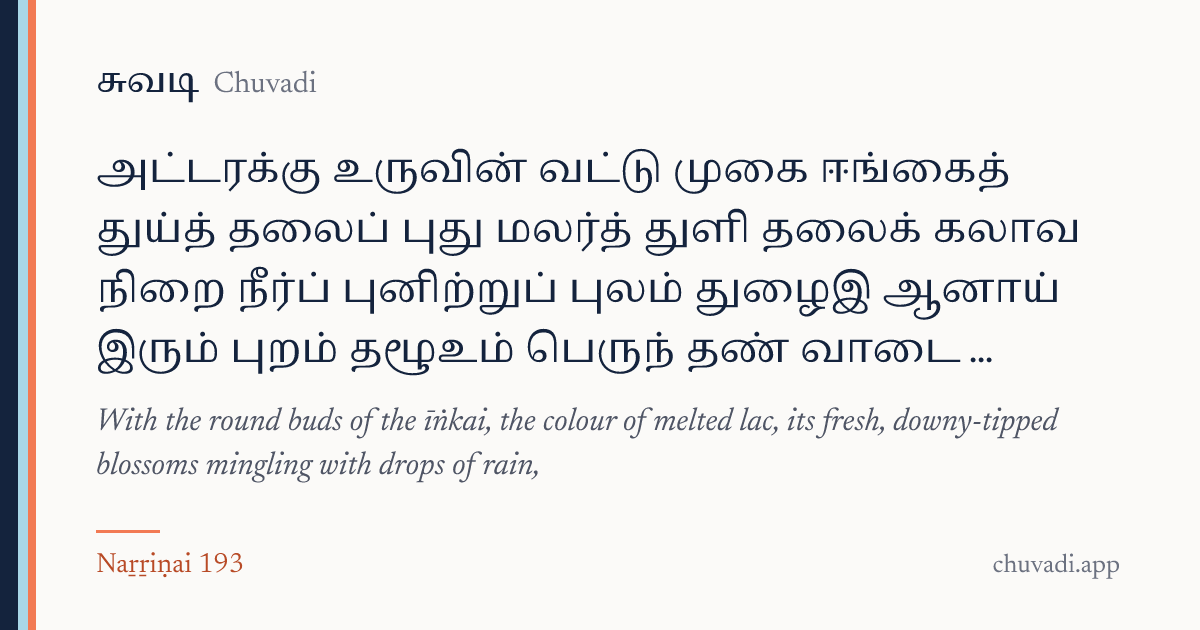
பாடல் · The poem
Tap a word to see where else it occurs.
பொருள் · Meaning in TamilAI
காய்ச்சிய அரக்கைப் போன்ற சிவந்த நிறமுடைய உருண்ட மொட்டுகளையுடைய ஈங்கையின், பஞ்சு போன்ற நுனியுடைய புதிய மலர்களின் மேல் மழைத்துளிகள் கலக்கும்படி வீசி, நீர் நிறைந்த புதிதாக முளைத்த வயல்களைத் துழாவி, ஓயாமல் கரிய பரந்த முதுகுகளைத் தழுவிச் செல்லும் பெரிய குளிர்ந்த வாடைக்காற்றே! உனக்கு நாங்கள் எந்தத் தீங்கும் செய்ததாக அறியோம். என் பருத்த தோள்களில் இருந்த ஒளிரும் வளையல்களை நெகிழச் செய்த என் காதலர், அடைதற்கரிய பொருளின் மேல் கொண்ட ஆசையால் பிரிந்து சென்றுவிட்டார். ஆதலால் யாருமில்லாத ஒரு மூலையில் தனித்திருந்து பெருந்துயரம் அடையும் என்னை நீயும் வருத்தாதே.
பாலைத் திணை; பிரிவுத் துயரைப் பொறுக்க முடியாத தலைவி வாடைக்காற்றை நோக்கிச் சொல்லியது. மழைக்காலக் குளிர்ந்த வாடை தனித்திருப்பவளின் துயரத்தைப் பெருக்கும் என்பது மரபு. வாடை தழுவும் இரும் புறம் எதைக் குறிக்கிறது என்பது தெளிவாகச் சொல்லப்படவில்லை.
ஆங்கிலம் · English translationAI
Translation
- With the round buds of the īṅkai, the colour of melted lac,
- its fresh, downy-tipped blossoms mingling with drops of rain,
- searching through the new-sprung fields brimming with water, never ceasing,
- embracing broad dark backs, great cold north wind,
- we know of no harm we have ever done to you.
- Our lover, who loosened the bright bangles on my rounded arms,
- has left me, bound by the affliction of wealth so hard to win;
- alone in a corner where there is no one,
- I suffer great grief: do not torment me.
What the poem says
The heroine, unable to bear her husband's absence, speaks to the cold north wind (vāṭai) of the rainy season (pālai by label; the setting is the season of waiting).
The wind is described as it moves: through red īṅkai buds the colour of melted lac, shaking raindrops from the new flowers, over fields freshly sprouted and full of water, wrapping round broad dark backs, perhaps of cattle or of the hills. It is a wind of the season when absent men should come home.
Her plea is simple. She has done the wind no wrong; her lover, who made her bangles slip from her thinning arms, has gone after wealth; she sits alone in a corner of the empty house. Let the wind not add to her suffering. The cold wind sharpens the loneliness of the separated woman, a common convention.
What the wind 'embraces' in line 4 (irum puṟam) is not specified.