




நற்றிணை 198
பாடல் · The poem
Tap a word to see where else it occurs.
பொருள் · Meaning in TamilAI
தொலைவிலிருந்தே தெரியும்படி வலிமையான யா மரங்கள் உயர்ந்து நிற்கும், ஓமை மரங்கள் நீண்டு வளர்ந்த காட்டின் நடுவே செல்லும் பாலை வழியில், முந்தைய நாள் என் மகள் அப்பால் கடந்து சென்றாள். உறக்கம் கொள்ள விரும்பும் என் கண்கள் கண்ணீரில் மூழ்கிவிட்டன. அவனுடைய தந்தையின் ஊரை நோக்கி நான் வணங்குகிறேன். நுண்ணிய பல வரிகளையுடைய உயர்ந்த இடையில் தேமல் அரும்பியவள்; நீண்டு ஒளிரும் வெண்மையான பற்களும் அழகிய மாலையும், சில வளையல்களும், அடர்ந்த கூந்தலும் உடையவள் அவள். கரிய தாடியும் வலிய தோளும் பெரிய கைகளும் உடையவனும், வலிய வில்லிலிருந்து எய்யும் அம்பு தவறாதவனும், வள்ளன்மையான களிப்புடையவனுமாகிய அவனுடைய தந்தையின் ஊர் இதுவே. அவளைப் பெற்றவள் நானே; உங்கள் பெயர் சிறந்து விளங்குக!
பாலைத் திணை; உடன்போக்கில் சென்ற தலைவியைப் பின்தொடர்ந்து சென்ற செவிலி வழியில் கண்டவர்களிடம் சொல்லியது. ஆனால் ஈன்றேன் யானே என்று சொல்வது நற்றாய்க்கே பொருந்தும்; துறைக்குறிப்பும் பாடலும் இதில் முரண்படுகின்றன. முதல் அடியும் கண்பட என்னும் சொல்லும் உறுதியான பொருள் தருவன அல்ல.
ஆங்கிலம் · English translationAI
Translation
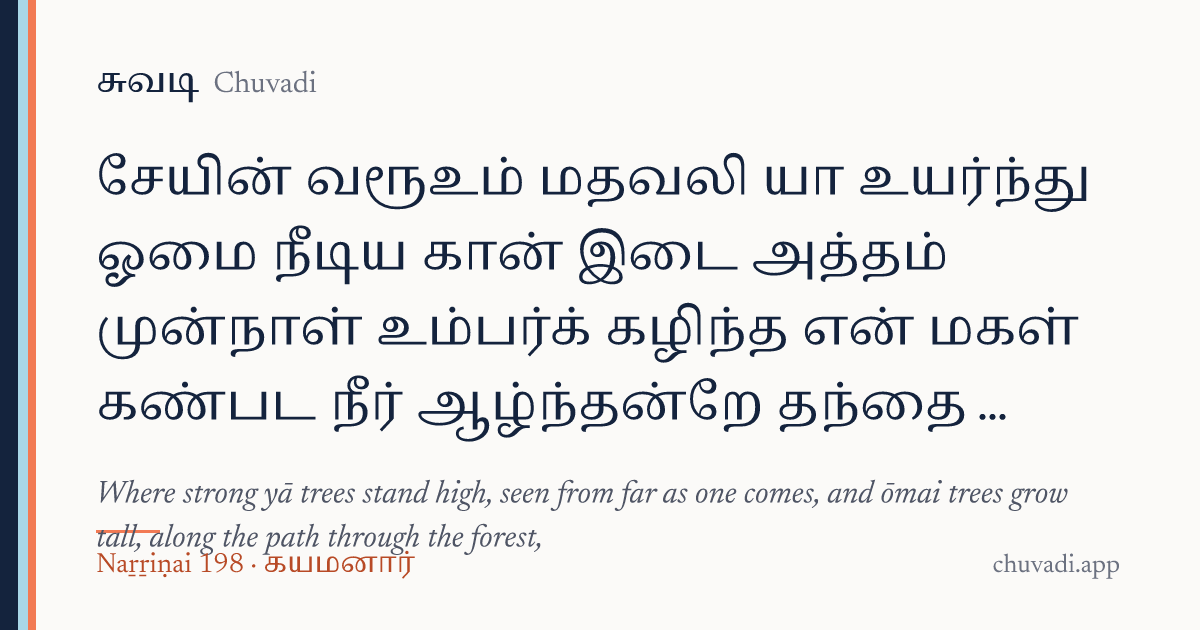
- Where strong yā trees stand high, seen from far as one comes,
- and ōmai trees grow tall, along the path through the forest,
- my daughter passed beyond, the other day;
- my eyes, longing for sleep, are drowned in tears. To the father's
- own town I bow down. With fine, many
- lines on her raised waist, where the spots have budded,
- long, shining white teeth, a splendid garland,
- few bangles and abundant hair: she is that girl.
- And of the man with dark beard, strong shoulders and broad hands,
- whose strong bow's arrows never miss, generous in his revels,
- his father's town is this one.
- I am the one who bore her: may your name flourish!
What the poem says
The colophon says the foster-mother (cevili), who followed the eloping couple, speaks to people she meets on the way (pālai). Yet she says 'I bore her', which suits the mother; either the colophon is loose or the cevili speaks with a mother's voice.
Her daughter has gone through the forest of yā and ōmai trees with her lover, and the woman, sleepless and weeping, has come to the young man's home town. She describes the girl as if to strangers who might have seen her: the spots of beauty budding on her waist, white teeth, a garland, few bangles and thick hair.
Then she recognises the place: this is the town of the father of the young man, a dark-bearded archer whose arrows never miss and who gives generously. She blesses the people there, 'may your name flourish', perhaps in relief, perhaps in hope that her daughter has been received with honour. Line 1 and the phrase kaṇpaṭa in line 4 are uncertain in sense.