



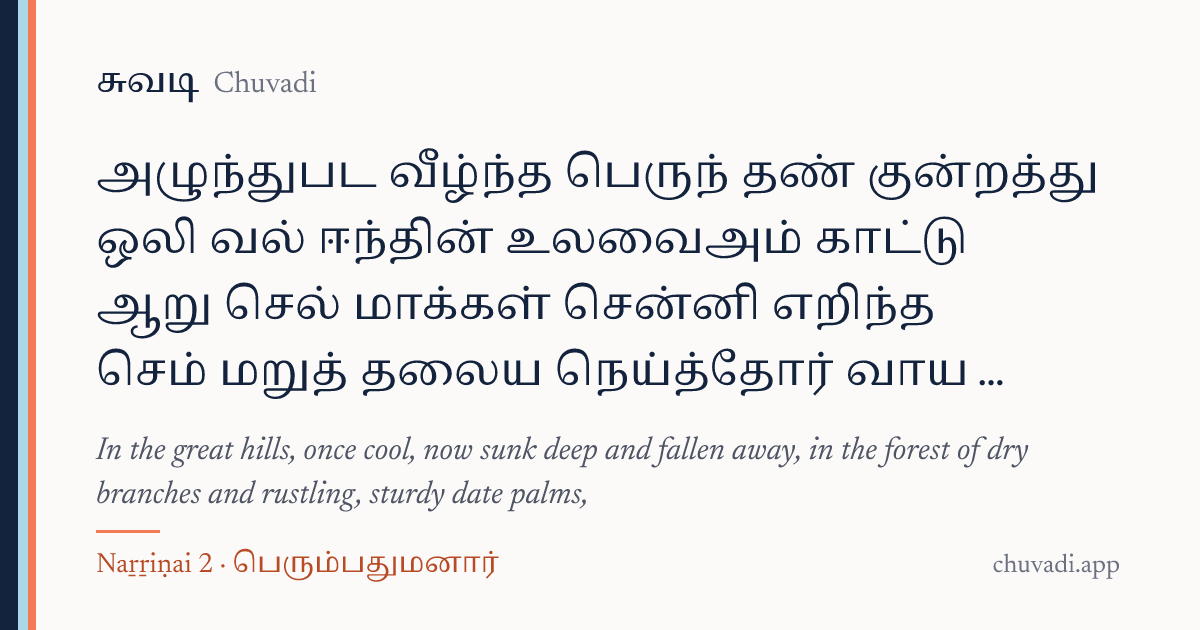

நற்றிணை 2
பாடல் · The poem
Tap a word to see where else it occurs.
பொருள் · Meaning in TamilAI
ஆழமாகச் சரிந்து வீழ்ந்த பெரிய குன்றுகளிடையே, காய்ந்த கிளைகளும் சலசலக்கும் உறுதியான ஈந்து மரங்களும் உள்ள காட்டில், வழிச்செல்லும் மக்களின் தலையைத் தாக்கியதால் சிவந்த கறை படிந்த தலையும் குருதி படிந்த வாயும் கொண்ட பெரிய தலையுடைய புலிக்குட்டிகள் மாலையில் திரிகின்றன; மான்கள் மருண்டு நோக்கி நிற்கின்றன; ஈங்கைப் புதர்களின் மேல் இண்டங்கொடி படர்ந்திருக்கிறது; இதுதான் இந்தப் பாலைவழி. கூரிய பற்களையுடைய மெல்லிய இளம்பெண்ணுக்கு முன்னே நடந்து, பகற்பொழுதில் இவ்வழியைக் கடந்து செல்லும் இந்த இளைஞனின் நெஞ்சம், காற்றோடு கலந்த மழையுடன் பெரிய மலைகளையும் பெயர்க்கும் இடியைவிடக் கொடியது.
பாலைத் திணை; உடன்போக்கில் செல்லும் தலைவனையும் தலைவியையும் சுரத்தின் நடுவே கண்டவர்கள் தமக்குள் சொல்லியது. கொடிய காட்டு வருணனை, இத்தகைய வழியில் மெல்லிய பெண்ணை அழைத்துச் செல்வது எவ்வளவு துணிவானது என்பதைக் காட்டுகிறது. 'மான் நோக்கு' என்ற தொடரின் பொருள் உறுதியாகத் தெரியவில்லை; 'எல்லிடை' என்பதைப் பகலில் என்று கொண்டது ஒரு ஊகமே.
ஆங்கிலம் · English translationAI
Translation
- In the great hills, once cool, now sunk deep and fallen away,
- in the forest of dry branches and rustling, sturdy date palms,
- having struck at the heads of men who travel the road,
- their heads smeared red, their mouths bloody,
- the big-headed tiger cubs prowl at evening;
- deer stand gazing; iṇṭu vines climb the īṅkai: such is this wasteland.
- Going ahead of the slender girl with sharp teeth,
- crossing it by daylight, the young man has a heart
- crueller than the thunder that, with rain driven by the wind,
- shakes loose the great mountains.
What the poem says
The colophon says this is spoken by people who meet an eloping couple in the middle of the wasteland (pālai, poem by Perumpatumaṉār). They do not address the lovers; they speak among themselves about what they see.
The first six lines build the landscape of pālai at its harshest: worn and broken hills, a forest of dead branches and wild date palms, tiger cubs whose heads and mouths are red from attacking travellers, thorny iṇṭu creepers climbing the īṅkai bushes. The point is that no one should bring a young girl here.
The onlookers then turn on the young man. He walks ahead of her, leading her through this country, and they call his heart crueller than storm-thunder that loosens mountains. The judgement is half reproach and half wonder at how far love has driven him.
Some phrases are uncertain. 'Sunk deep and fallen' in line 1 may describe eroded hills or a hill whose coolness has gone. In line 6, 'deer gaze' (māṉ nōkku) is hard to construe and may be corrupt. In line 8, elliṭai can mean 'by day' or simply 'in that time', so 'by daylight' is a guess.