




நற்றிணை 200
பாடல் · The poem
Tap a word to see where else it occurs.
பொருள் · Meaning in TamilAI
கண்ணியாகக் கட்டிய கதிர்களைப் போன்ற ஒளிவீசும் கொத்துகளையுடைய நொச்சி மாலையை அணிந்து, ஆறு கிடப்பது போன்ற அகன்ற நீண்ட தெருவில் திருவிழா வருகிறது என்று அறிவிக்கும் முதிய குரலுடைய குயவனே! அங்கே இதையும் அறிவிப்பாயாக: ஆம்பல் மலர்கள் நெருங்கிய இனிய பெரிய வயல்குளங்களை உடைய பொய்கை ஊருக்குப் போகிறவர்களே! கையால் மீட்டும் நரம்புகளையுடைய யாழோடு பாடல் பாடும் இந்தப் பாணன் செய்த துன்பங்கள் பல. கூர்மையான பற்களையும் மென்மையான அகன்ற இடையையும் உடைய பெண்களே, இவனுடைய பொய் நிறைந்த கொடிய சொற்களிலிருந்து உங்களைக் காத்துக்கொள்ளுங்கள் என்று சொல்.
மருதத் திணை; தலைவியின் உள்ளக்குறிப்பை அறிந்த தோழி, தலைவனுக்காகத் தூது வந்த பாணன் கேட்கும்படி குயவனை அழைத்துச் சொல்லியது. ஊரில் விழாவை அறிவிப்பவன் குயவன் என்பது பழைய வழக்கம். பரத்தையரிடம் தலைவனுக்காகப் பொய் சொன்னவன் இப்பாணன் என்று பகிரங்கமாக எச்சரிக்கச் சொல்வதன் மூலம் அவனுக்கு வாயில் மறுக்கிறாள்; பொய்கை ஊர் என்பது பரத்தையர் வாழும் இடத்தைக் குறிக்கலாம்.
ஆங்கிலம் · English translationAI
Translation
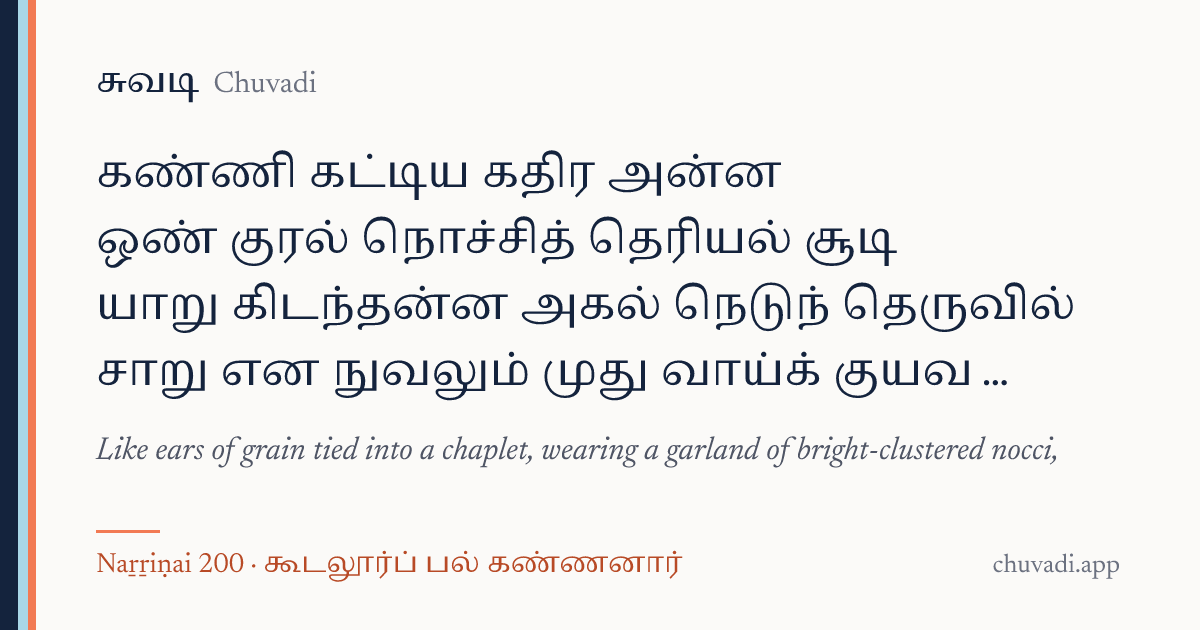
- Like ears of grain tied into a chaplet,
- wearing a garland of bright-clustered nocci,
- in the wide, long street that lies like a river,
- O potter with the old voice, who cries out, 'Festival!',
- announce this too, there, I beg you:
- 'In the great sweet field-pool crowded with waterlilies,
- you who go to the town of ponds,
- the bard of songs whose strings the hand plucks
- has caused many troubles; you women with sharp teeth
- and slender, wide waists, from this man's
- lie-laden, crooked words, keep yourselves safe!'
What the poem says
The heroine's friend, sensing the heroine's mind, speaks when the husband's bard has come to plead his case. She calls out to the potter, but so that the bard will hear (marutam).
The potter, wearing a garland of nocci, was the town's crier, walking the broad street to announce festivals. The friend asks him to add one more proclamation, to be cried in the town of ponds where the husband goes: let the women there beware of this bard, whose sweet lute-songs have caused so much trouble and whose words are packed with lies.
The attack is indirect and very public. The bard is the husband's go-between with the courtesans, and his songs carried the husband's promises to them; now he comes to the wife to carry promises the other way. Calling for a public warning against him is the friend's way of refusing him entry, and of shaming the husband through his messenger. 'The town of ponds' probably names the place where the courtesans live.