




நற்றிணை 203
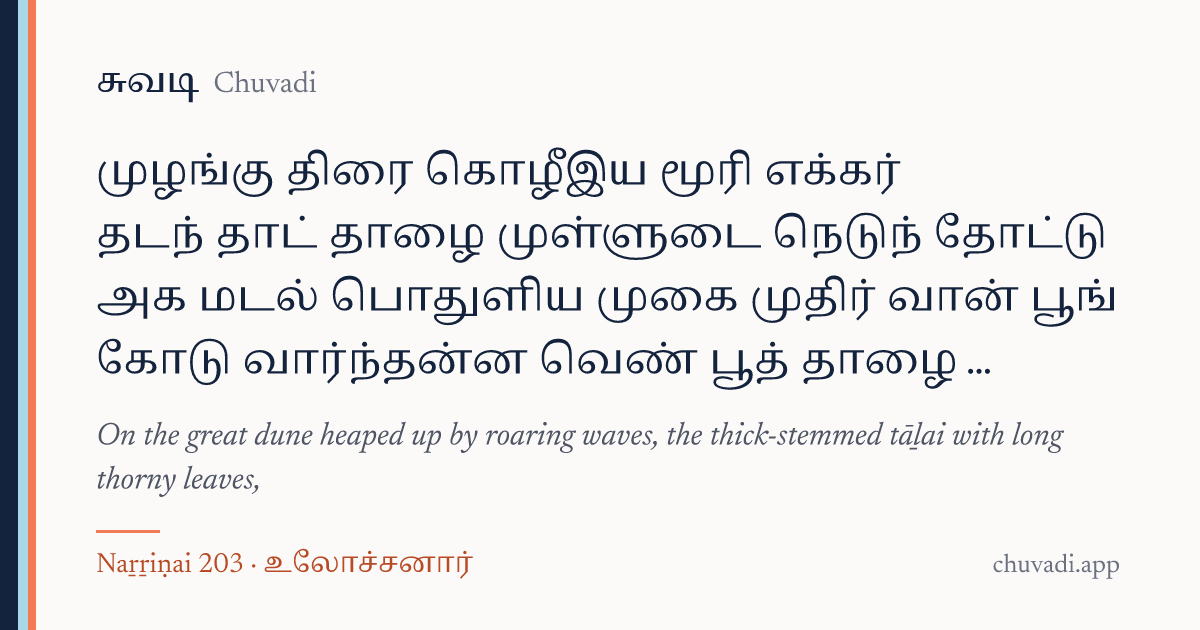
பாடல் · The poem
Tap a word to see where else it occurs.
பொருள் · Meaning in TamilAI
முழங்கும் அலைகள் கொண்டுவந்து குவித்த பெரிய மணல்மேட்டில், பருத்த அடிமரமும் முள்ளுடைய நீண்ட மடல்களும் கொண்ட தாழை நிற்கிறது. அதன் உள்மடல்களில் நிறைந்து முதிர்ந்த அரும்புகள், கடைந்தெடுத்த தந்தம் போல வெண்மையாக மலர்கின்றன. மோதும் அலைகள் உதைப்பதால் அந்த வெண்தாழைப் பூக்கள் பொங்கி மகரந்தம் உதிர்த்து, சிற்றூரின் தெருக்களில் வீசும் மீன் நாற்றத்தையே மாற்றிவிடுகின்றன. அத்தகைய மணம் கமழும் கடற்கரைச் சோலையில்தான் நம் நட்பு உண்டானது. ஒரு நாள் பிரிந்தாலும் பிழைப்பது அரிது என்று எண்ணாமல், விரைந்து ஓடும் குதிரைகள் பூட்டிய தன் நெடுந்தேர் இங்கே வருவதை அவன் நிறுத்திவிட்டான். அவன் செய்த அந்தத் தவறு போதாதென்று, ஆரவாரம் செய்யும் இந்த ஊரும் சேர்ந்து நமக்குத் துன்பம் தருகிறது.
நெய்தல் திணை; தலைவன் வேலிப்புறத்தில் மறைந்து நிற்கும்போது, அவன் கேட்கும்படி தோழி தலைவியிடம் சொல்லி மணம் செய்யத் தூண்டுகிறாள். மீன் நாற்றத்தையும் போக்கும் தாழை மணம், தலைவன் மணந்தால் ஊர் பேசும் அலரும் மறையும் என்பதைக் குறிப்பாக உணர்த்துகிறது. பூவைத் தந்தத்தோடு ஒப்பிடும் வரி சுருக்கமானது; அதன் பொருள் ஓரளவு ஊகமே.
ஆங்கிலம் · English translationAI
Translation
- On the great dune heaped up by roaring waves,
- the thick-stemmed tāḻai with long thorny leaves,
- its inner sheaths crowded with full-grown buds, bright flowers
- like smoothed tusks, the white-blossomed tāḻai,
- kicked by the dashing waves, swells and sheds its pollen
- and drives the fish-stench from the streets of the little hamlet:
- in that fragrant seashore grove our friendship was joined;
- not thinking, 'If we part for a single day, there is no surviving,'
- he has stopped his long chariot with swift horses from coming there;
- and besides that fault of his own making,
- this clamouring town has joined in the pain.
What the poem says
The friend speaks to the heroine while the hero stands unseen just outside the fence, and she means him to hear (neytal, Ulōccaṉār). The colophon says her aim is to press him to marry.
The poem opens on the seashore tāḻai (screw-pine), whose white flowers, bursting as the waves strike them, scatter so much fragrance that the fish-smell of the fishing village is overcome. In that grove the lovers first met. The image works as uḷḷuṟai: just as the flower's scent masks the stench of the streets, a marriage would cover the gossip now spreading through the town.
The complaint is pointed. He has stopped coming, without caring that the heroine cannot survive even a day's separation; and on top of his fault, the noisy town, with its talk (alar), adds to her distress. Line 4's comparison of the white bloom to a polished tusk is our reading of a compressed phrase.