



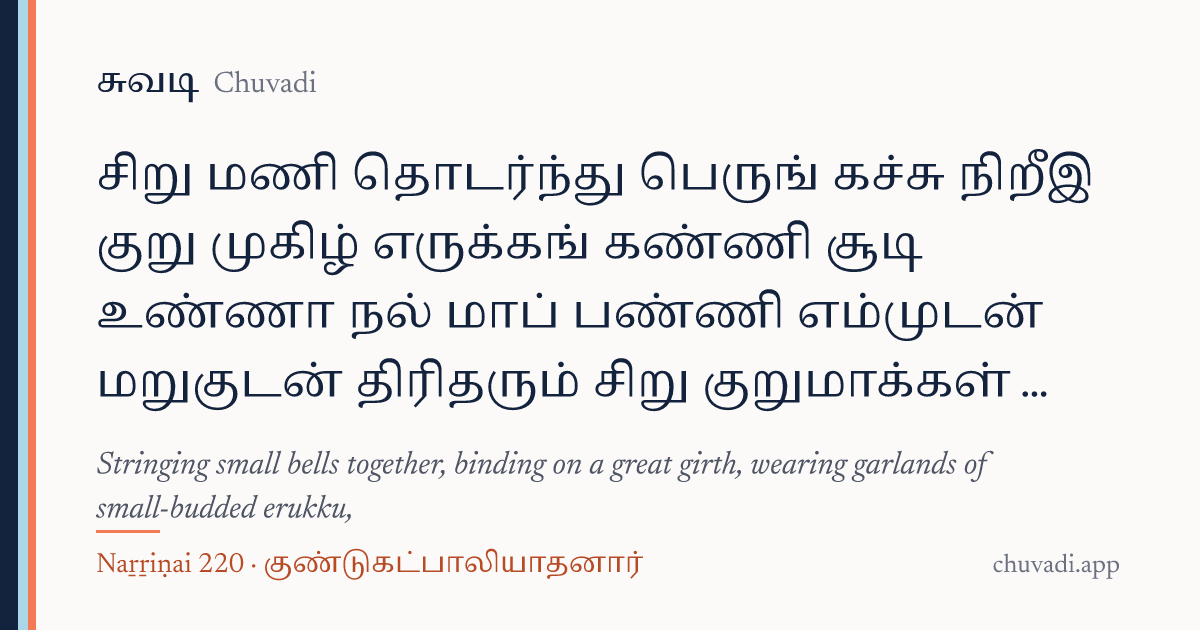

நற்றிணை 220
பாடல் · The poem
Tap a word to see where else it occurs.
பொருள் · Meaning in TamilAI
சிறிய மணிகளைத் தொடர்ச்சியாகக் கட்டி, பெரிய கச்சை இறுக்கி, சிறிய அரும்புகளையுடைய எருக்கம்பூ மாலையைச் சூடி, தீனி தின்னாத நல்ல குதிரையைச் செய்துகொண்டு, எங்களோடு தெருவெல்லாம் சுற்றித் திரியும் சின்னஞ்சிறு பிள்ளைகள் உண்மையிலேயே மிகவும் பண்புடையவர்கள்! இறுக்கிக் கட்டிய முழவின் கண் உலராத, விழாக்கள் நிறைந்த இந்த ஊரில், ‘நாங்களே ஊர்’ என்று பெருமை கொள்ளும் இவர்கள், தாமும் இரக்கம் அறிந்தவர்களாக இருந்தால், தேன் போன்ற மொழியும், கயல்மீன் போன்ற மையுண்ட கண்களும் உடைய அந்த இளம்பெண்ணிடம் ‘இவனுக்கு அயலாளாக இருக்காதே’ என்று சொல்லி எங்கள் பக்கம் சேர்ந்திருப்பார்கள்.
குறிஞ்சித் திணை; கொளு பல சூழல்களைத் தருகிறது; சொற்கள் தலைவன் கூற்றாகவே எளிதில் பொருந்துகின்றன. மணி, எருக்கம்பூ, தின்னாத குதிரை ஆகியவை, காதலன் பனைமடலால் செய்த குதிரையில் ஏறி ஊர் அறிய வருந்தும் மடலேறுதலைக் குறிப்பதாகத் தோன்றுகின்றன; ‘மடல்’ என்ற சொல் பாடலில் இல்லை. சிறுவர்களின் அன்பைப் புகழ்வது ஊர்ப் பெரியவர்களைக் கடிந்துகொள்வதே.
ஆங்கிலம் · English translationAI
Translation
- Stringing small bells together, binding on a great girth,
- wearing garlands of small-budded erukku,
- fashioning a fine horse that never eats, along with us
- the little children who wander all through the streets
- are truly most noble! Where the tight-laced
- drum-faces never dry, in this place of festivals,
- these who take great pride in saying, 'We are the town',
- if they themselves knew kindness, saying to the honey-voiced
- young girl with kohl-dark eyes lovely as kayal fish,
- 'Do not be a stranger,' they would join with us.
What the poem says
The colophon offers several situations: the friend, having agreed to help, approaches the heroine; or the hero commends the heroine to the friend's care; or he speaks because he cannot bear his longing (kuṟiñci, Kuṇṭukaṭ Pāliyātaṉār). The words read most easily as the hero's.
The details point to maṭal ēṟutal, the desperate lover's public ride on a "horse" made of palmyra stems, wearing erukku flowers, to shame the girl's people into consent. Here the children of the town copy him: they tie on bells and a girth, garland themselves with erukku and make their own horse "that does not eat", and they follow him through the streets. The poem does not use the word maṭal, but the bells, erukku and the horse that never eats make the reference very likely.
The children's goodwill is set against the grown-ups of this festive, drum-loud town, who boast that they are its leading people. If they had the kindness the children show, they would take his side and tell the girl not to treat him as a stranger. The praise of the children is a reproach to their elders.