



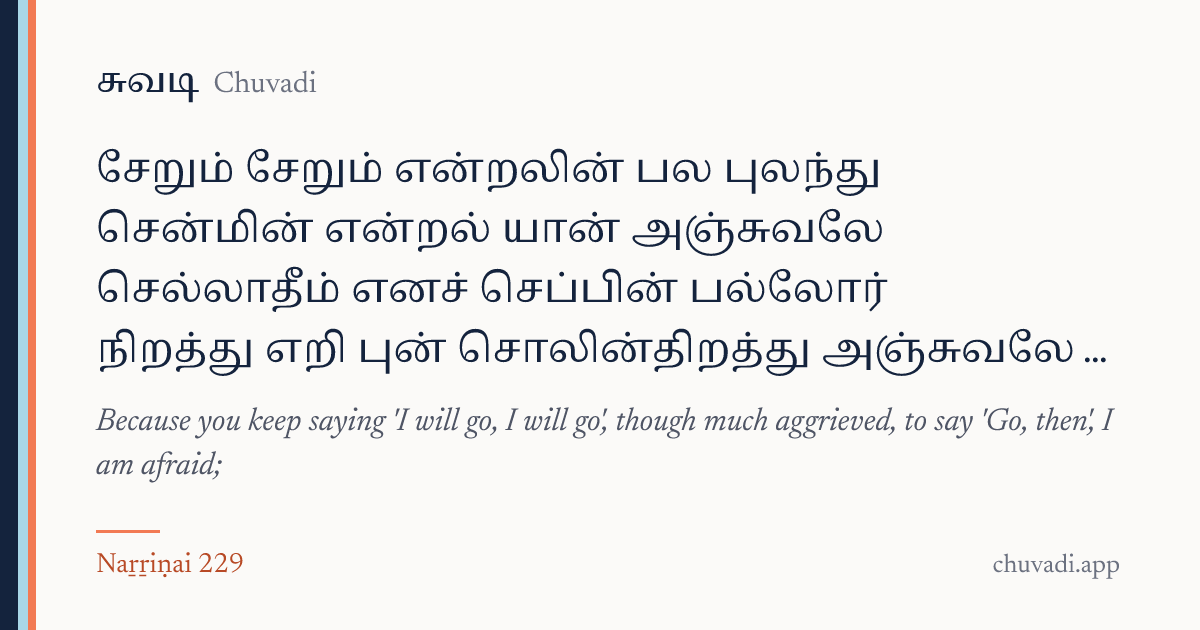

நற்றிணை 229
பாடல் · The poem
Tap a word to see where else it occurs.
பொருள் · Meaning in TamilAI
‘போகிறேன், போகிறேன்’ என்று நீ திரும்பத் திரும்பச் சொல்வதால், மிகவும் வருந்தி ‘போ’ என்று சொல்ல நான் அஞ்சுகிறேன். ‘போகாதே’ என்று சொன்னாலோ, பலர் நெஞ்சில் தைக்கும்படி எறியும் இழிவான சொற்களுக்கு அஞ்சுகிறேன். ஆகவே போ; போய் உன் செயலை முடி; போன இடத்தில் நீண்டநாள் தங்காமல் பார்த்துக்கொள். நள்ளிரவில் அணிகள் அணிந்த அவள் மார்பில் தழும்பு படும்படி நீ தழுவிக்கொண்டு அருகிலேயே இருந்தாலும், அவள் தனித்திருப்பவள் போல நடுங்குகிறாள். மென்மையான வானத்தின் பரப்பில் திரண்டு குளிர்ச்சியாகப் பெய்த இளமழைக்குப் பின்னால், வாடைக்காற்றும் வந்து நிலைகொண்டுவிட்டதை நீ பார்த்தாயா?
பாலைத் திணை; தலைவன் பிரிவதைச் சொன்னபோது, தோழி தலைவியைத் தேற்றி அவன் செல்ல உடன்பட்டது; அவன் போவதைத் தடுத்ததாகவும் கொள்ளலாம். ‘போ’ என்றாலும் ‘போகாதே’ என்றாலும் துன்பம் என்ற இக்கட்டை வெளிப்படையாகச் சொல்கிறாள். அவன் அருகில் இருக்கும்போதே வாடைக் குளிரில் நடுங்கும் தலைவி அவன் பிரிந்தால் எப்படித் தாங்குவாள் என்பதே உட்பொருள்.
ஆங்கிலம் · English translationAI
Translation
- Because you keep saying 'I will go, I will go', though much aggrieved,
- to say 'Go, then', I am afraid;
- and if I say 'Do not go', then of the many
- who strike at the heart with mean words, I am afraid.
- So go: go and finish your work; once you have gone,
- take care not to linger there. At midnight,
- though you embrace her till her jewelled breast is marked,
- though you are beside her, she shivers as if alone;
- gathering in the expanse of the soft sky, coolly
- after the young rain that played,
- the north wind too, do you see? has come and stays.
What the poem says
The hero has told the friend that he must leave. The colophon says she consoles the heroine and agrees to his going, or, read the other way, talks him out of it (pālai; the poet's name is lost). The poem holds both readings in balance.
The friend is caught in a dilemma and says so frankly. If she tells him to go, she fears the consequences for the heroine; if she tells him to stay, she fears what people will say of a man who idles at home instead of working. So she lets him go, on condition that he finish quickly and not stay away long.
The last six lines are her real argument. Even now, when he holds her close all night, the heroine shivers as if she were alone. The light early rains are over and the cold north wind (vāṭai) has set in, the season of the dews, when lovers most need each other. If she trembles with him beside her, how will she bear it when he is gone? Said this way, the permission is almost a plea to stay.