



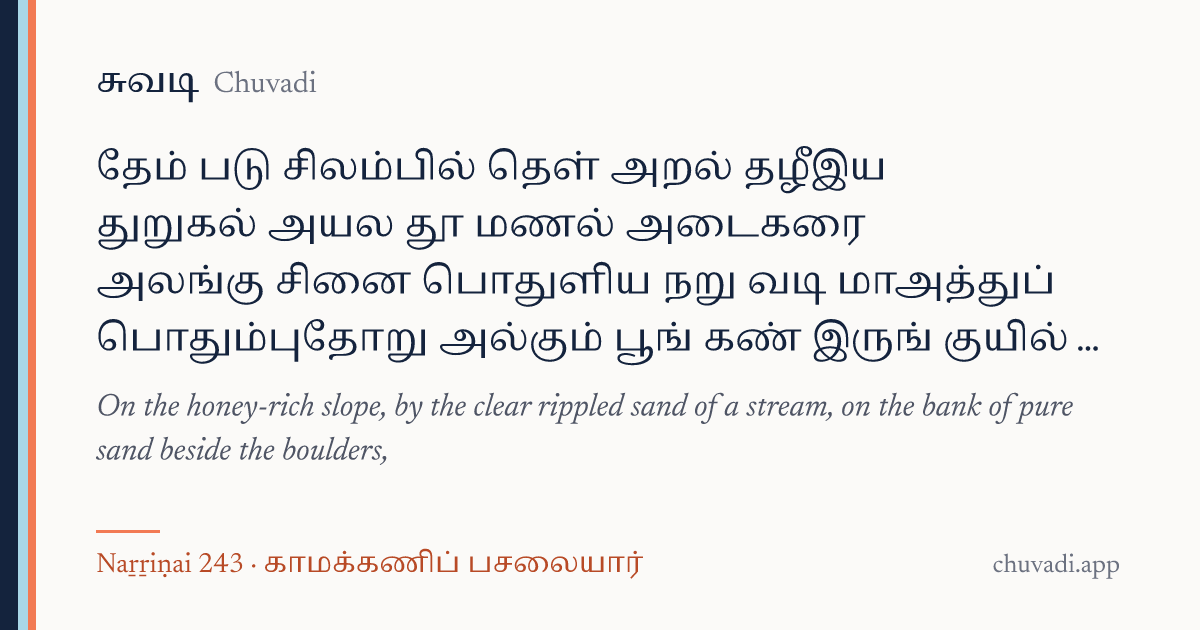

நற்றிணை 243
பாடல் · The poem
Tap a word to see where else it occurs.
பொருள் · Meaning in TamilAI
தேன் நிறைந்த மலைச்சாரலில், தெளிந்த நீர் ஓடும் மணல் அலைகளைத் தழுவிய, பாறைகளுக்கு அருகே தூய மணல் படிந்த கரையில், அசையும் கிளைகளில் மணமுள்ள பிஞ்சுகள் நிறைந்த மாமரங்கள் இருக்கின்றன. அவற்றின் ஒவ்வொரு புதர்நிழலிலும் தங்கும் அழகிய கண்களையுடைய கரிய குயில், 'அறிவுடையவர்களே, சூதாடும் கவறு உருட்டப்பட்டு மாறுவது போல வாழ்க்கை நிலையில்லாதது; அதற்காக மனைவியை விட்டுப் பிரிவதைத் தவிர்த்துக்கொள்ளுங்கள்' என்று, பெண்களைக் கதியற்றவர்களாக்கிப் பிரிந்து செல்பவர்களைக் கடிந்துகொள்வது போல, அருகில் நெருங்கி அமர்ந்து விருப்பத்தோடு கூவுகிறது. இப்படித் துன்பம் தரும் காலத்திலும் பொருளுக்காகப் பிரிவதுதான் ஆண்களின் இயல்பு என்றால், அவர்களுக்கு அறத்தைவிடப் பொருளே அருமையானது போலும்!
பாலைத் திணை; பிரிவால் மெலிந்த தலைவி கூற்று. இளவேனில் காலத்தில் கூவும் குயில் பிரிந்திருப்பவர்களின் ஏக்கத்தைத் தூண்டும் என்பது மரபு; இங்கே அக்குயில் பிரிந்து செல்வோருக்கு அறிவுரை சொல்வதாகத் தலைவி கற்பனை செய்கிறாள். இறுதி அடிகளில், மனைவியோடு இருப்பதாகிய அறத்தைவிடப் பொருளைப் பெரிதாக எண்ணுகின்றனர் என்ற கசப்பான நகைப்பு உள்ளது. கவறு பற்றிய உவமை பிரிந்து அலைபவர்களின் வாழ்க்கையையும் குறிக்கலாம்.
ஆங்கிலம் · English translationAI
Translation
- On the honey-rich slope, by the clear rippled sand of a stream,
- on the bank of pure sand beside the boulders,
- in mango trees with swaying boughs dense with fragrant young fruit,
- the dark koel with lovely eyes, resting in grove after grove,
- 'Life does not stay, like dice cast and moved again; for its sake
- take care not to leave, you who are wise': so,
- as if it were rebuking those who abandon their women helpless,
- it sits close by and calls out eagerly;
- at such a painful time to leave in search of wealth,
- if that is the nature of men,
- then wealth, it seems, is rarer and dearer than virtue.
What the poem says
The colophon gives this to the heroine, worn thin by her husband's absence. She speaks in general terms, about "men", but the bitterness is personal.
The scene is spring in a cool grove beside a mountain stream: mango trees heavy with young fruit, and in every thicket a koel calling. The heroine hears its cry as a lecture to travellers. Life, it seems to say, is as unstable as the throw of dice, which are cast and then moved again; so do not leave, you who think yourselves wise. The bird sits close by as it calls; the phrase could also mean that it sits pressed against its mate, which would itself be a reproach to the man who is not beside her. Spring and the koel's voice are among the strongest goads to longing in Tamil poetry.
The closing lines turn this into irony. If men must leave in such a season, then wealth must be worth more than aṟam, the right conduct that would keep a man at home with his wife. Line 5 is compressed, and the dice simile could also be read as describing the restless life of the travellers themselves.